Sales of American objects will take place at several New York auction houses in January 2025. As reported in the press over the last several weeks, a round of job cuts which may total 100 in the New York offices of Sotheby’s, with the possibility of more cuts to come, has brought with it a decided sense of gloom. Some of the smaller departments there, including Americana, are said to be at risk. You can find one of the latest articles here.
The number of lots in the Americana sales at Sotheby’s and Christie’s has been coming down over the decades. We will wait to see what the future holds until after the sales at the end of January. For now, I would like to mention of few of the objects that are of interest to me.
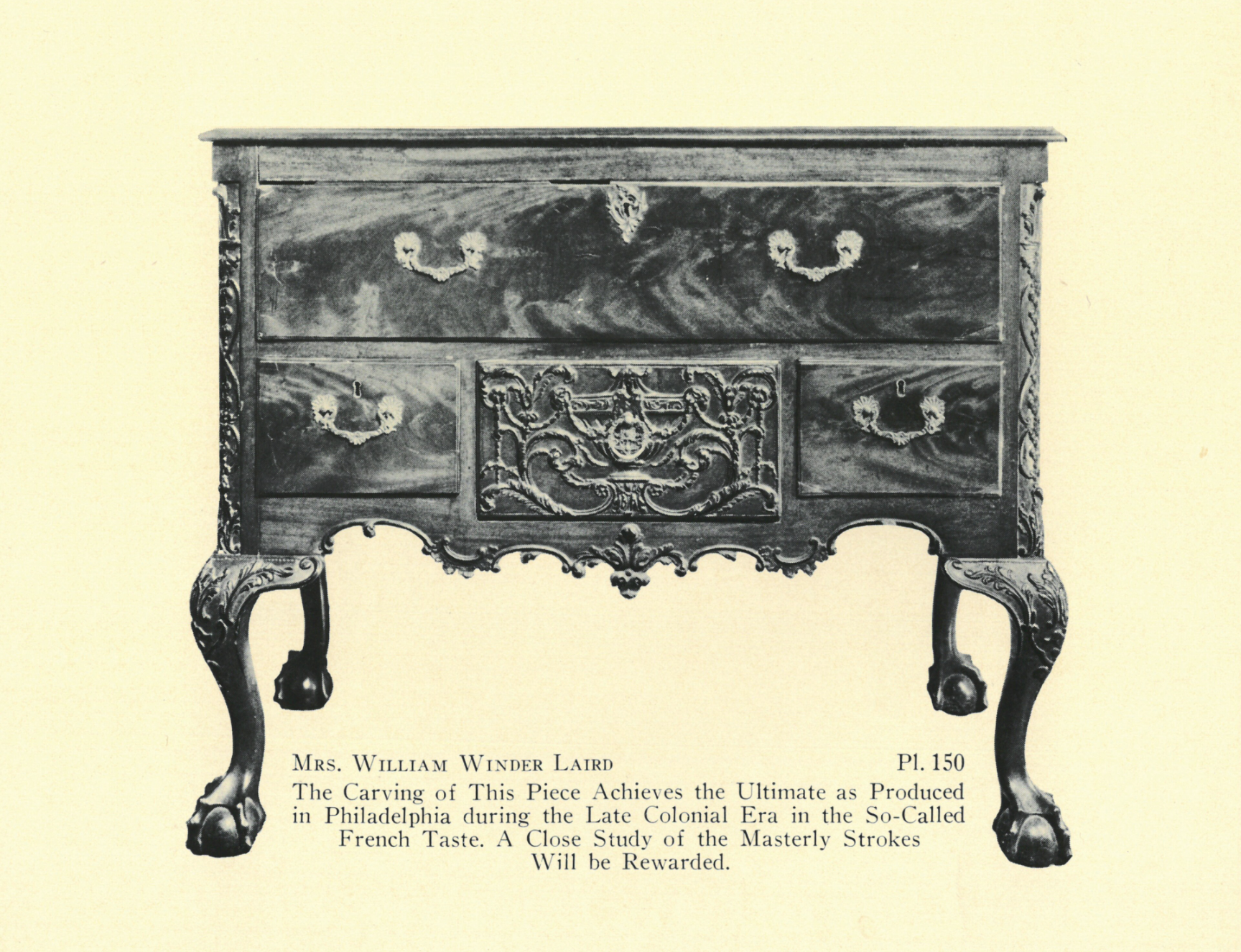
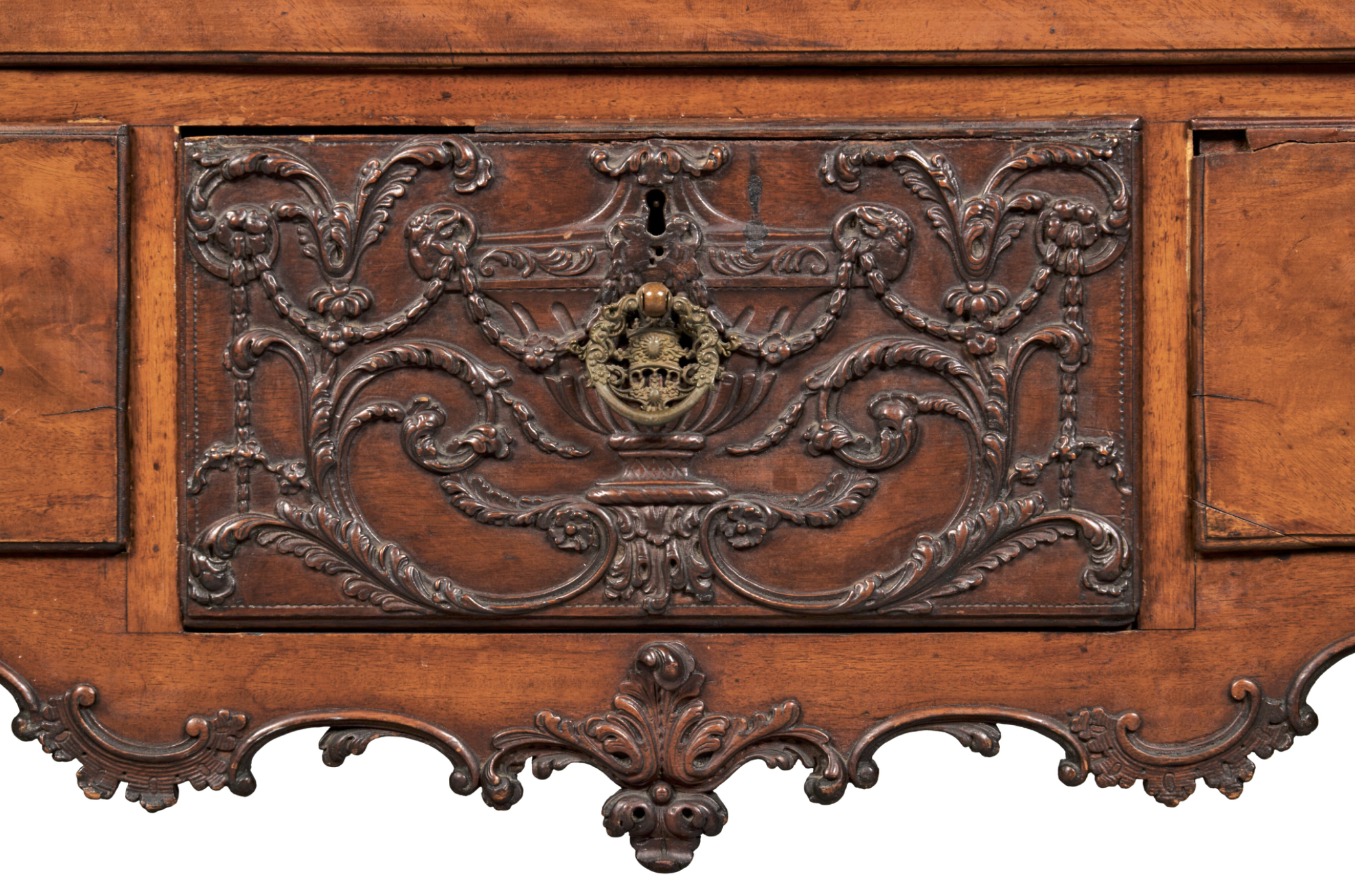
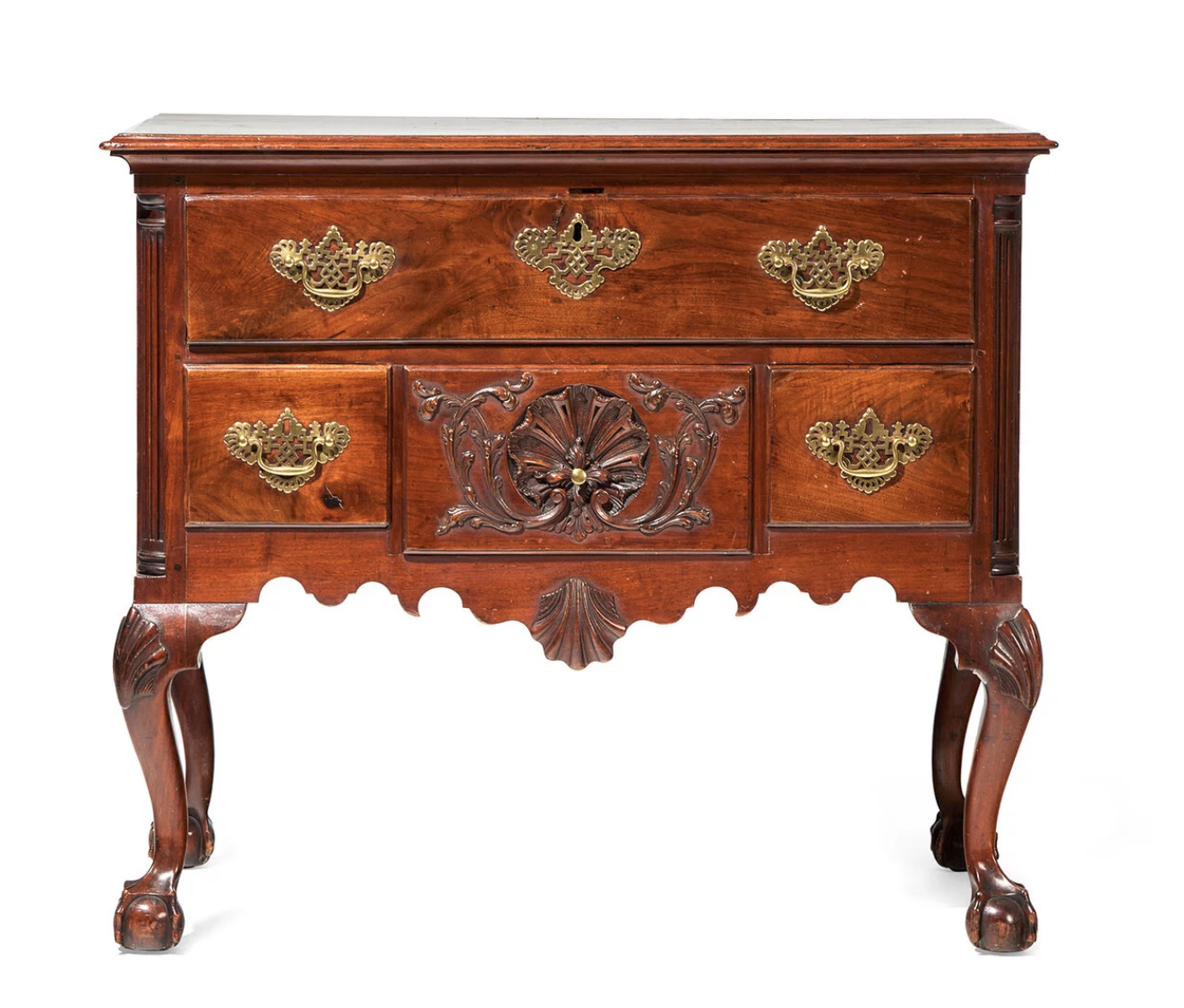
I’ll begin with what is being called the “Laird” family high chest base as it was owned by Mrs. William Winder Laird (Mary Alletta Belin DuPont Laird, 1878–1938) of Wilmington, Delaware in the first quarter of the 20th century when William Macpherson Hornor, Jr. had it photographed for his Blue Book of Philadelphia Furniture, published in 1935. It has not been published or written about since then. It’s not known how the Laird’s came by the high chest base though it is likely an object they collected rather than inherited. It is lot 111 in Sotheby’s “Important Americana” sale and can be found here. As it is the base to a high chest, the current wood top was added after the base and upper section were separated. A band of fret from above the long drawer is missing. The brass pulls are said to be original with a fire-gilt coating. Though the majority of the carving along the bottom rail is carved from the solid, a small appliqué of wood laminated to increase thickness has been applied at the top of the central carved motif. If original, what an incredible survivor.
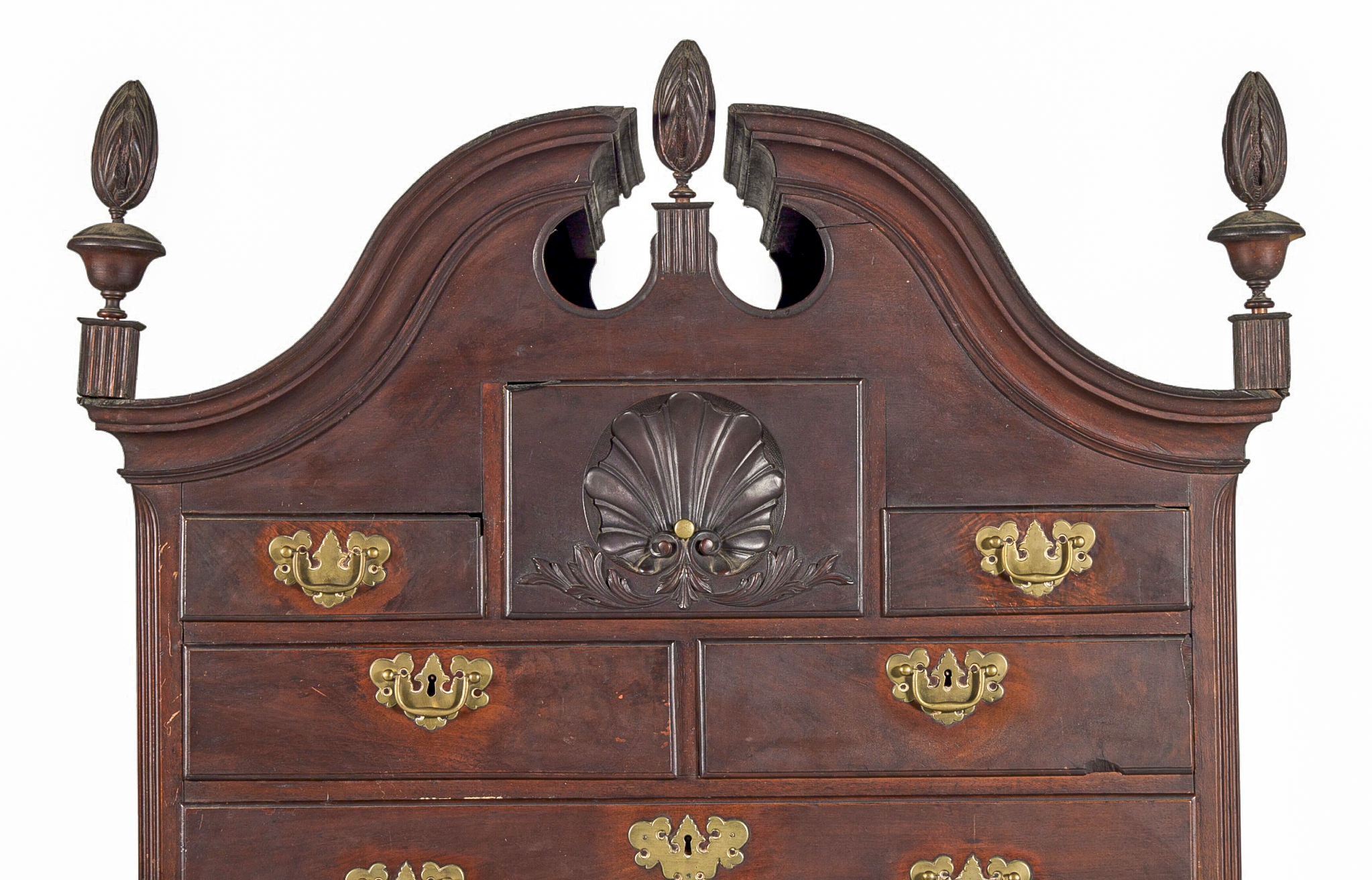
Next up at Sotheby’s is lot 78, a previously unpublished high chest that descended in the Reynell and Coates families of Philadelphia. In auction house speak it has survived “untouched” which is code for having little to no restoration though obviously it has been “touched” constantly since it was made in the early 1750s. It has a few losses and there appears to be accumulations of multiple layers of varnish in various states of deterioration. It is “in the black,” which is marketplace speak for, well, having multiple layers of varnishes in various states of deterioration. Sotheby’s couldn’t come to a consenus in attributing the carving so it is an “and/or” attribution to Samuel Harding or Brian Wilkinson. Perhaps they could have included Brian’s father Anthony, who died in 1765 and was also a carver. The chest also is said to retain its original brass hardware. It can be found here.
A note on the possibly confusing dates given in the description of the chest. The dates for the joiner who the chest is attributed to, George Claypoole, Sr., are his birth and death dates – 1706-1793. The dates after Brian Wilkinson’s name are first, the earliest date his is known to have been working – 1748 – and second his death date, 1794.
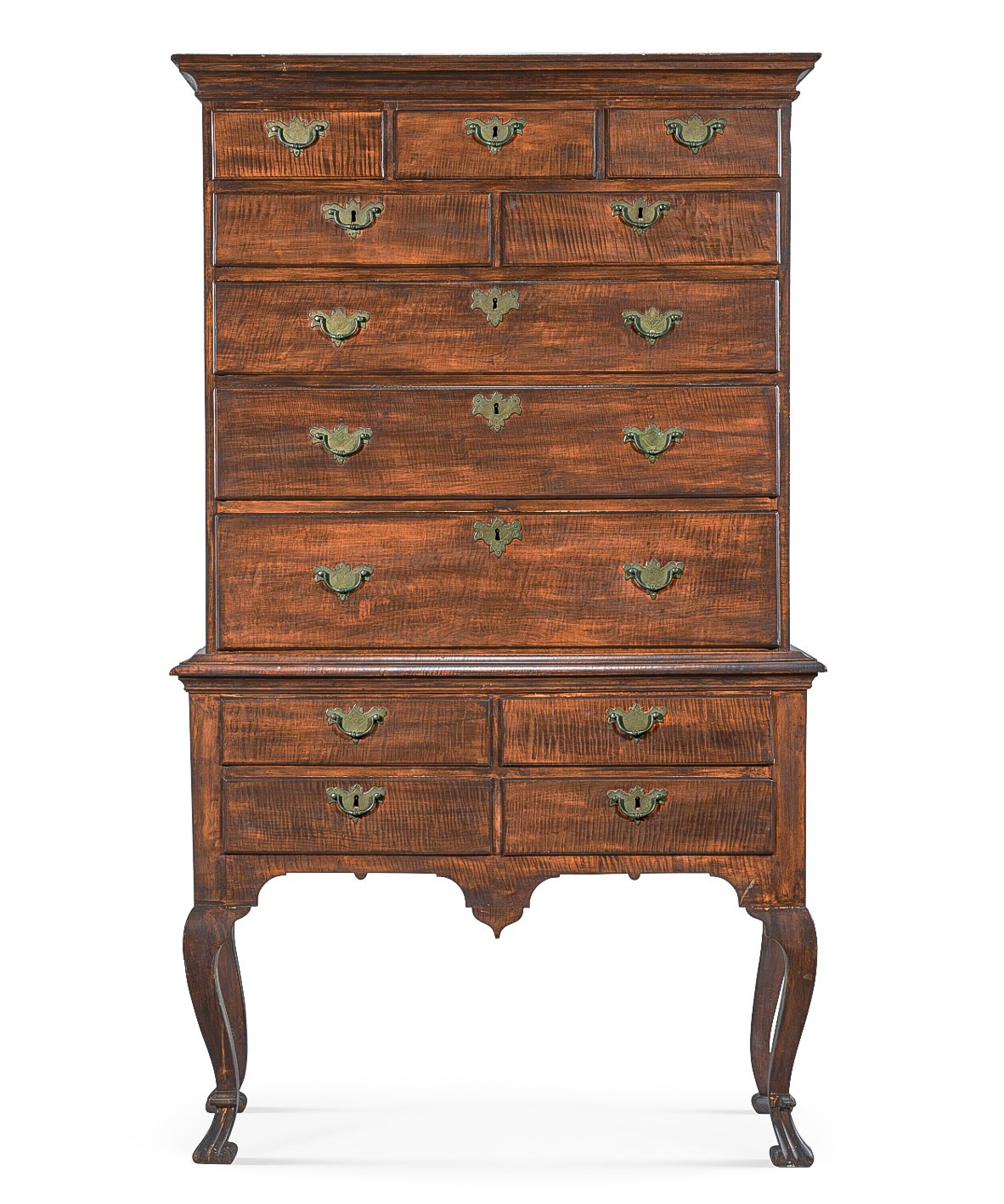
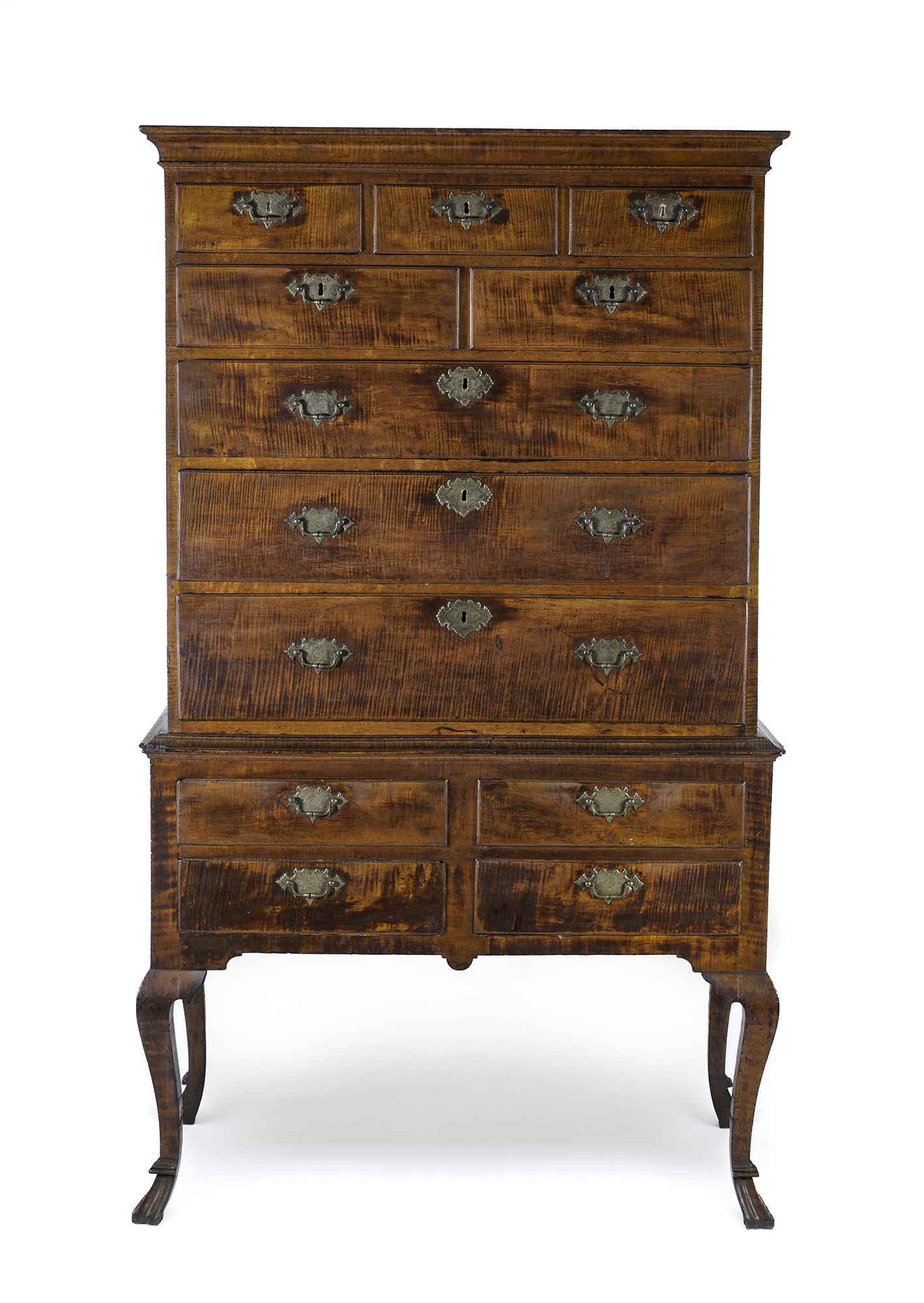
Down at Christie’s, lot 575 is a maple high chest made in Philadelphia c. 1745. I’ll be examining this chest to compare and contrast it to the maple high chest and dressing table at Stenton which I photographed this spring and I am continuing to research. It can be found here.
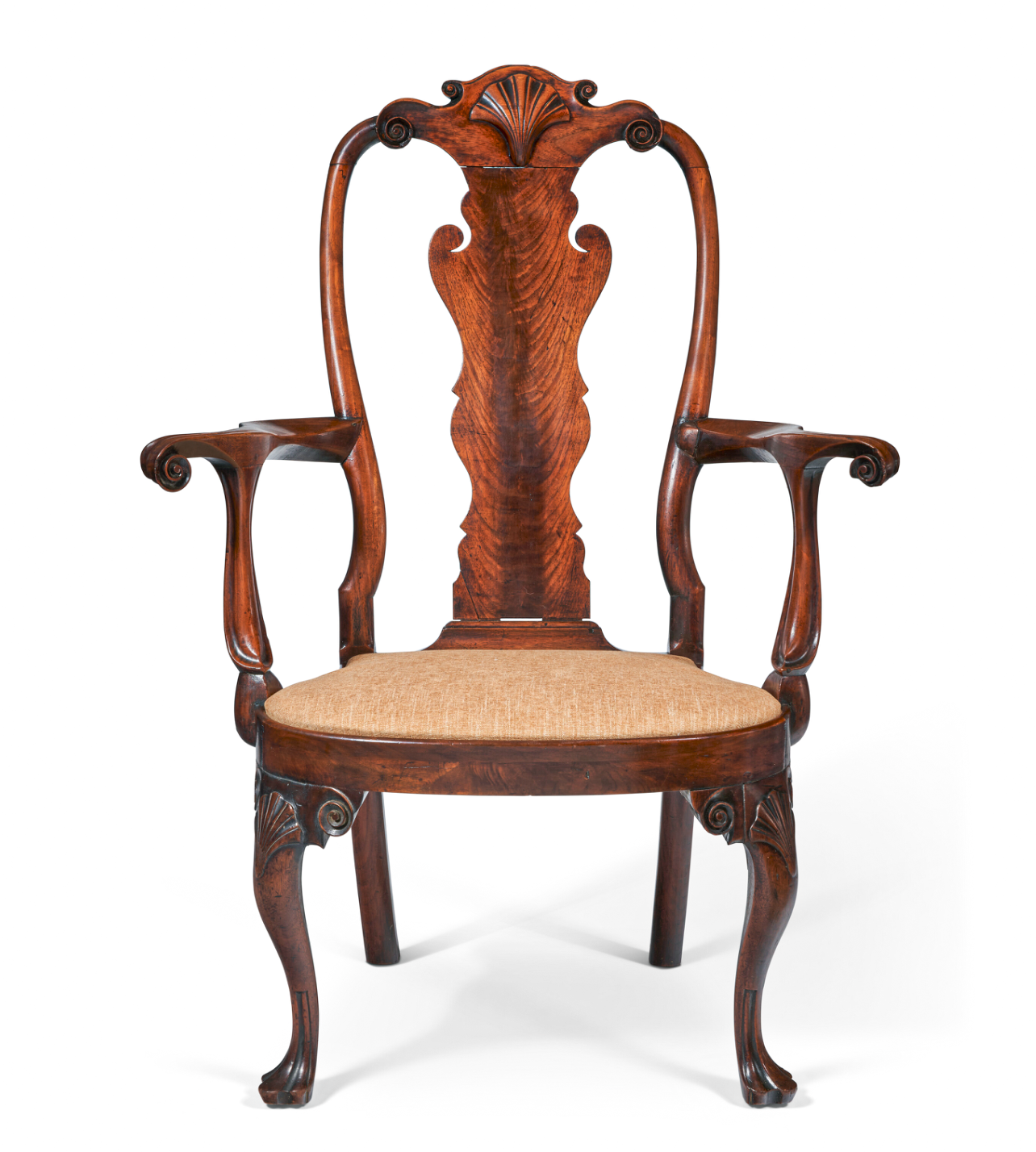
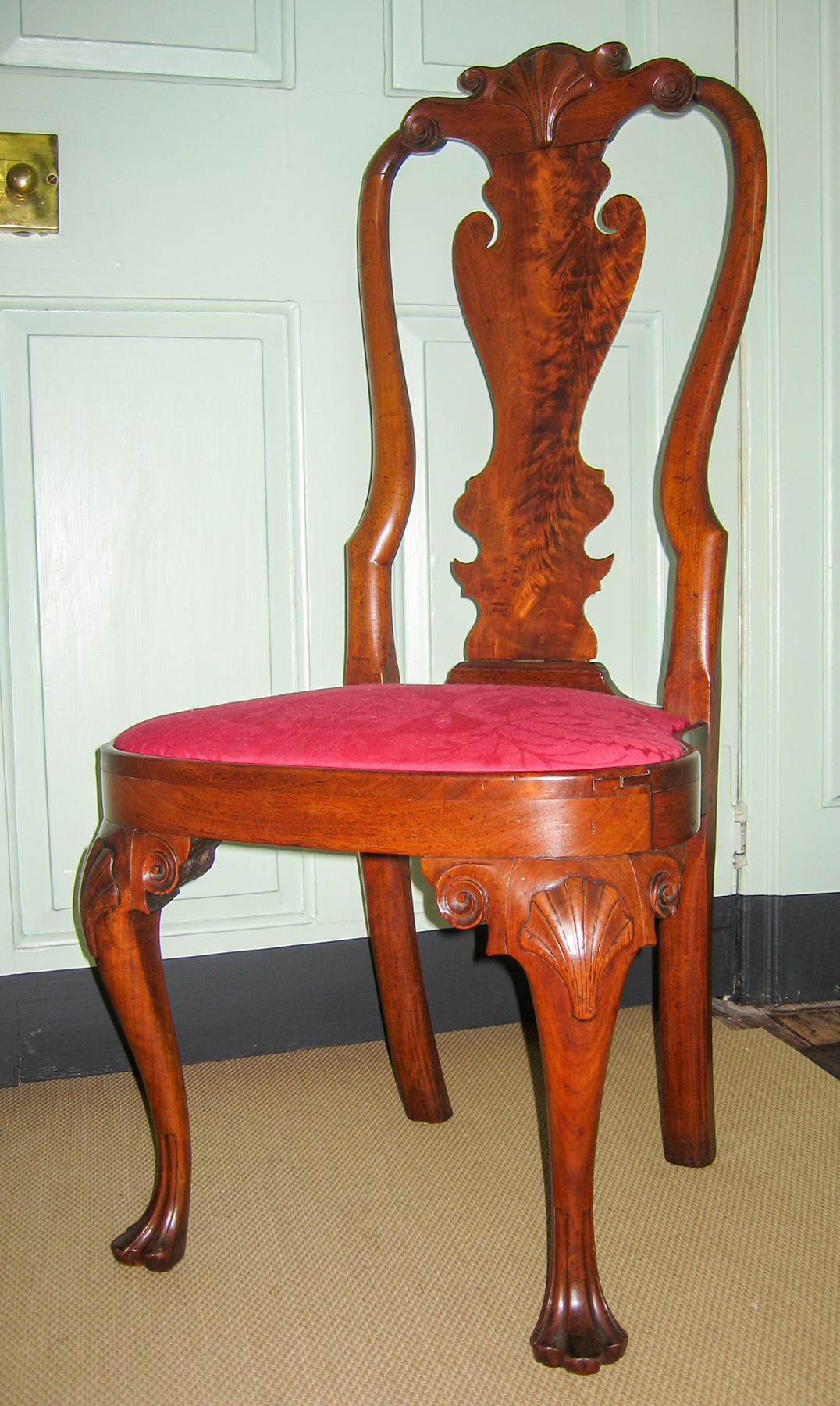
Also at Christie’s, lot 563 is another Philadelphia armchair from the only known set of compassed armchairs. I have previously written about this set of armchairs after examining one of the set that was on loan to Stenton last year. You can find those posts here and here. The chair for sale in January is marked II on both the interior surface of the rear seat rail and on the loose seat. The highest number of any of the surviving chairs is VIII. The newly discovered armchair shares design, construction, and wood choice with most of the other armchairs of the set including iron braces on the back of the joint at the juncture of the crest and stiles. Christie’s believes these iron braces are original to the armchairs though they do not give a reason for their conclusion. They suggest that they were “… perhaps added because of the chairs’ exceptional height …” though normal size side chairs from the same shop also have the iron braces. I’m going to go back and re-read all the auction catalogue entries for armchairs from this set as I’m not sure the very closely related side chairs have ever been mentioned. Similar braces on the side chairs counters the argument that the braces were added due to the great height of the armchairs. There is debate in the field about whether the braces are original or not, but no convincing arguments for either position have been made available. It can be noted that there is no damage to the chairs at the locations of the iron braces, they are not there to stabilize breaks in the joinery.
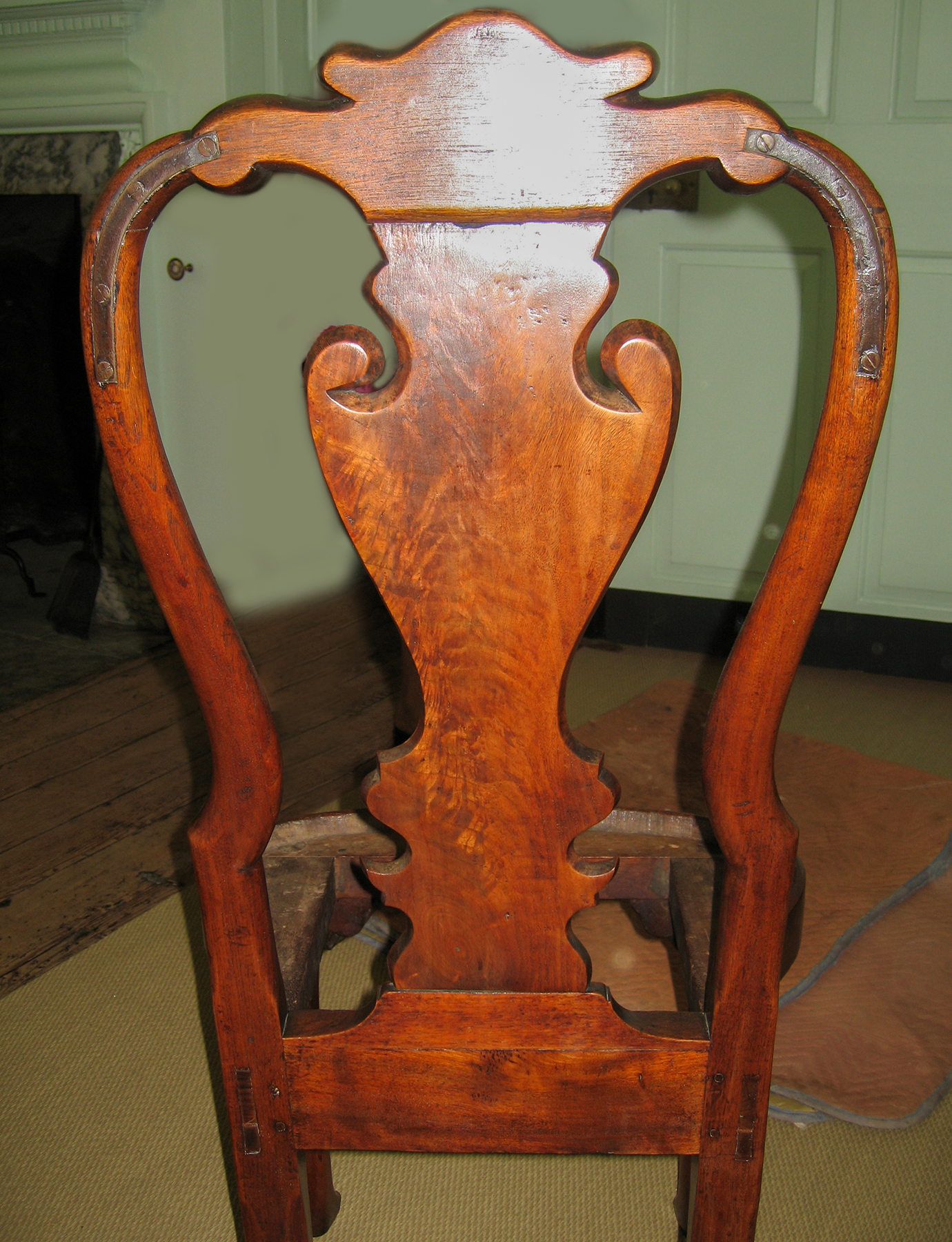
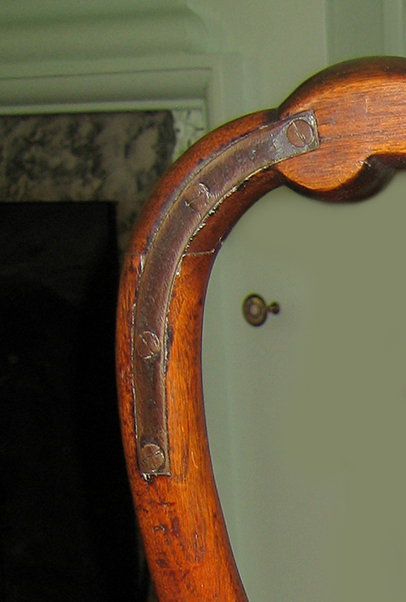
Unfortunately, as with the other chairs of the set, the provenance of the armchair at Christie’s does not help tracing the origin of the chairs. Ownership of several of the chairs can be traced back to the early nineteenth century but so far no common ancestry has been discovered.
Finally, the merger of the Freeman’s and Hindman auction houses accords both houses a New York presence for the first time. They are presenting a select group of objects in a single owner sale during Americana Week. An overview of the sale can be seen here.
 In Proportion to the Trouble
I remember seeing one of the matching side chairs having the iron bracing In the mid 1970s at the Sandor’s shop in New Hope. I believe they pictured it in one of their full page advertisements in “Antiques magazine.”
Yes, a couple of them are out there. Still some controversy about whether the iron braces are original but I think the thought is tipping towards them being original.
I recall the Sandor side chair coming up at Freeman’s. Due to the braces, there was much discussion as to whether the crest was replaced. We lacked Chris Storb’s expertise at the time!
jay
The \fact that so many others have turned up since then, including the rare set of armchairs helps. Something I can’t emphasize enough is the insights that come from a furniture making and woodworking background. I know the immense difficulty of cutting the channels for the iron braces and understand that they had to have been cut before the back of the stiles and crest were shaped and even before the chair was assembled.
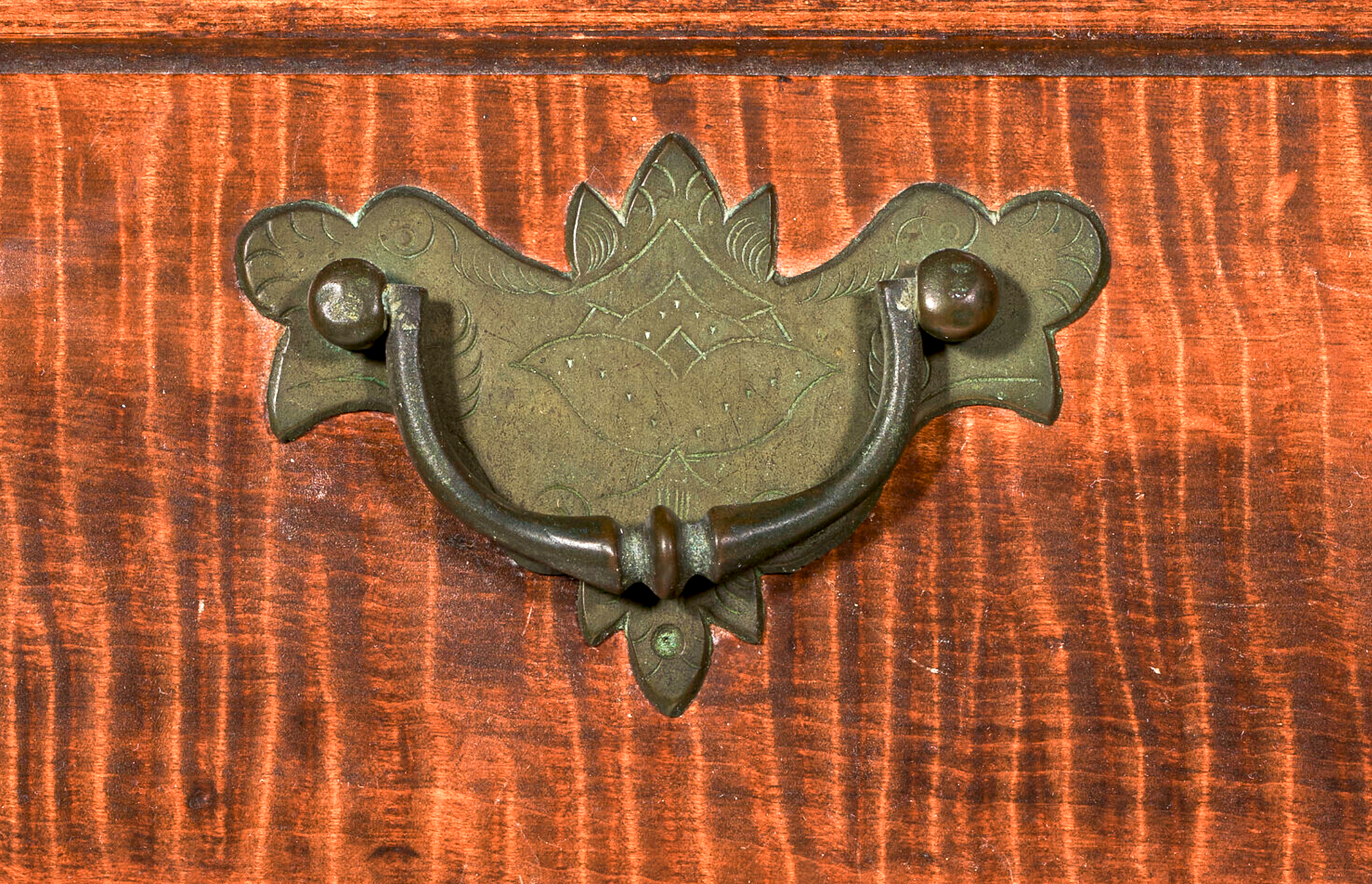
The shape and “lotus” motif engraving of the brasses on the maple high chest at Christie’s differ from others I recall on other furniture or in British pattern books. I wonder whether they might have been cast over here. Has anyone encountered them before?
jay
I haven’t sen that exact pattern before. With the complicated d-handle and the amount of stamping I have doubts it was made here. There would be no way of telling unless they are signed of the reverse. The brass pulls cast by Stow in Philadelphia a decade later that appear on a number of Philadelphia case pieces are distinctive in their thickness, they are noticeably thicker than English brass.
The D-handles may have been imported, but the outline of the plates seems stiff and crude in comparison to English brass plates with which I am familiar.
Good luck in finding a name on the back of the plates. Apart from those stamped “J•STOW,” I can’t recall any other brass plates stamped by local makers.
The D-handles may have been imported, but the outline of the plates seems stiff and crude in comparison to English brass plates with which I am familiar.
Good luck in finding a name on the back of the plates. Apart from those stamped “J•STOW,” I can’t recall any other brass plates stamped by local makers.