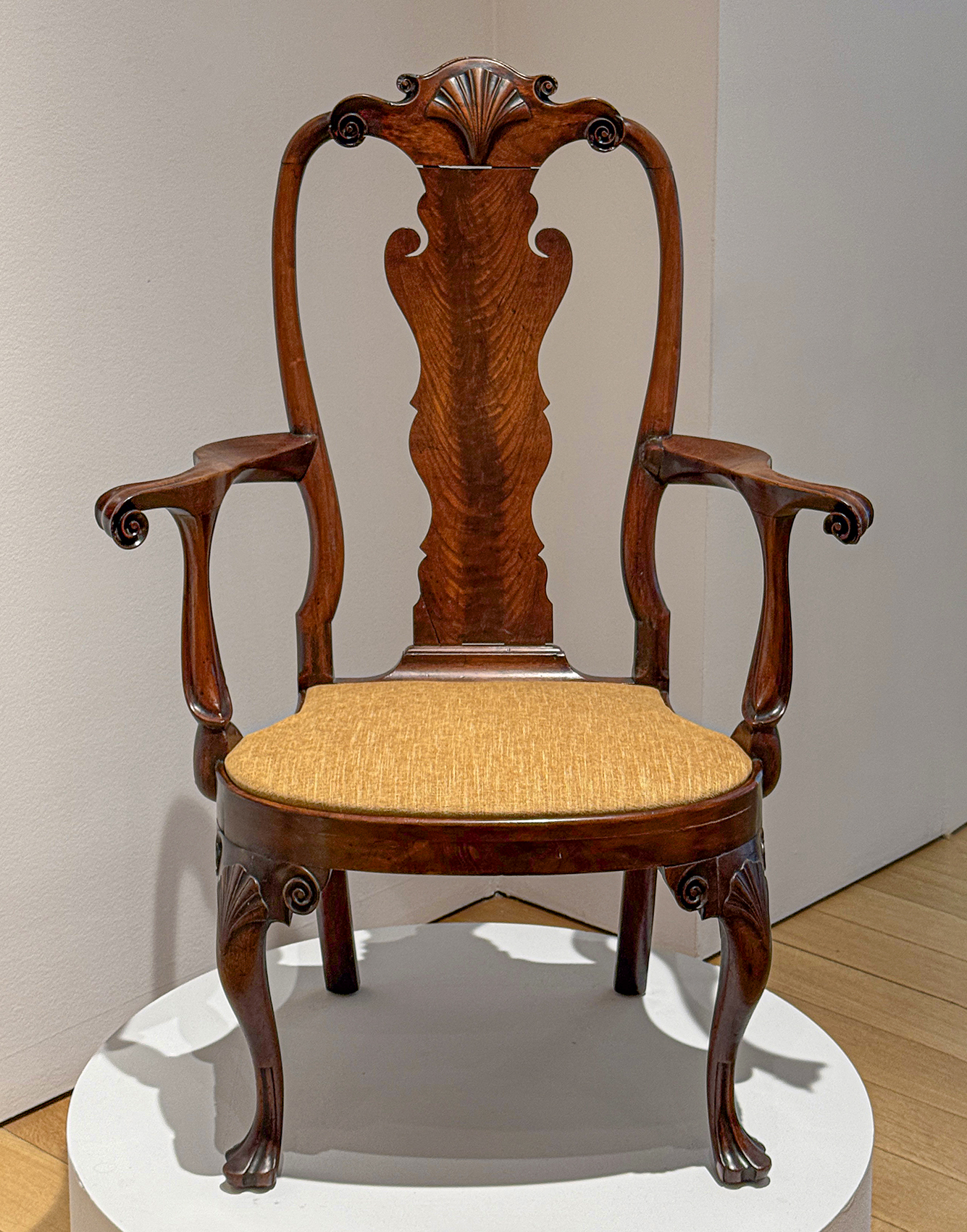
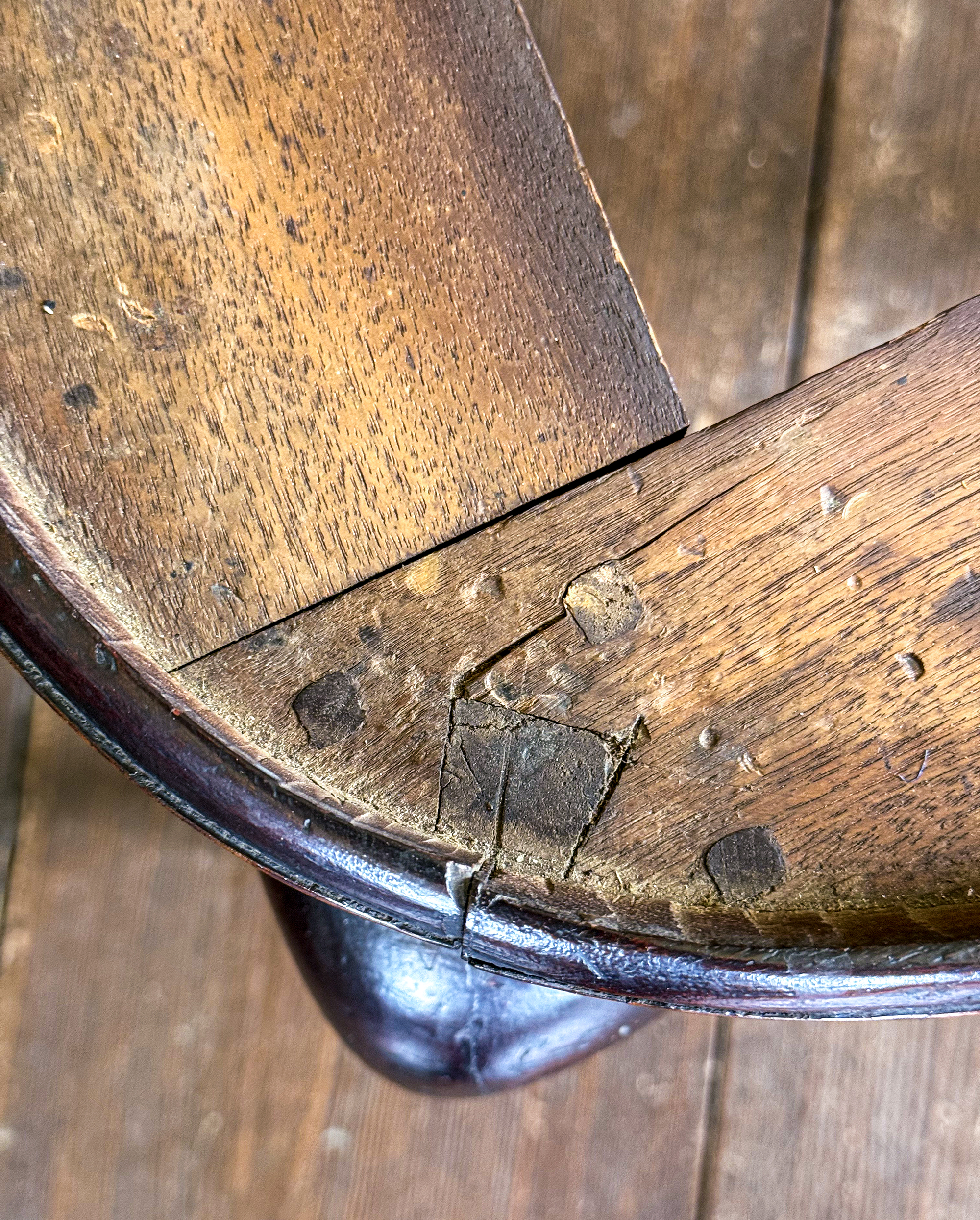
As mentioned in my post about January’s Americana Week, another armchair from the only known set of Philadelphia compassed armchairs was in Christie’s sale as lot 563. The loose seat is a modern reproduction. The front seat rim and one knee return are replaced. There are other repaired breaks throughout. The losses and repairs and refinished surface is not surprising knowing it had not been recognized as an important or valuable historic chair for some time. It was found last year in an Antique Mall in Pennsylvania and was later recognized for what it was based on the track record of the other chairs from the set that have sold recently. The chair then went to a restorers shop where the missing elements were recreated and the breaks repaired. A new loose seat frame was made and upholstered and the chair was sent to Christie’s for the January preview.
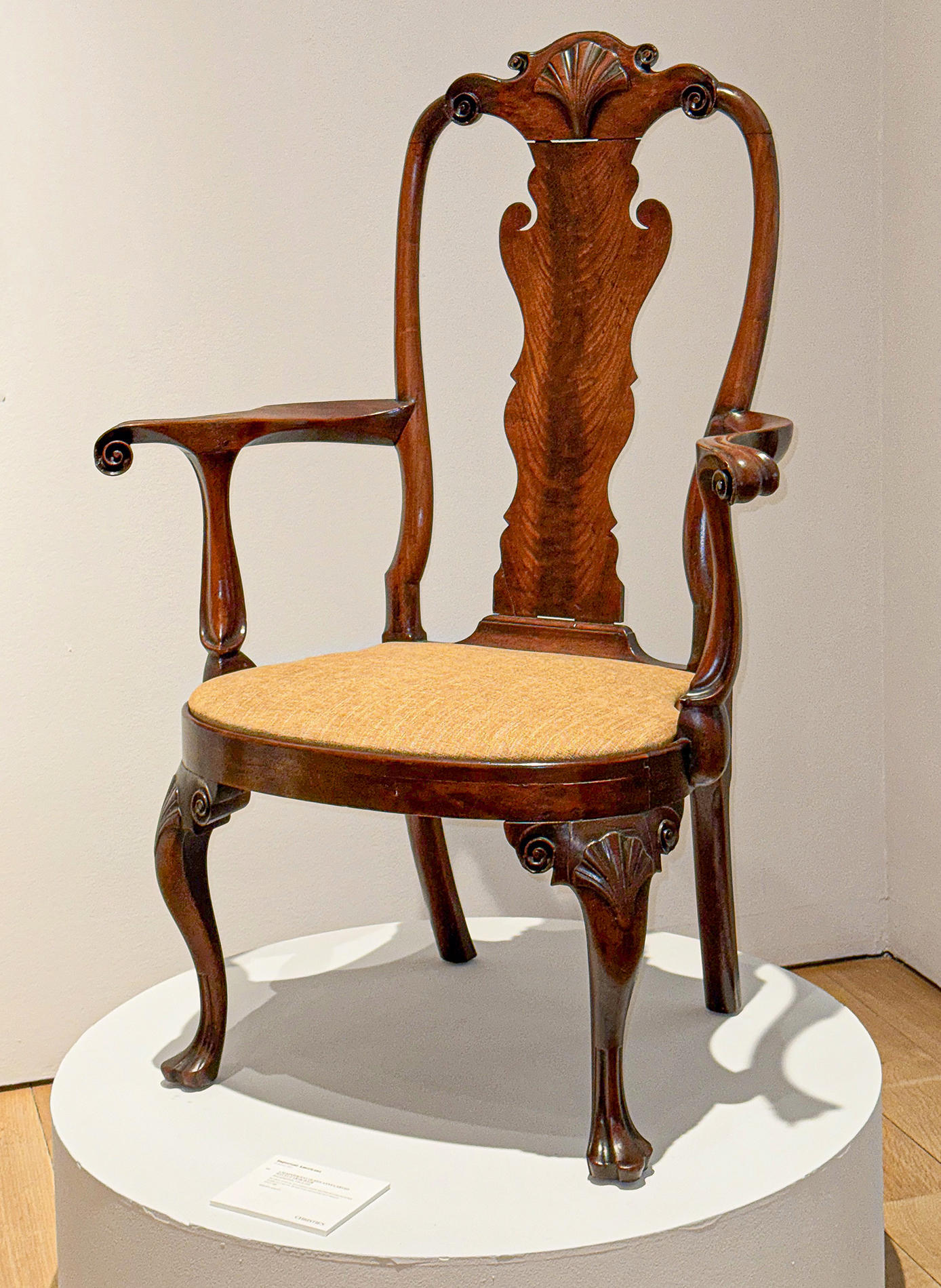
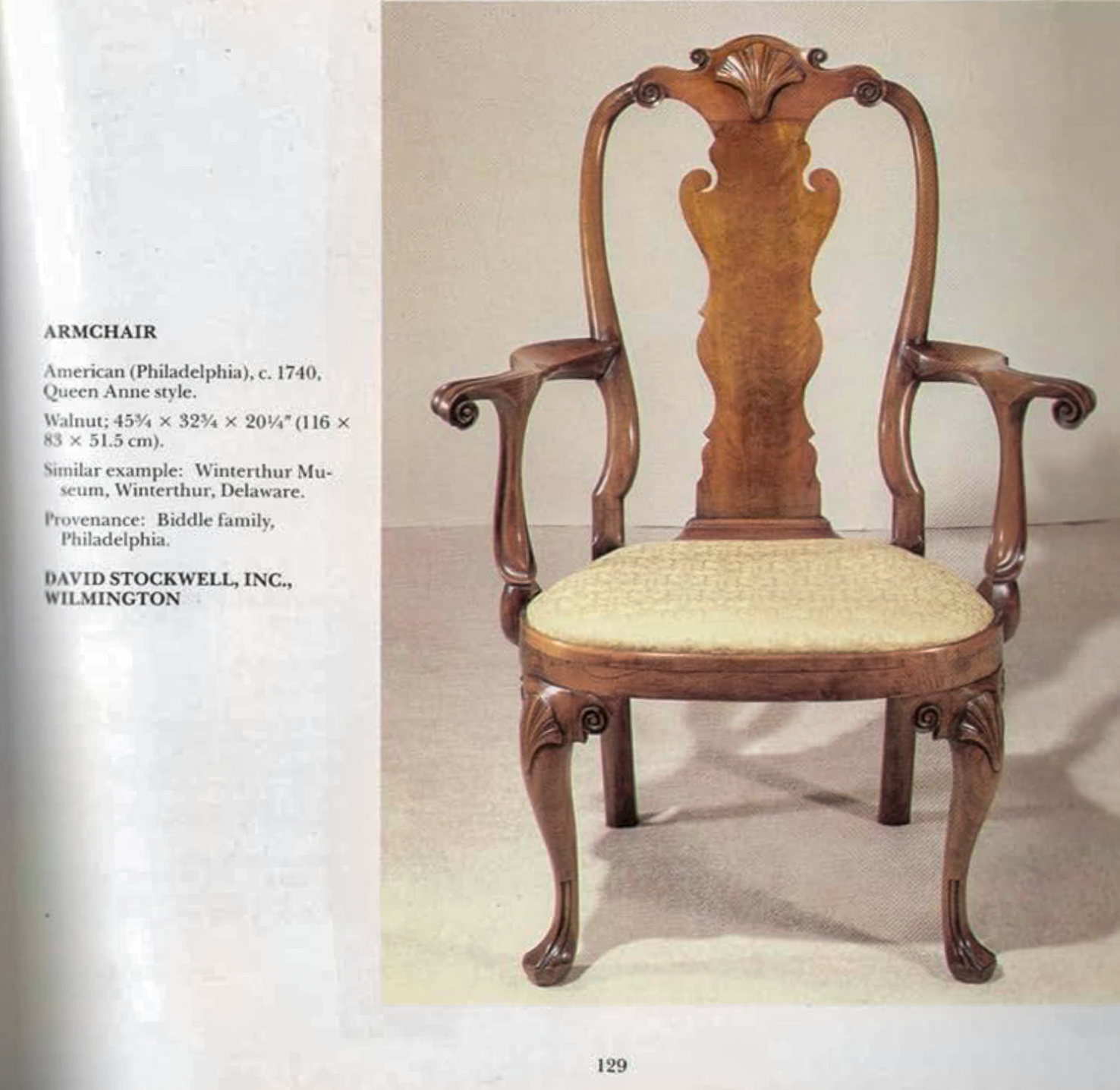
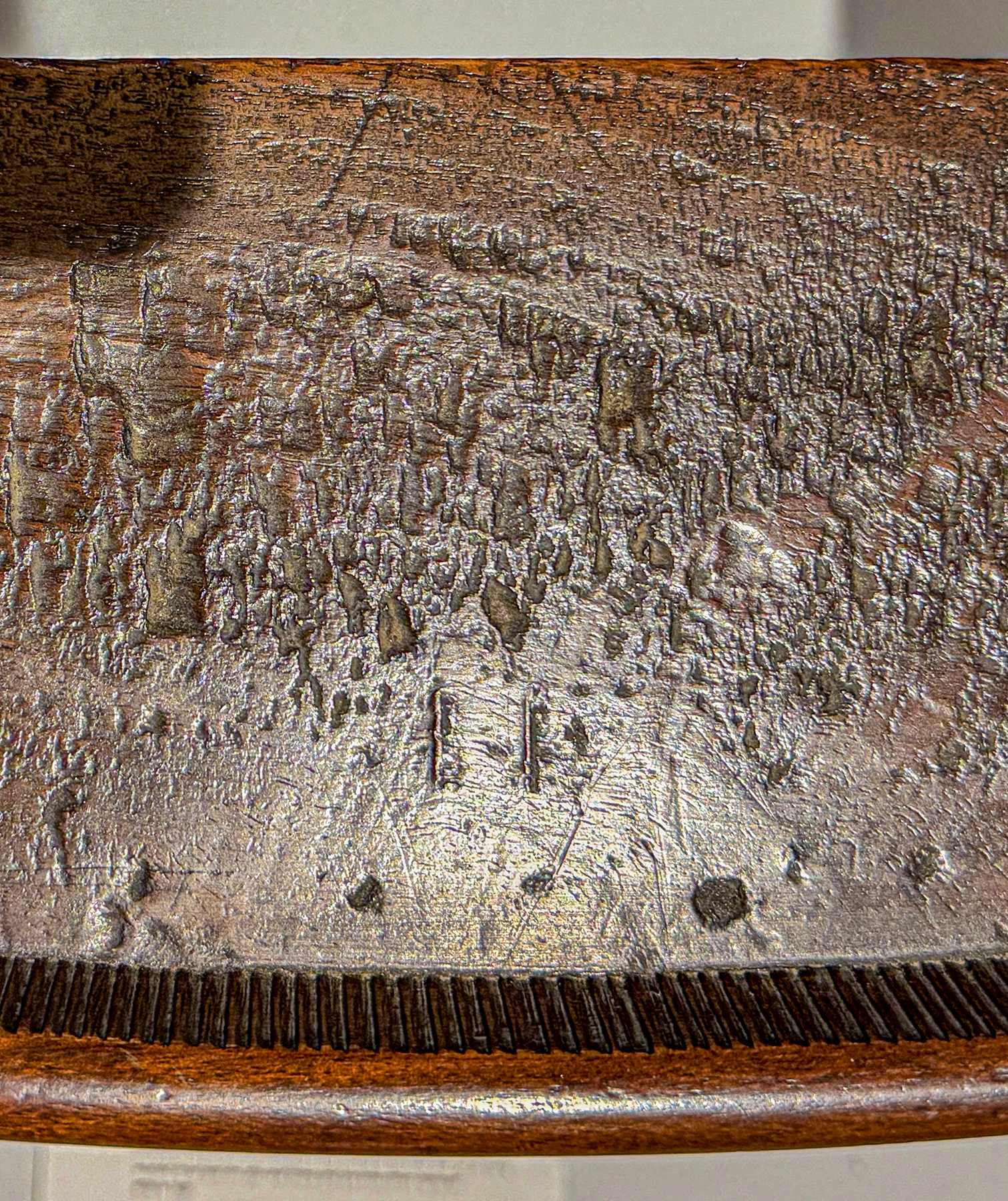
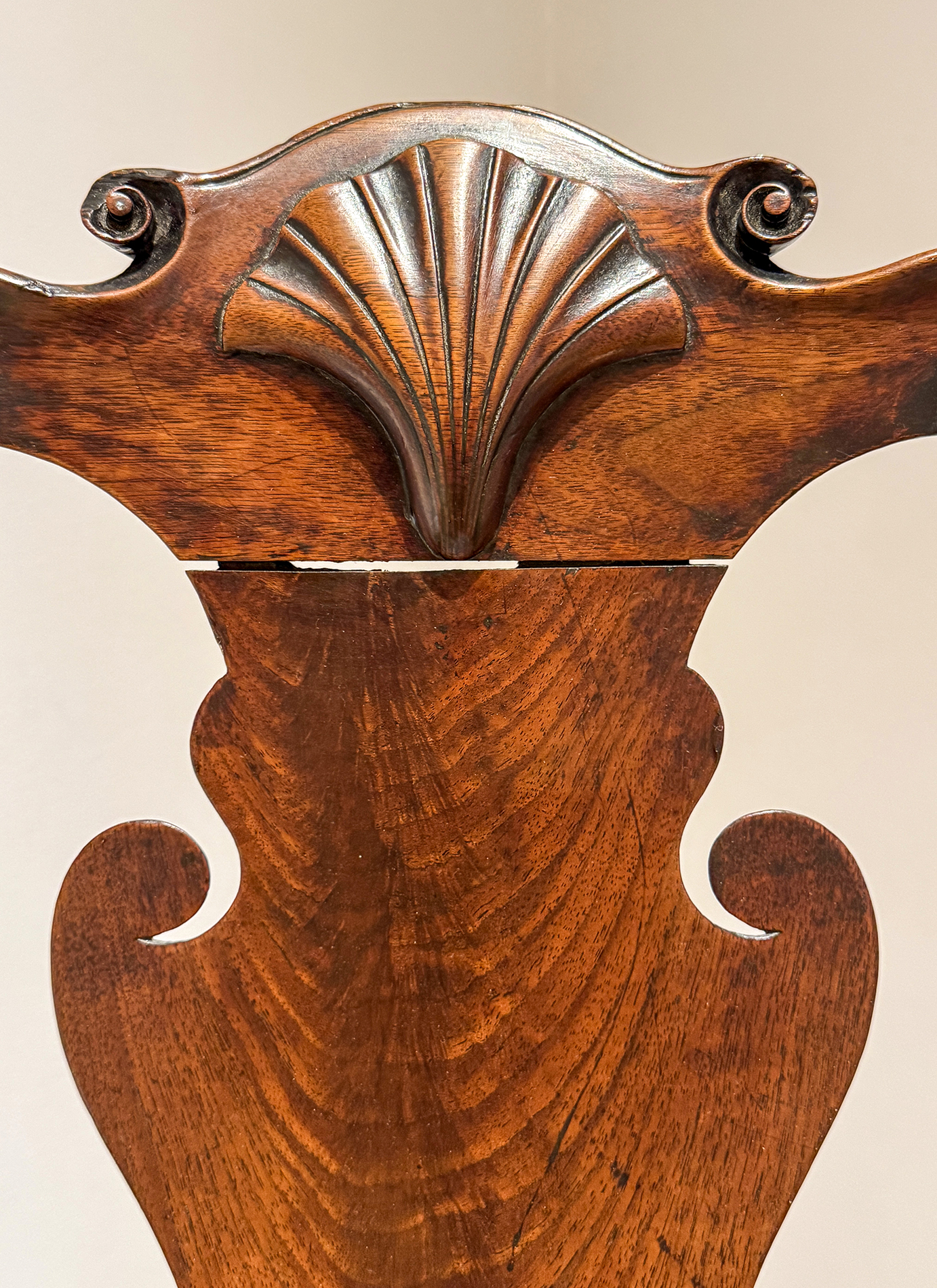
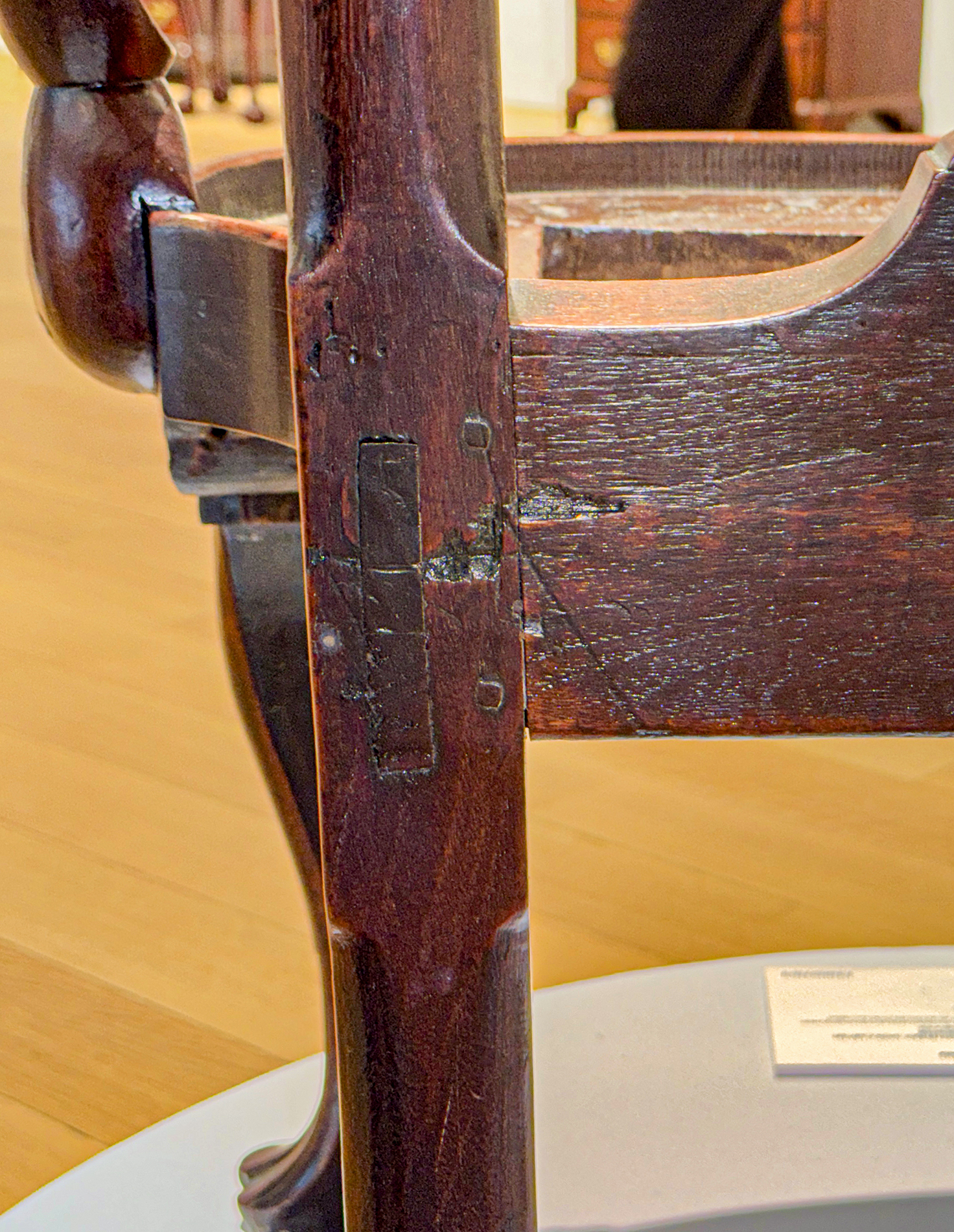
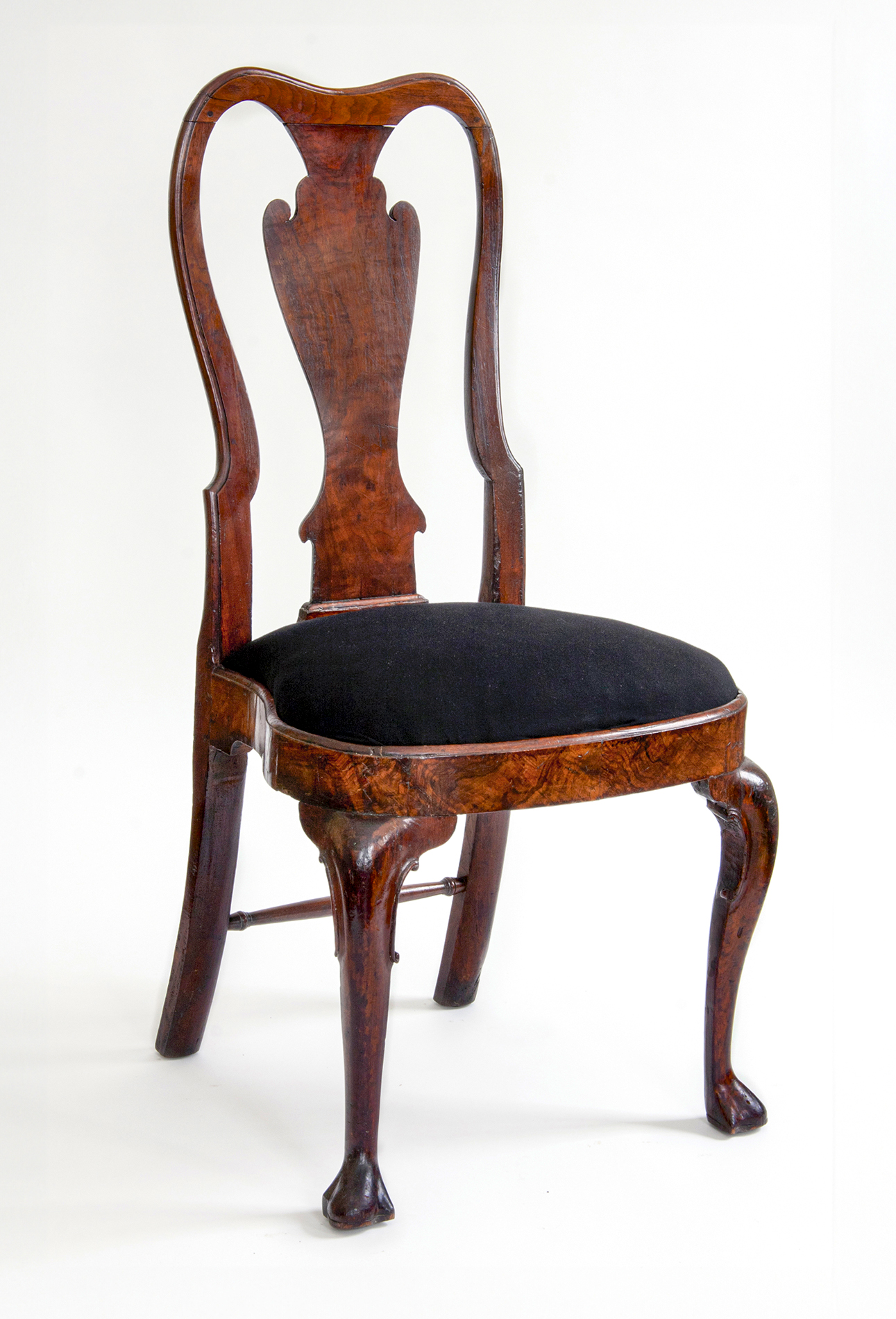
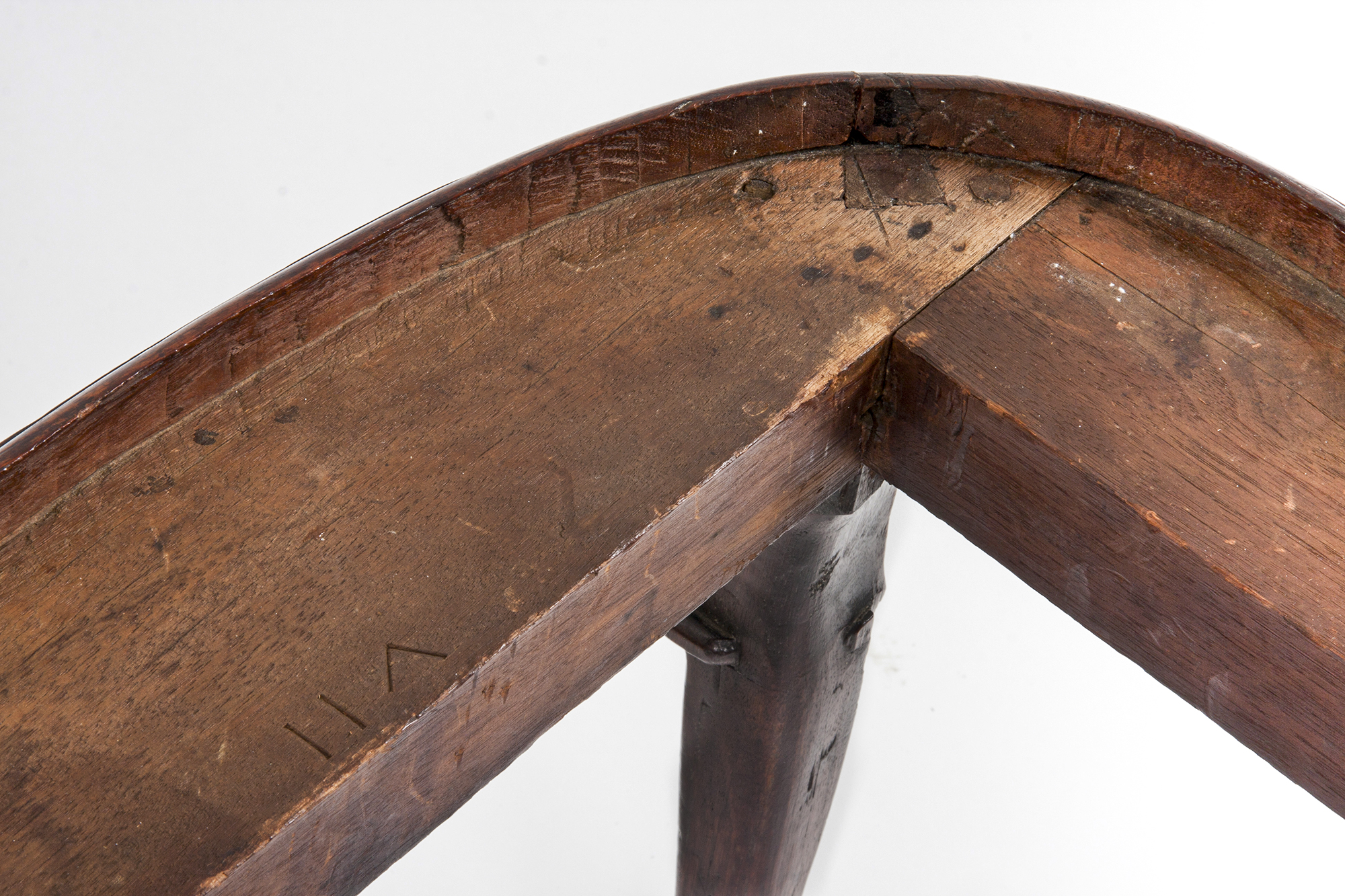
A group of early Philadelphia compassed chairs in the British manner, perhaps all from the same or closely related shops, have legs that are attached to the front seat rails with dovetails. The seat rails are covered with veneer concealing the joint at the front edge of the seat rail. A turned rear stretcher contributes structural support. These chairs do not have through tenons at the side seat rail to rear stile joint.
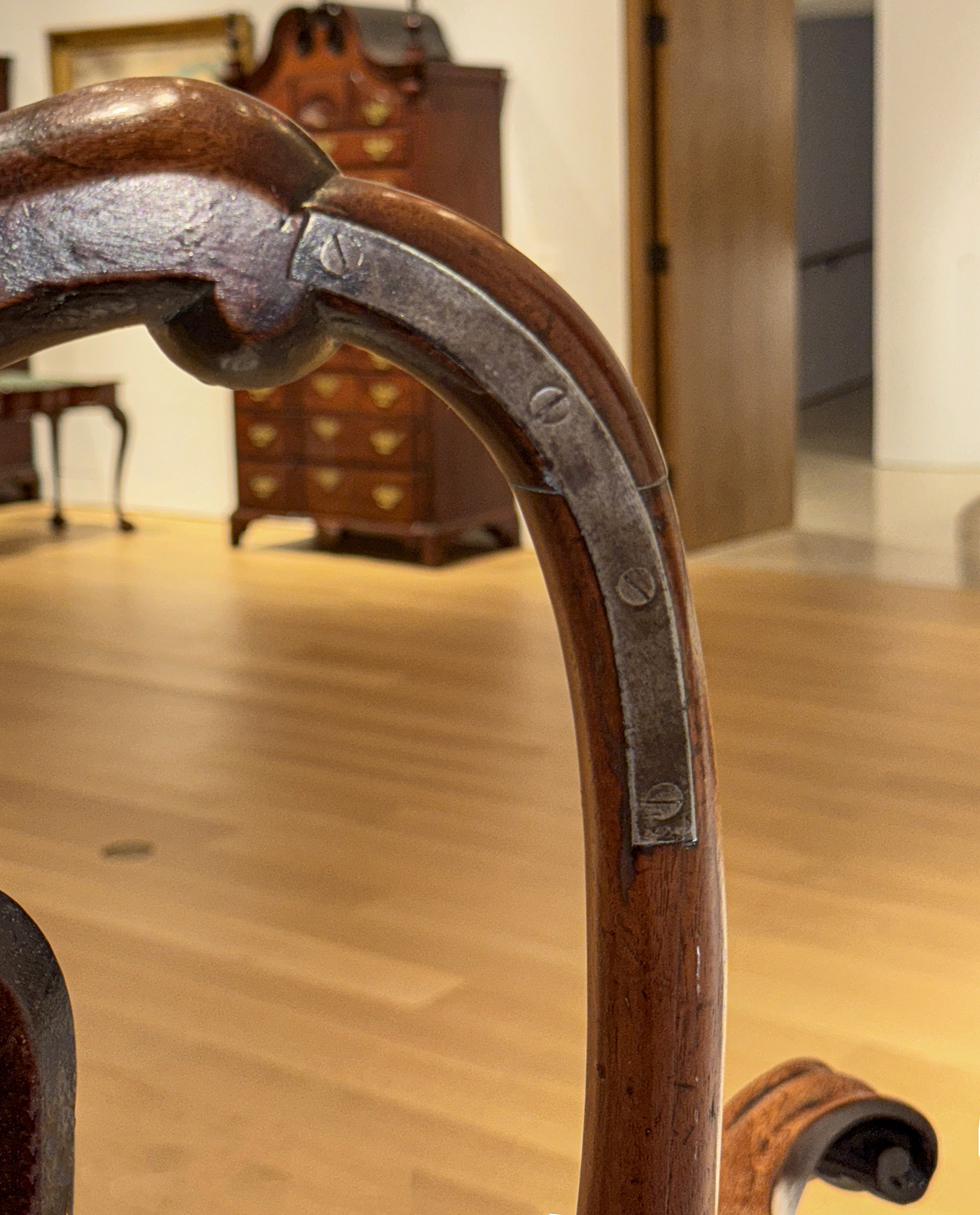
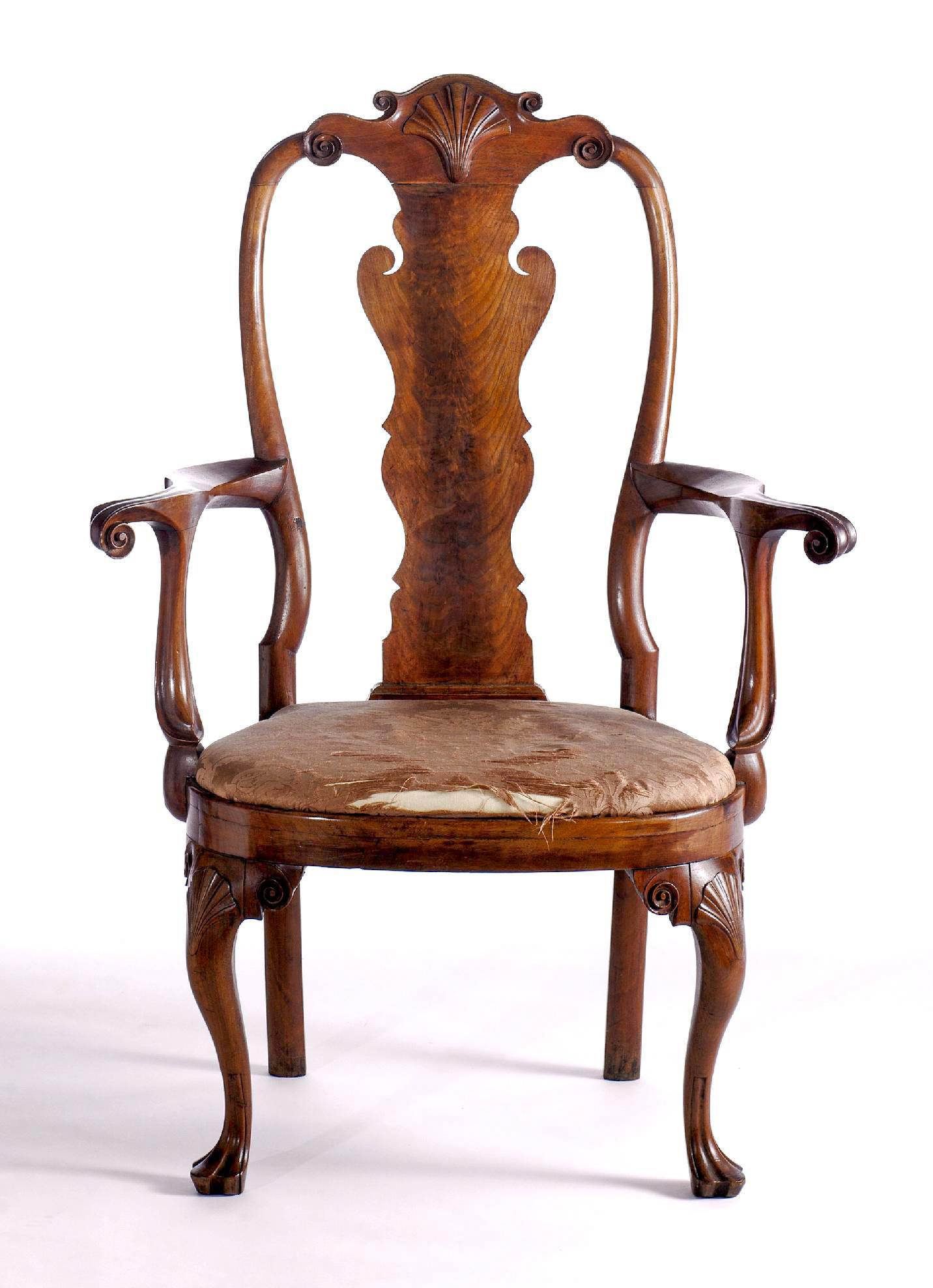
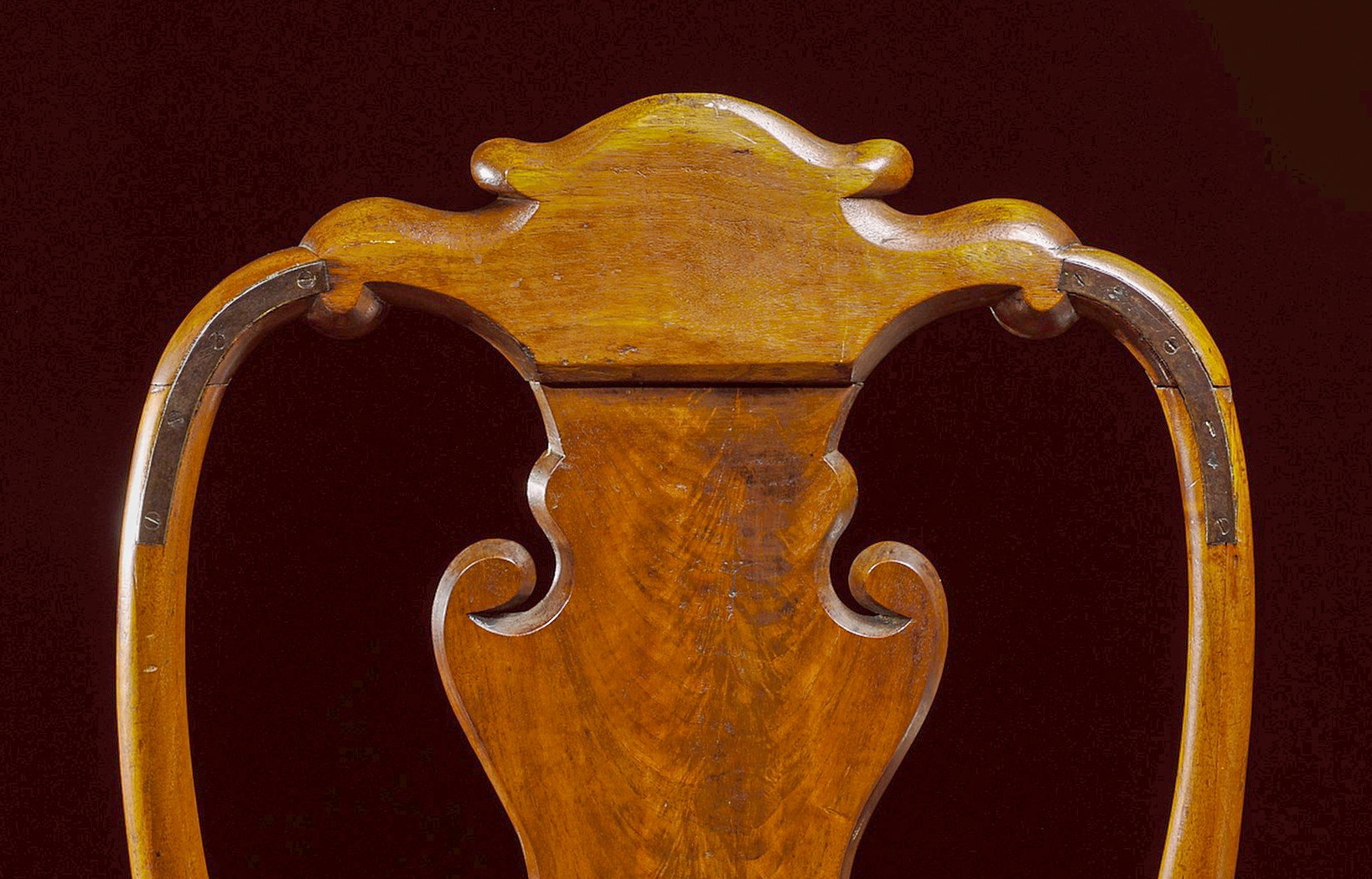
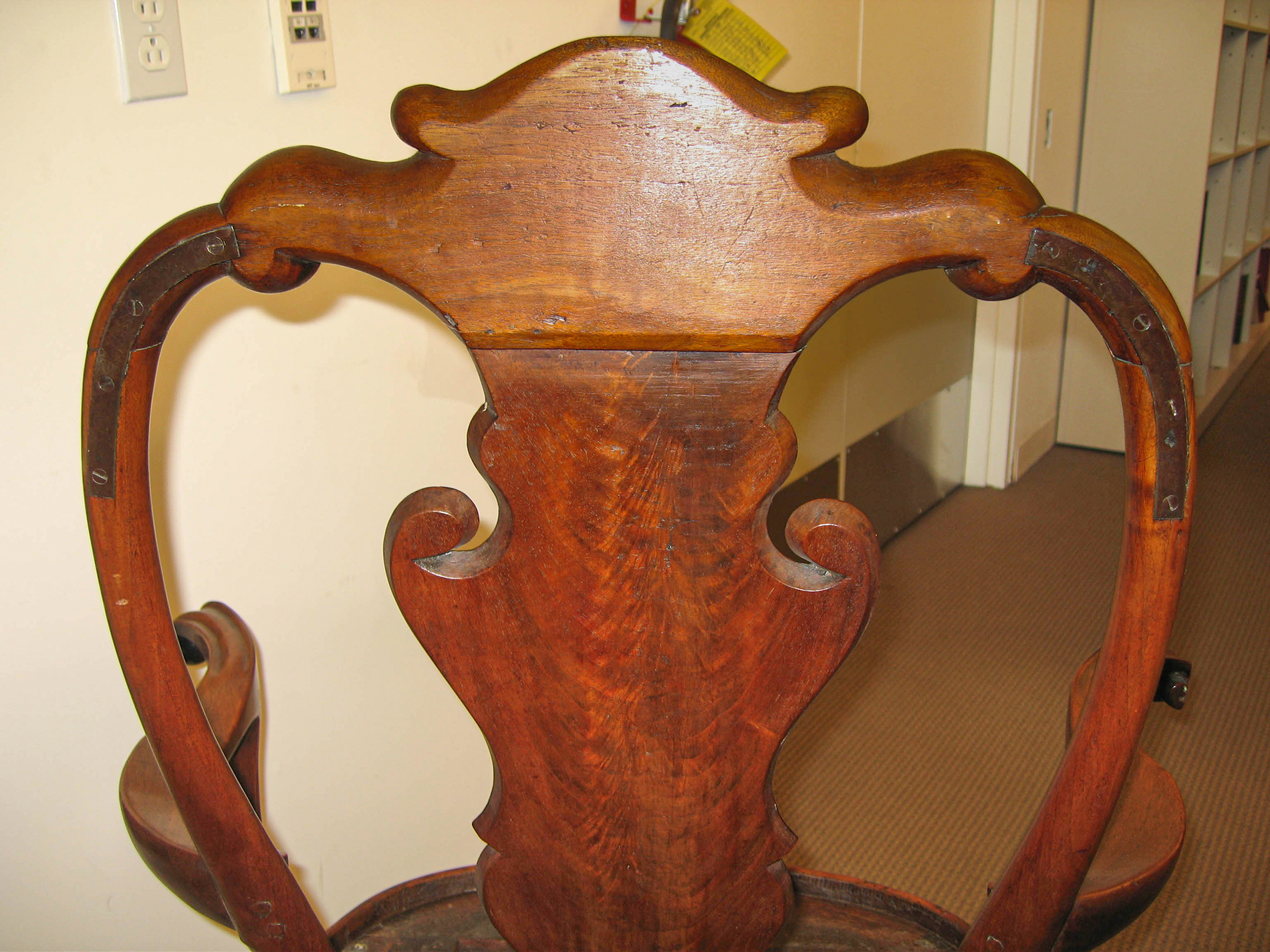
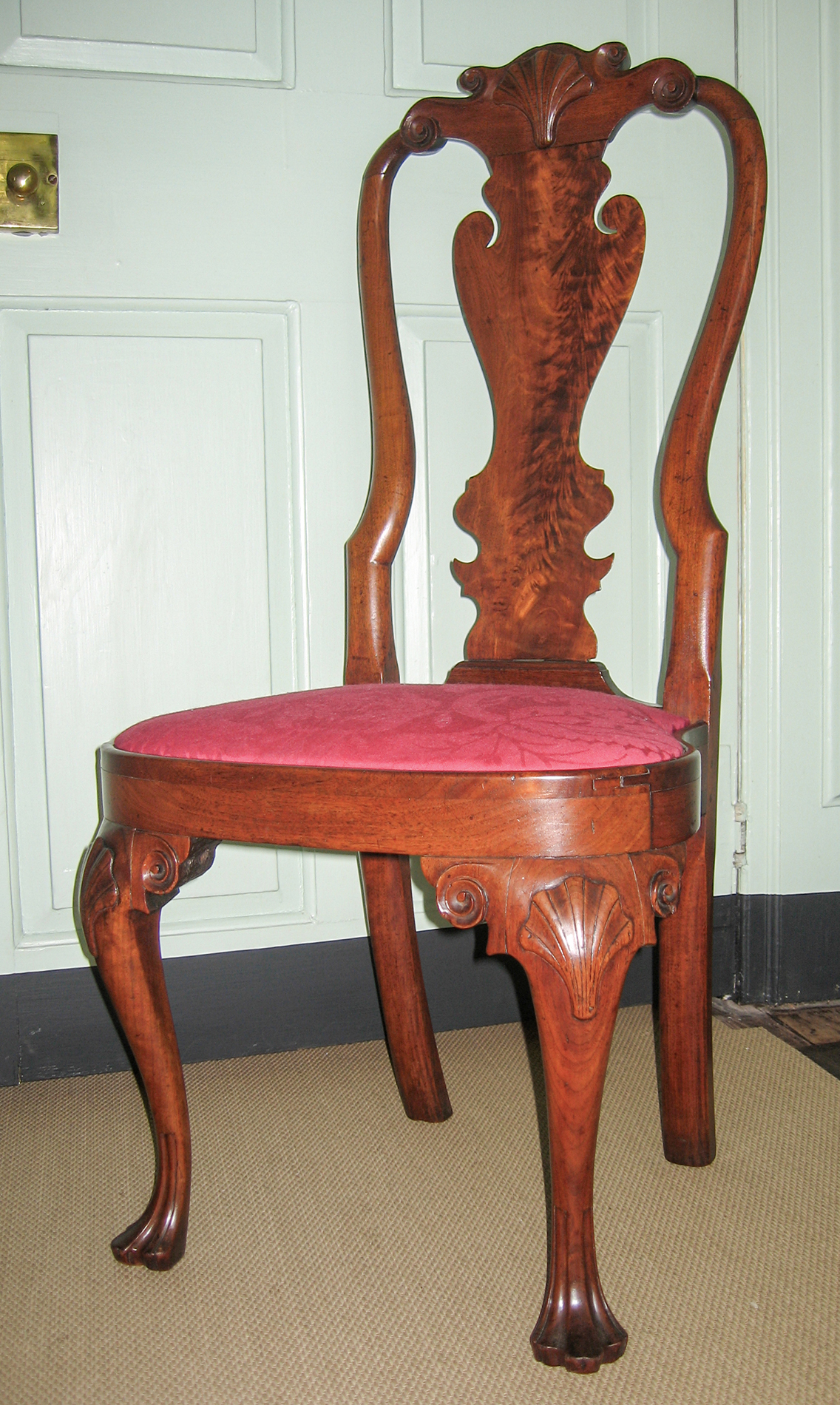
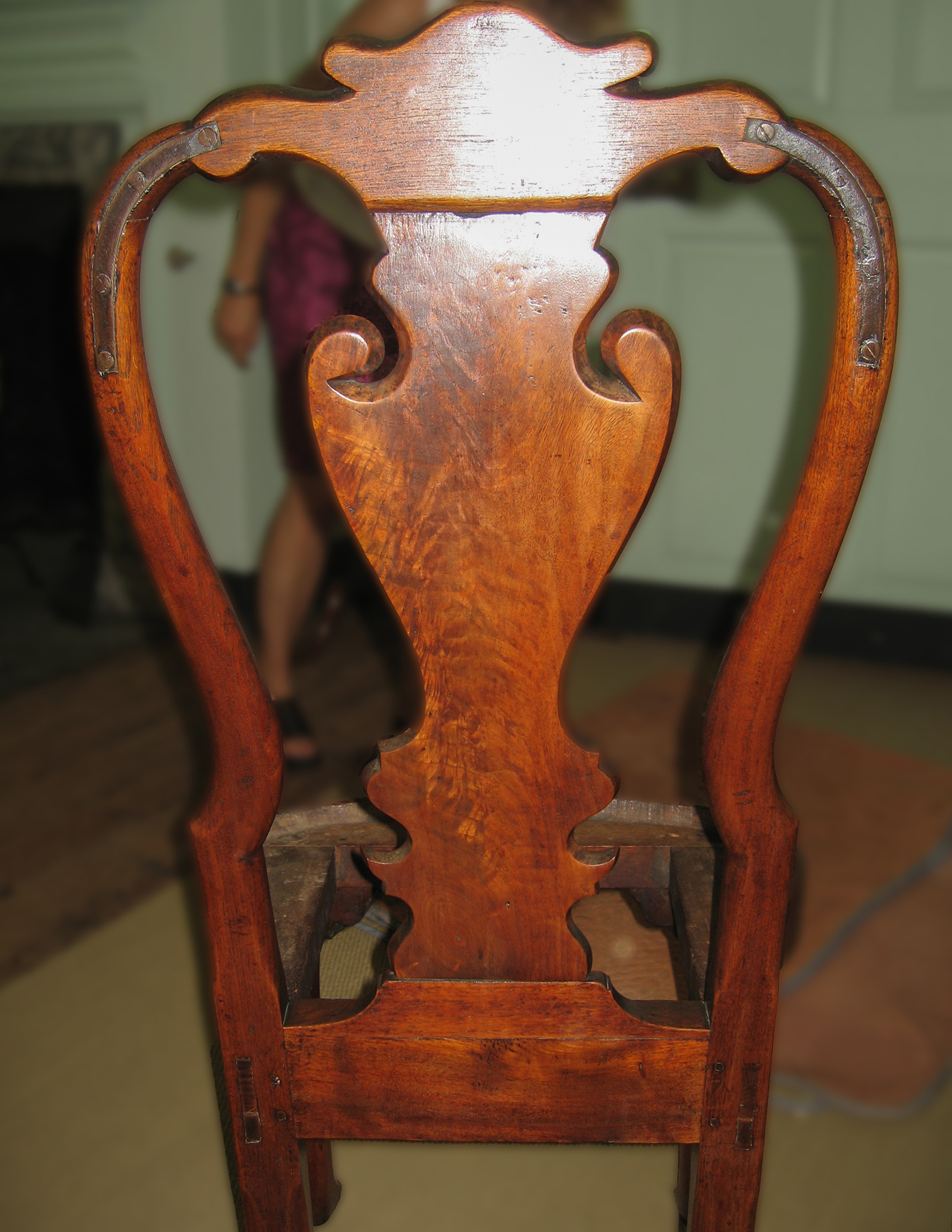
The known chairs from this set of side chairs all have iron braces that are indistinguishable to those on the armchairs. I will have more to say on this topic in another post, but note that all of the iron braces on the large ceremonial armchairs and the related side chairs are identical is size and placement and furthermore, none of these chairs has suffered damage at the joints the braces are intended to protect. These braces have been described as “repairs” and “misinterpreted” as original. While there are many instances of historical furniture having later repairs done with iron strapping of one kind or another, it seems unlikely this number of chairs, thought to have been separated at an early time in their history, should have exactly corresponding braces where no damage has occurred making the work of installing them at a later date superfluous.
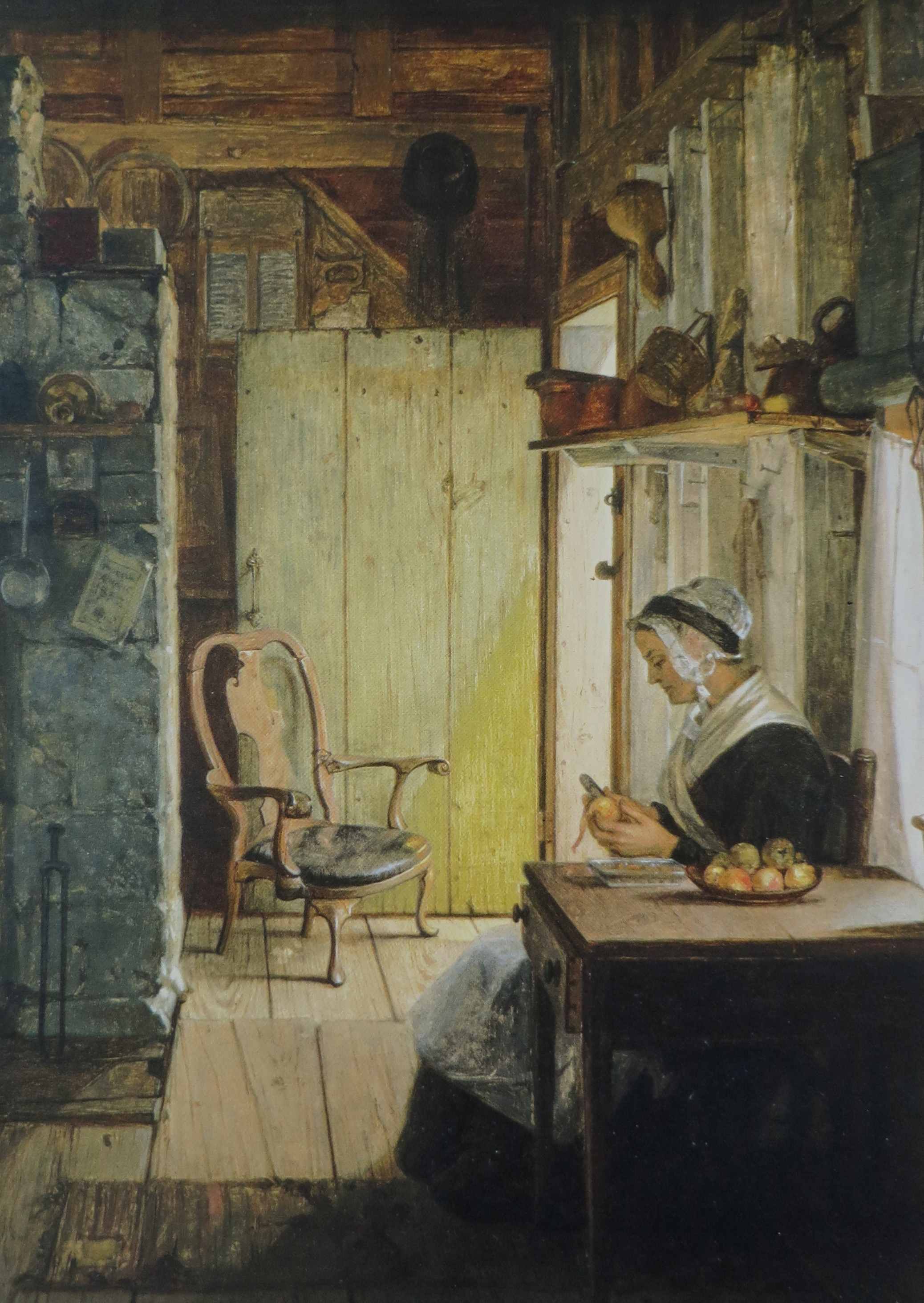
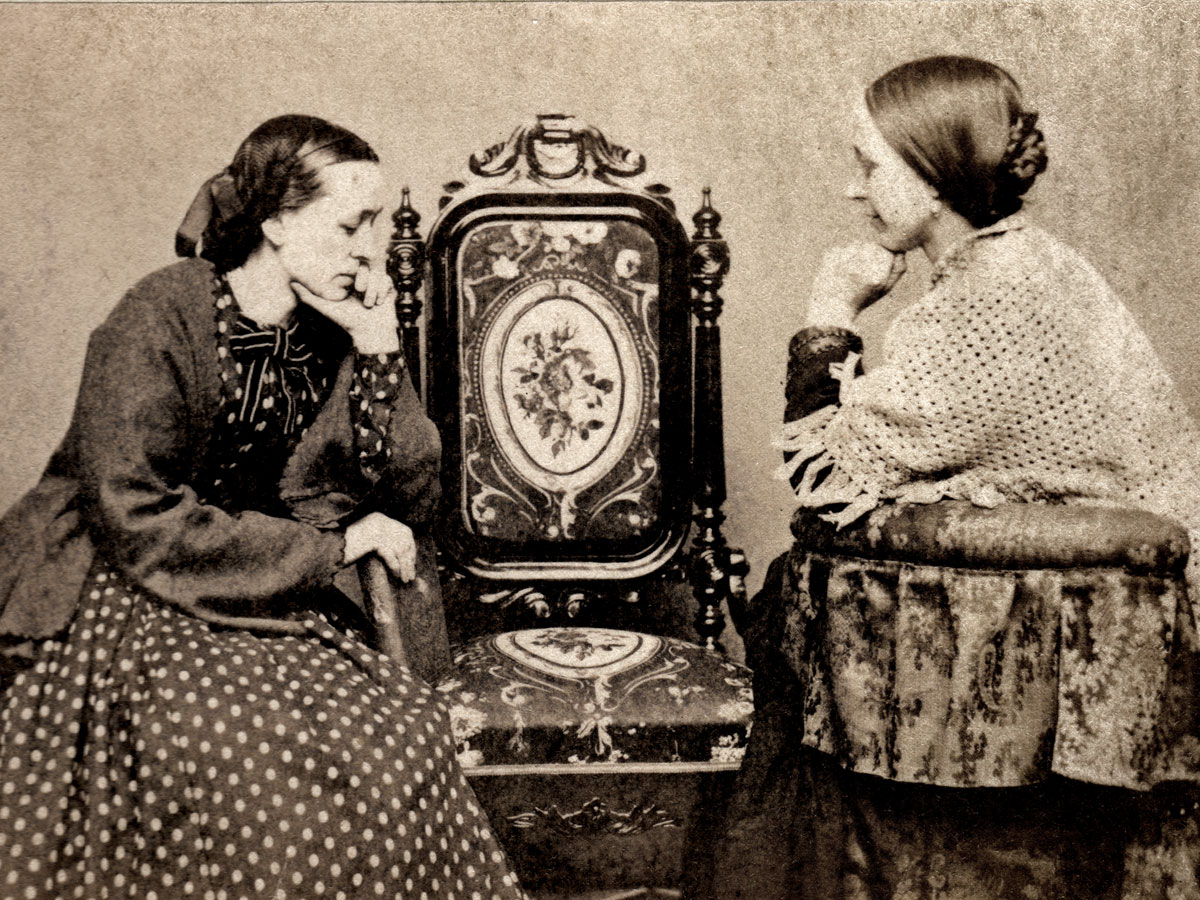
The Philadelphia compassed armchair depicted in Thomas Hicks’ painting above certainly has had its share of damage – probably a replaced crest rail, a large wood lose to the splat, one arm is being held on to the stile with bailing wire, and the seat rim is missing. Yet Hicks lovingly paints it bathed in light serving a function, propping open an exterior door. It has been written that the painting represents “romance and nostalgia for the past” in the early days of the Colonial Revival. That “Once a treasured heirloom but now an old-fashioned relic with a broken splat, the chair is a lingering reminder of a proud past.” But look again at the date of the painting. The long history of empty chairs depicted in paintings, needlework, and eventually photographs representing loss and remembrance suggests to me the painting is not necessarily nostalgic or lingering reminder of a romantic past but may be instead an act of honoring a missing family member, perhaps one of the hundreds of thousands of Union soldiers who died in the United States Civil War (1861-1865). It too, then, is a venerated armchair.
 In Proportion to the Trouble