The next Windsor form in chronological order by date in the Dietrich American Foundation collection is also the last Windsor acquired by H. Richard Dietrich Jr (1938-2007).
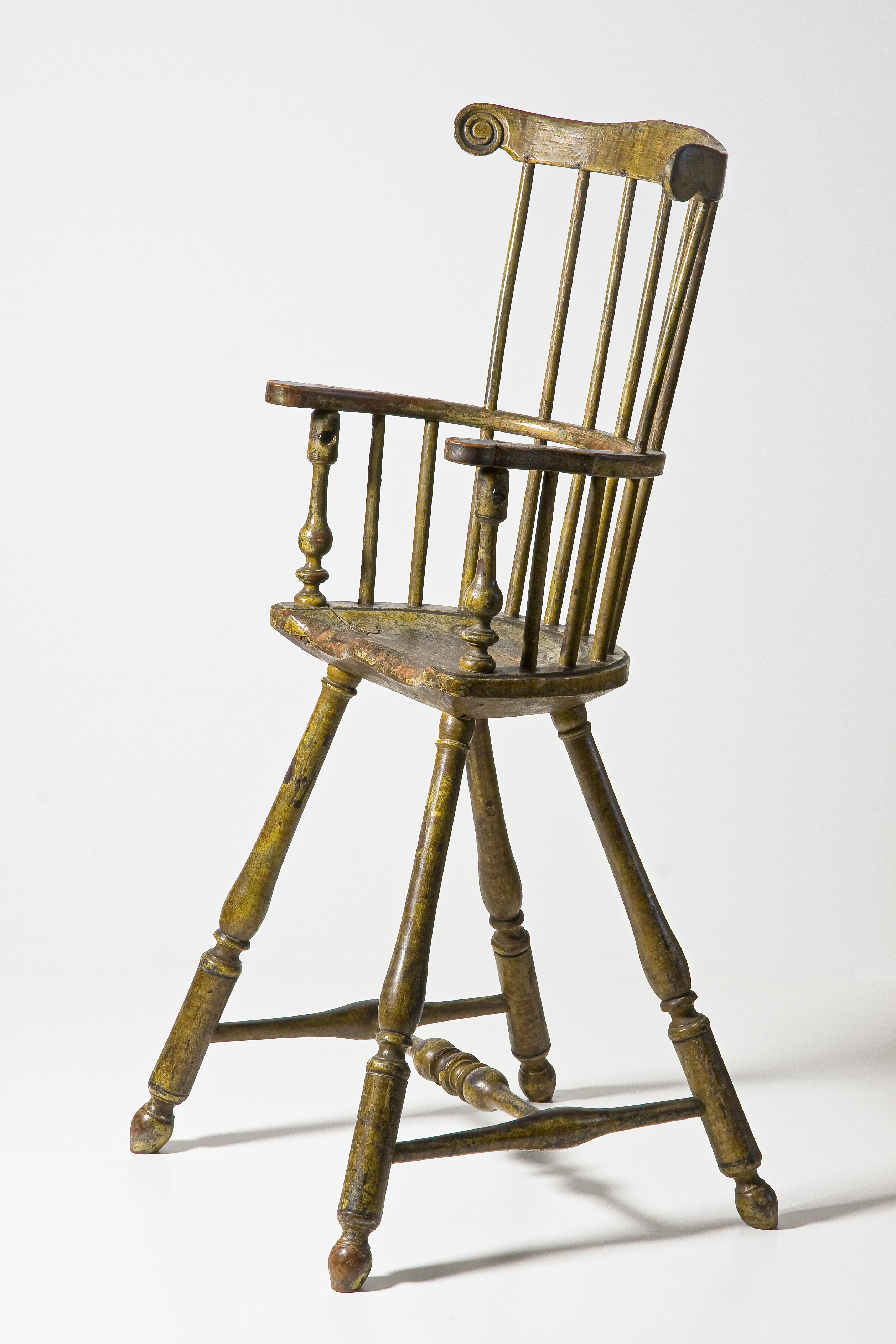
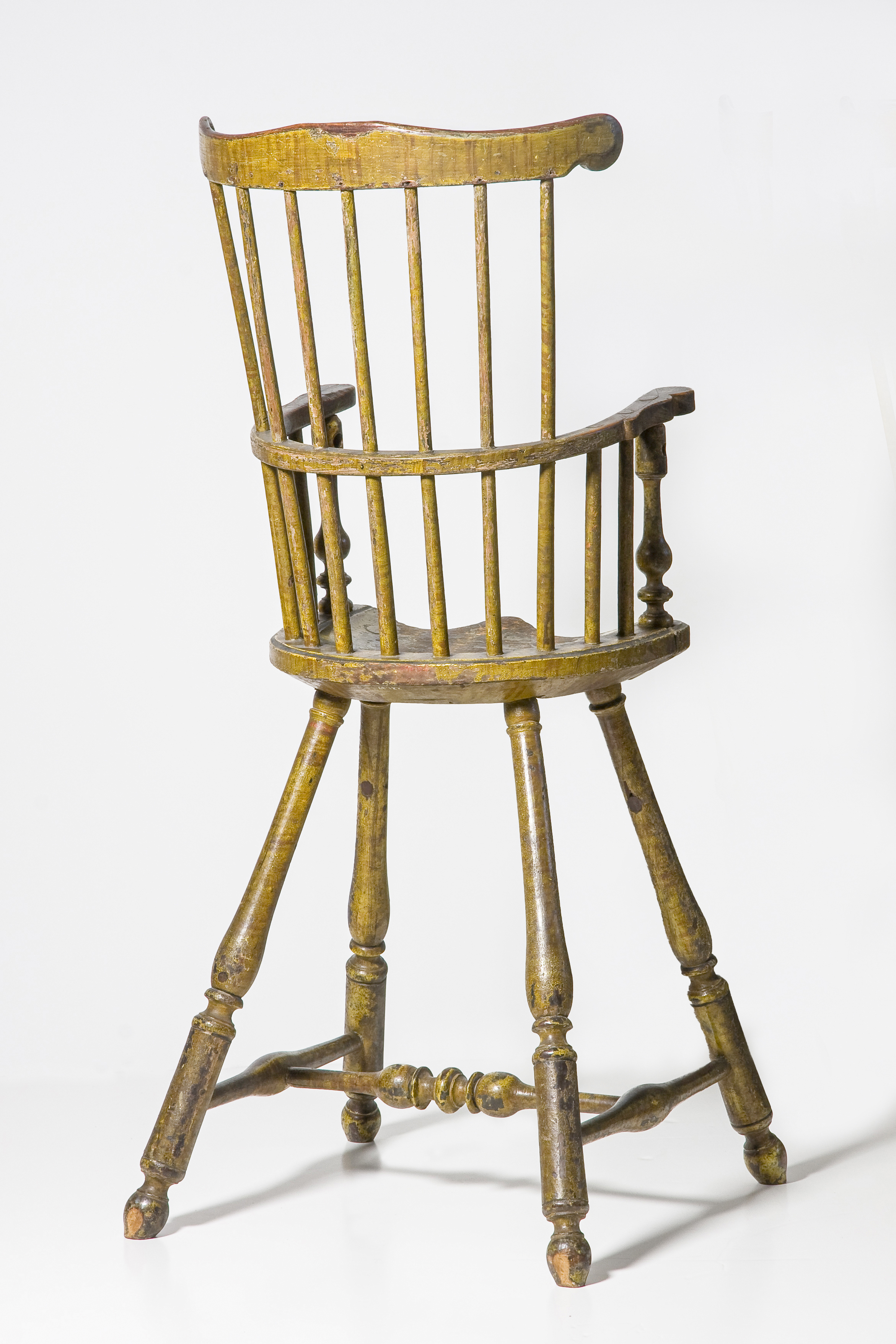
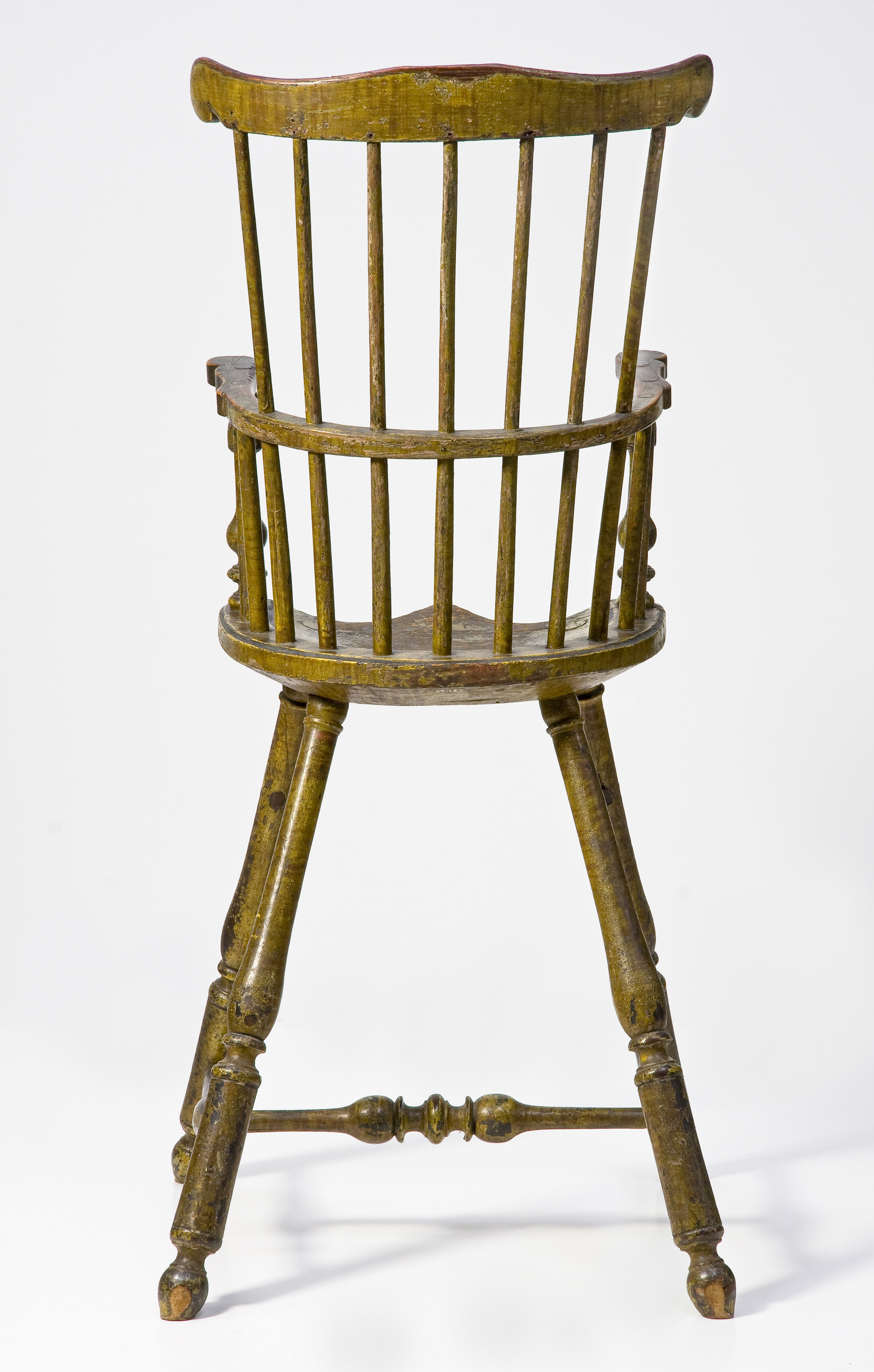
This high-back Windsor highchair has a who’s who provenance stretching back to the early twentieth century. Previous owners included Chauncey Cushing Nash (1884-1968), a Boston stockbroker and furniture collector elected to the Walpole Society in 1929 who served as its secretary from 1939-1962, Wallace Nutting, who illustrated this highchair in his Furniture Treasury, 1928, fig. 2507, the Americana dealer John Walton, Marshall Field & Company, and Howard and Catherine Feldman.
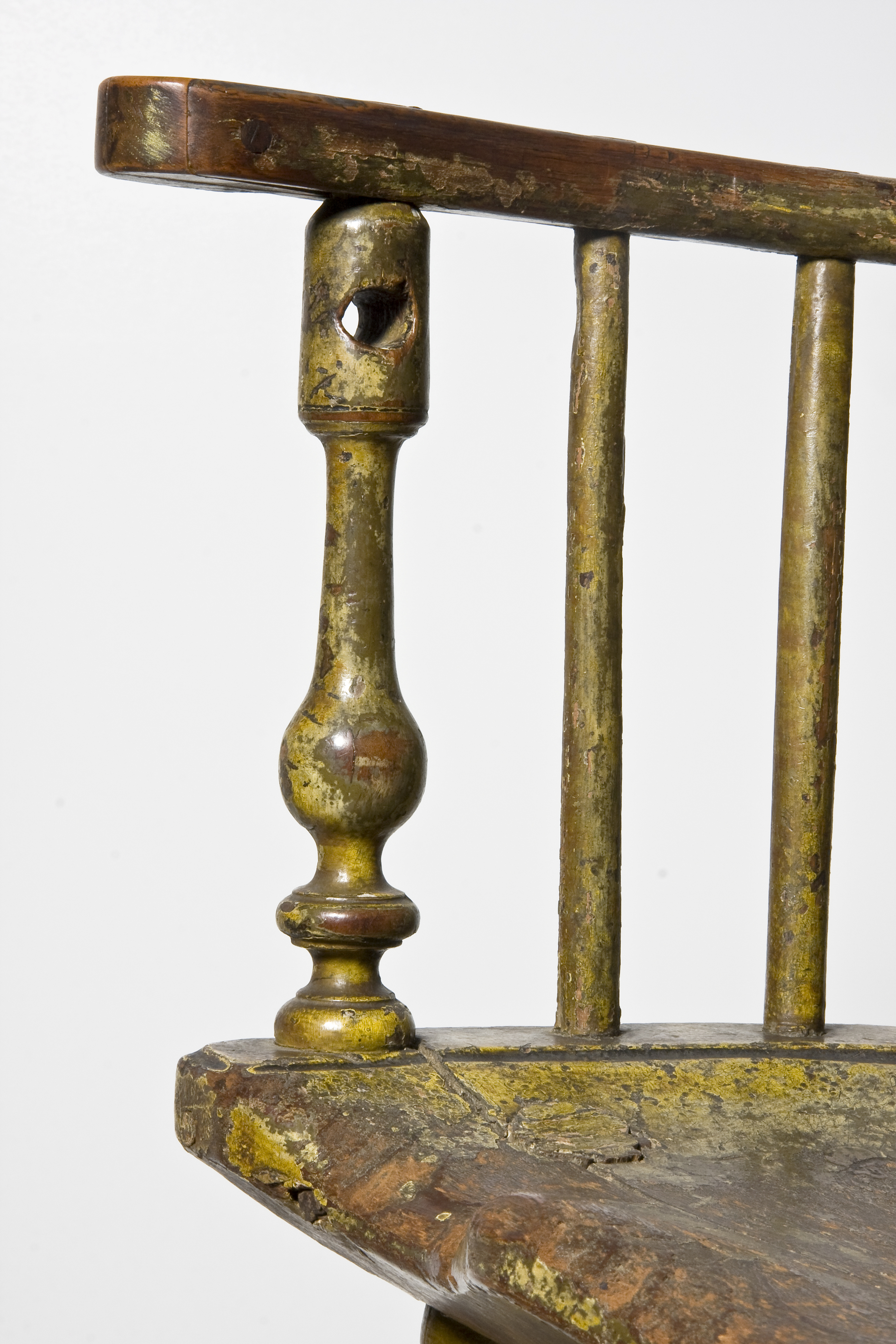
The release of Charles Santore’s (1935-2019) The Windsor Style in America and the loan exhibition, The Windsor: A Philadelphia Style, that Santore organized for the University Hospital Antiques Show in Philadelphia in April 1982, just months after his book was published, was instrumental in Dietrich’s renewed interest in his Windsor collection. Santore illustrated the highchair, then in the Feldman’s collection, in his first book, The Windsor Style in America, Running Press, 1981 and included it in the loan exhibit Santore organized for the 1982 Philadelphia University Hospital Antique Show, The Windsor: A Philadelphia Style. Introduced to Dietrich while seeking Windsors for the loan exhibit, Santore also included two Windsors from his collection, a Lancaster Windsor settee that was one of Dietrich’s first Windsor purchases, and a rare Windsor stand that Dietrich had acquired in 1970. In Santore, a specialist in American Windsors, Dietrich found an advisor who would play an active role in his pursuit of exemplary American Windsors including the Thomas Gilpin high-back Windsor armchair from my previous blog post.
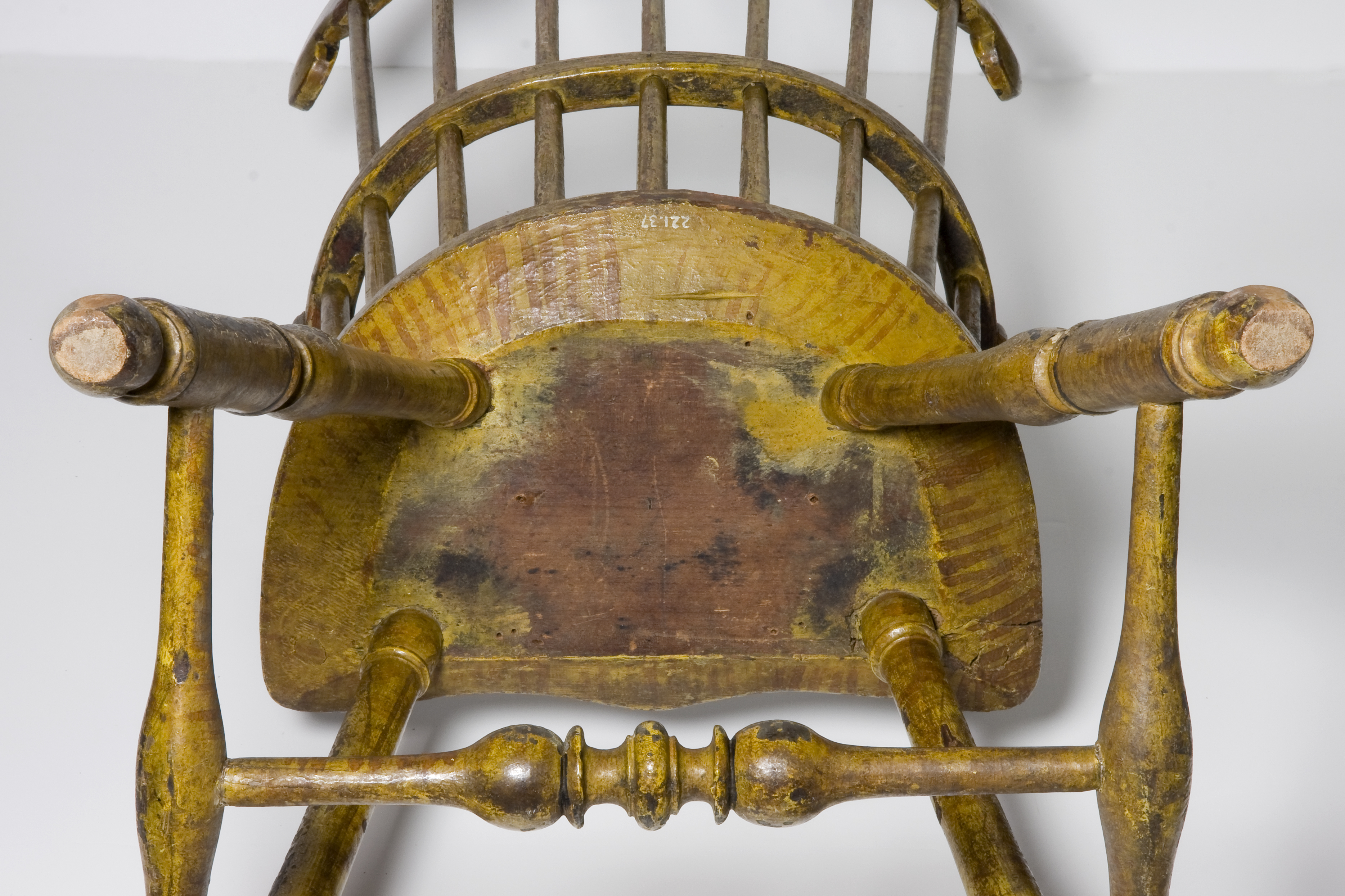
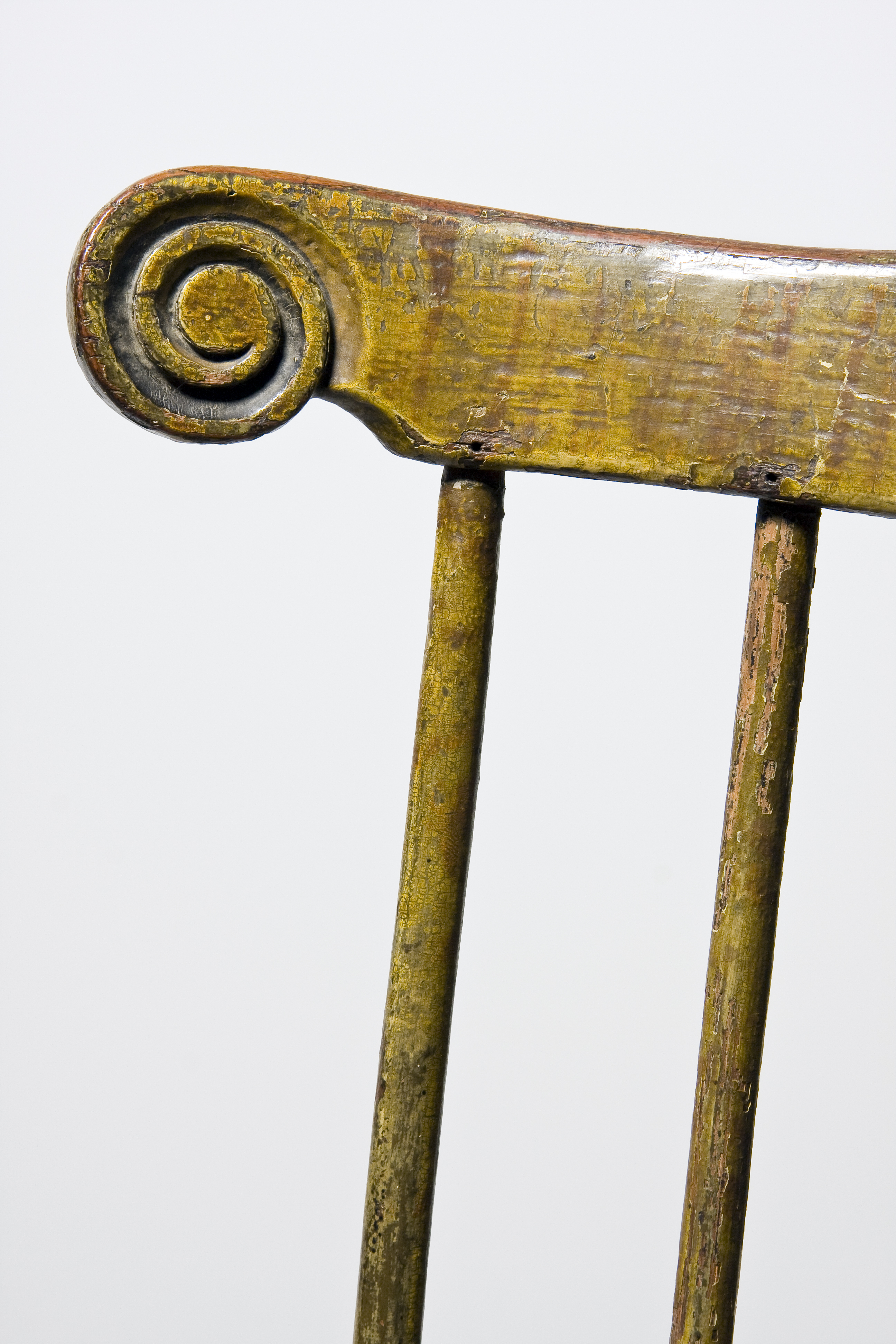
Six years after the University Hospital Antiques Show Dietrich acquired the highchair at Sotheby’s sale of the Feldman’s collection on June 23, 1988. The highchair was on loan to the Philadelphia Museum of Art from 2008 to 2018. It is currently on loan to the Peter Wentz Farmstead, an historic, German American farm that has been continuously farmed since 1744 located in Worcester Township, Montgomery County, Pennsylvania near Lansdale.
 In Proportion to the Trouble
Chris,
Another great post.
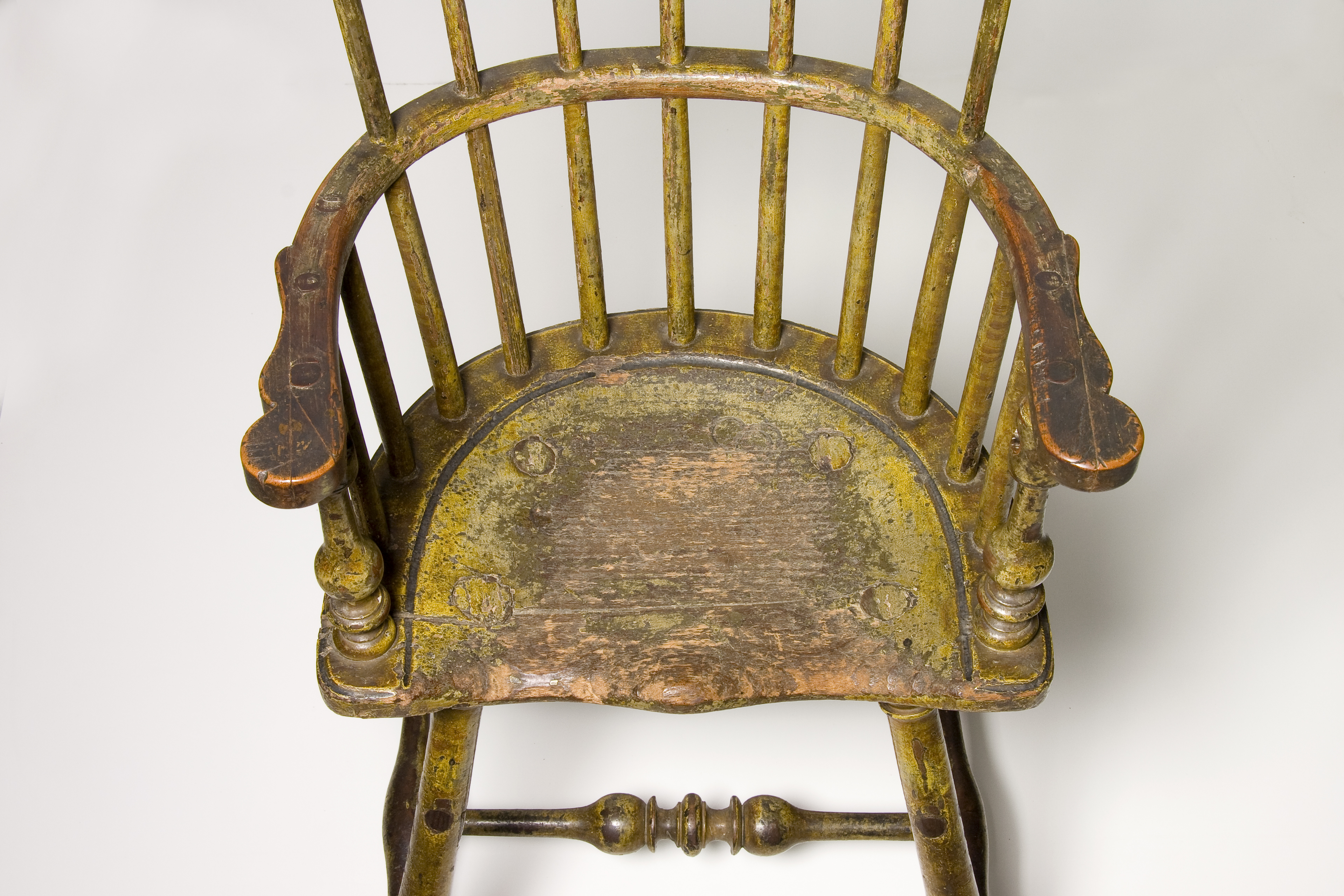
Love the paint surface and the turnings on the central stretcher.
If you had a chance to examine them at the Santore sale, did you feel that any of those Windsor high chairs were from the same maker as the Dietrich one?
Thnx.
Jay
Thanks Jay. Since there are so few high-back highchairs I’m working on a follow-up post that will feature them and your question will be addressed. The quick answer is that there were so few shops producing Windsors in Philadelphia at this time, it must certainly be the case that other surviving chairs are closely related to the DAF chair.
I did examine the chairs in the Santore’s sale but had previously viewed them at his house and worked on several of them. Spoiler Alert: one was a highchair Charlie had from Dietrich after he assisted Dietrich in acquiring the Feldman highchair in this post.
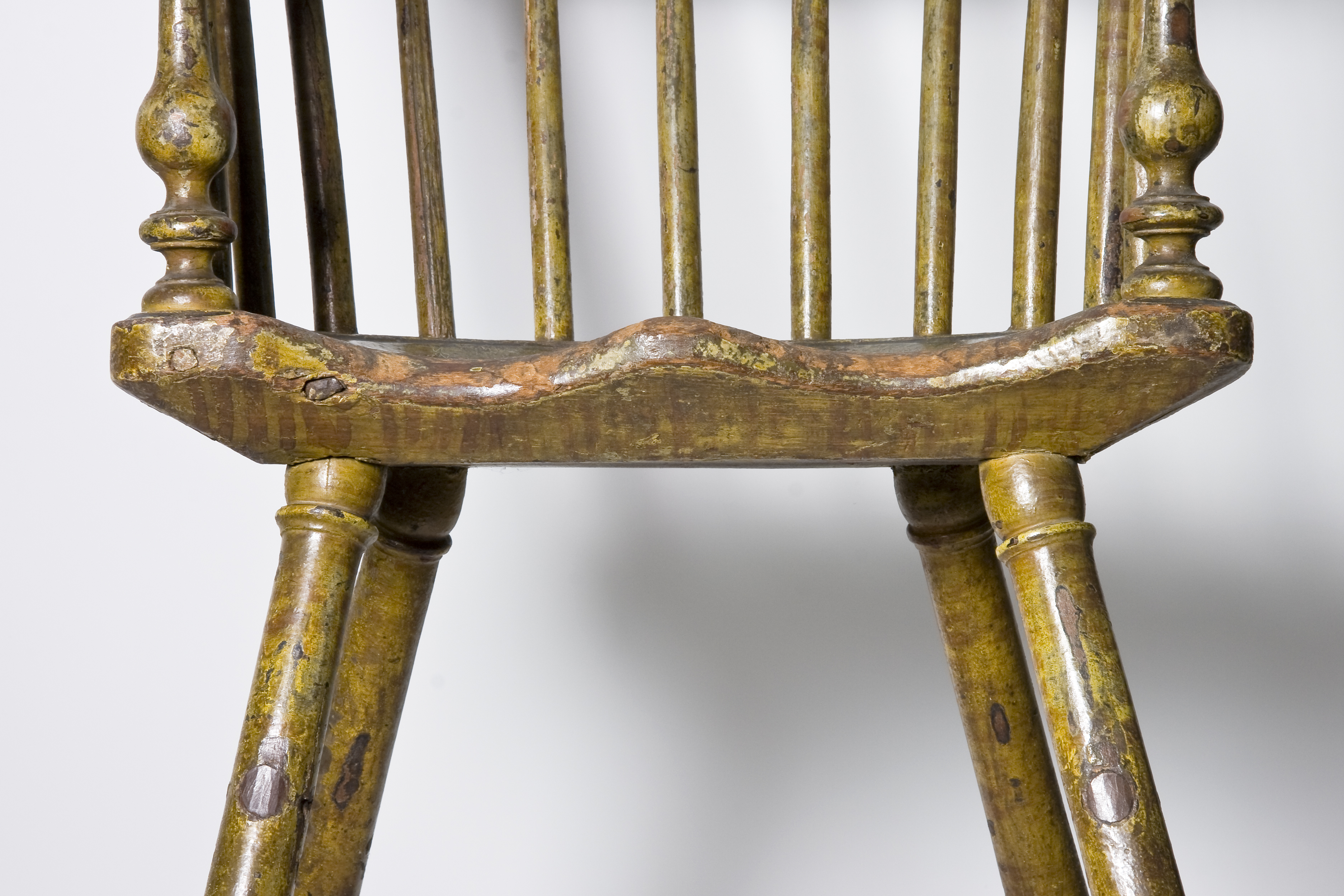
Incredible finish on that chair, even if it’s not original. Any idea when it would’ve been refinished? Also the leg tenons appear fairly beefy, perhaps due to the seat being smaller. It looks like the chairmaker used a straight tenon (perhaps 1” size?) vs the more common tapered tenons used today.
Thanks, interesting posts and detail provided.
Kevin
Kevin,
Technically the chair is not “refinished” as that implies removing an original or a multi-layered finish to apply a new surface coating on bare wood. All the layers, including the original paint are present, though discontinuous, meaning there are losses overall of the original paint. Paint-graining in the style of faux-oak was popular beginning in the mid-nineteenth century. Other than that it is hard to know when the latest layer was applied. We do know it looked as it does in the first years of the twentieth century as it was photographed then and had already passed though several collectors hands. So maybe 1850-1880?
The round leg tenons into the seat are most certainly tapered, if only slightly (an x-ray would be needed to confirm.) The wedging on the tenon would have enlarged them at the top of the seat somewhat. The legs start out from a blank that is the same size as a full size chair so the round tenons would be the same, no need for the chairmaker to change their approach to turning and boring for the joint. So yes, the size of the seat makes them appear larger than round tenons of a full size chair, but they are the same. I have noticed that modern makers tend to turn smaller radius leg tenons with more taper than early eighteenth century chairs. But then few modern makers are copying these early Philadelphia high-back Windsors and may not have examined and measured the few originals that have survived.
Thanks.