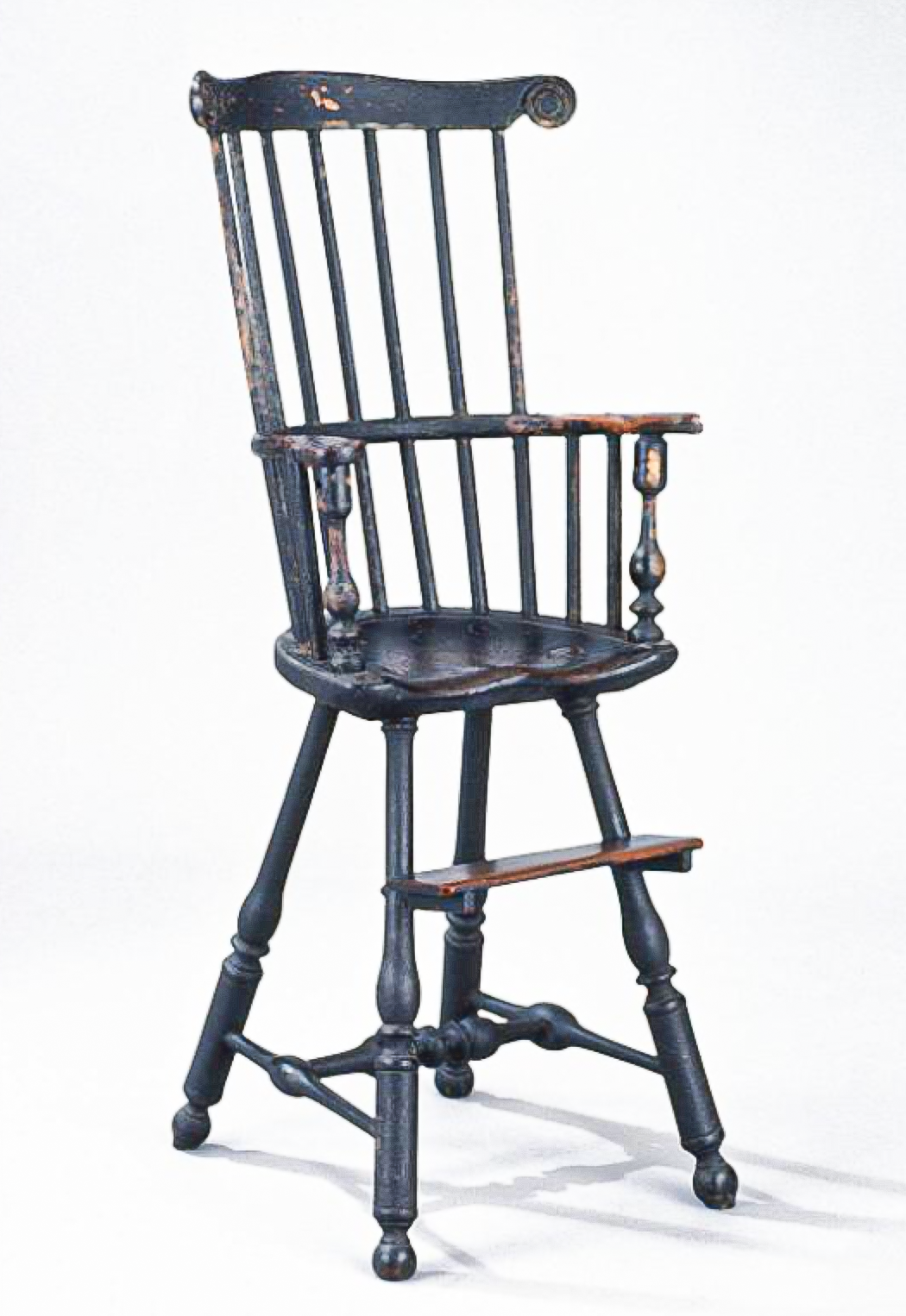
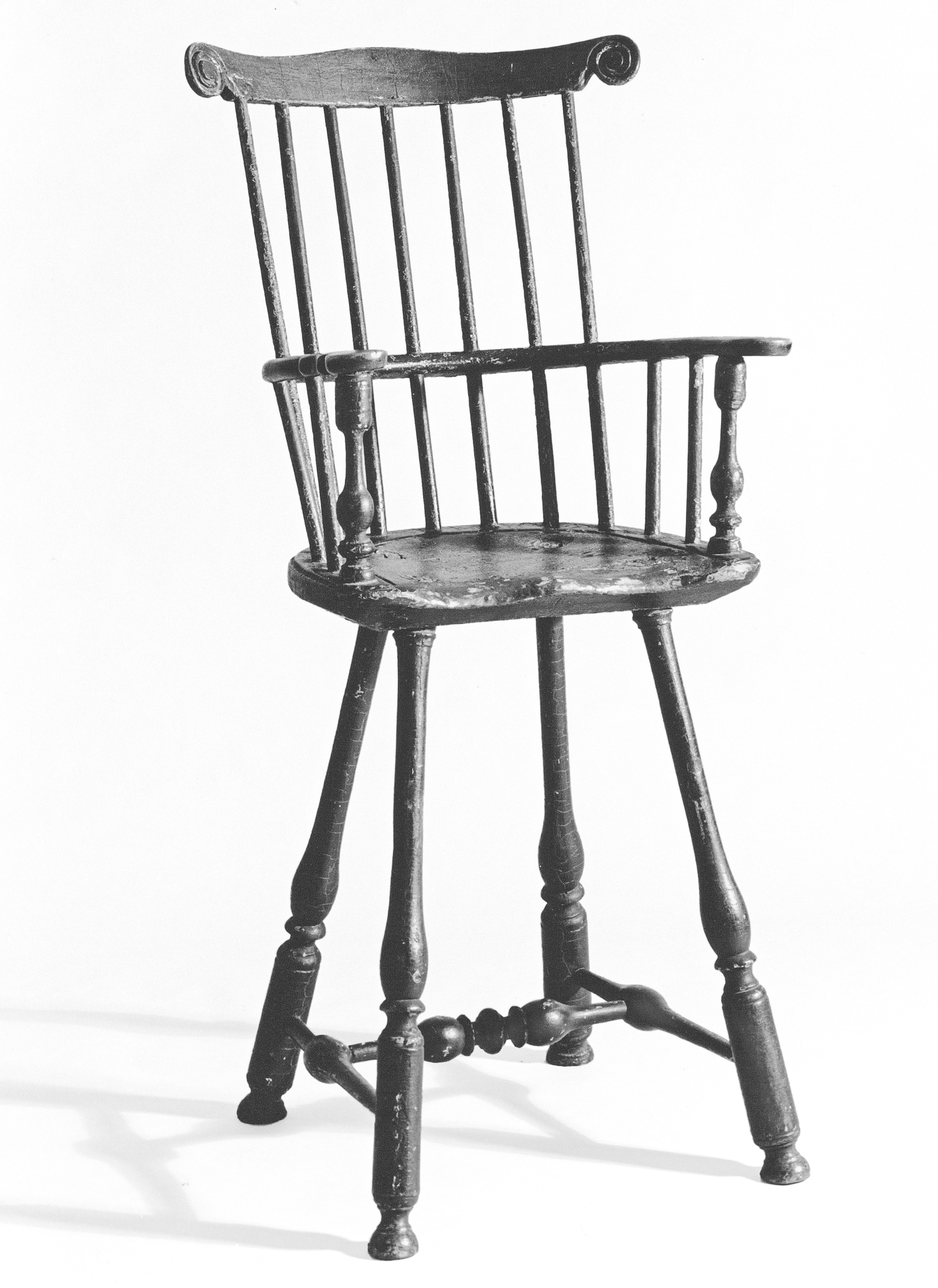
As noted in the last post, Windsor chairmakers in Philadelphia were making highchairs shortly after they began producing high-back Windsor armchairs in the mid-1740s. No highchairs modeled on the earliest Philadelphia high-back Windsors with plain crest rails and shaved arm supports are known to have survived, nor have any highchairs been discovered with Thomas Gilpin’s distinctive turnings and double grooves separating the spindle platform from the modeled seat. But by 1755, one or two chairmakers were producing high-back Windsor armchairs and highchairs that incorporated Gilpin’s innovations of turned arm supports and a crest rail terminating on carved scrolls while the eliminating one of the grooves of the spindle platform. Other features of these early Philadelphia high-back Windsors are side stretchers that are not symmetrical – the bulbous element, which the medial stretcher sockets into, is located closer to the rear of the chair – and the legs terminate in a cylinder form above ball feet.

Two highchairs are closely related to the Dietrich American Foundation highchair and all three were likely produced in the same shop. The first is in the collection of Colonial Williamsburg and was illustrated in Charles Santore’s The Windsor Style in America, Philadelphia, Running Press, 1981, p. 170, fig. 222.
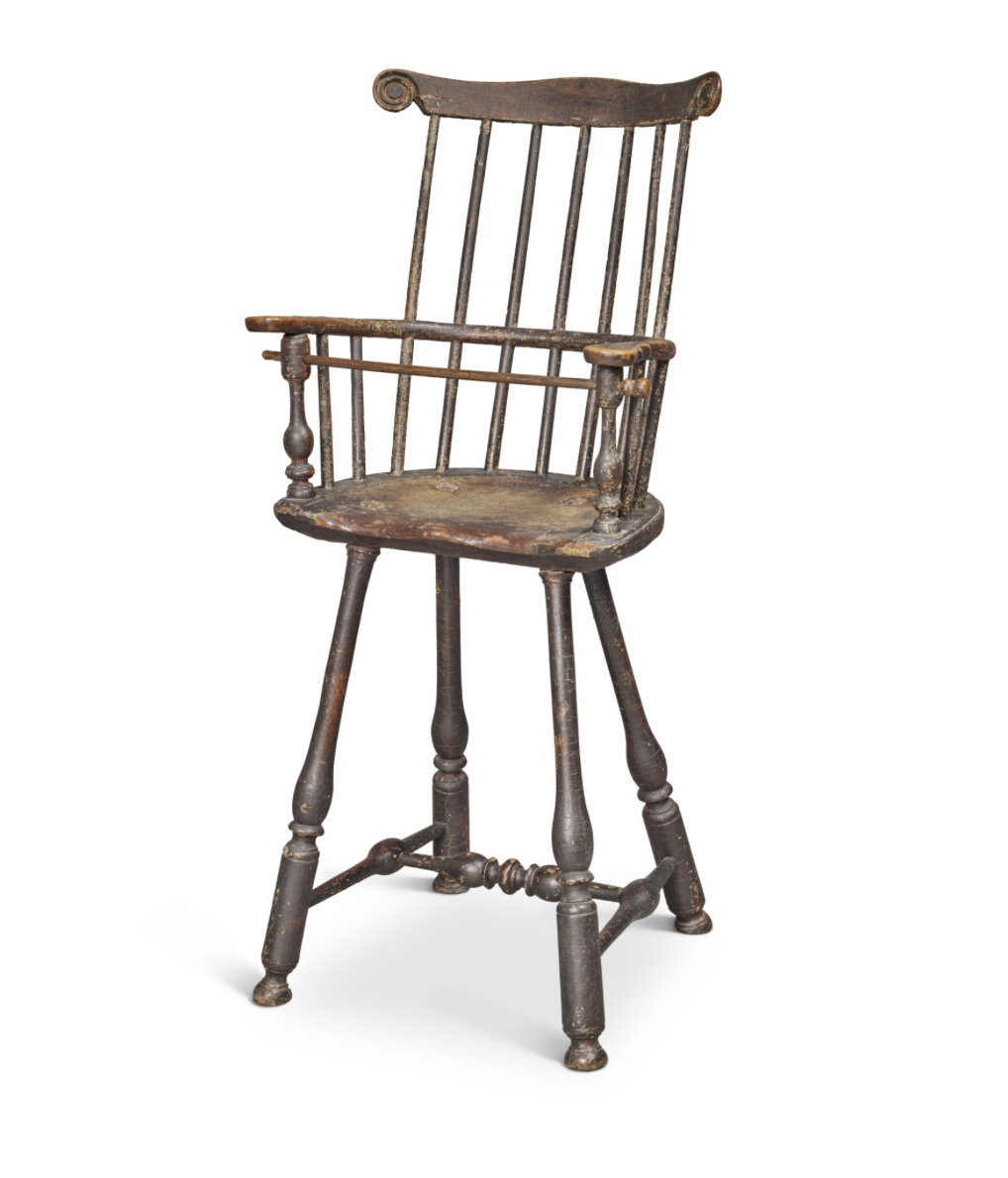
The second chair has only recently been published. It was owned by Charles (1935-2019) and Olenka Santore (1942-2019) and was sold as lot 141 at Sotheby’s January 19th, 2023 sale of their collection, lot 141. I know the catalogue is correct in stating the highchair’s medial stretcher is restored because I replaced a poorly made previously restored stretcher soon after Charlie acquired the highchair in the late 1980s.
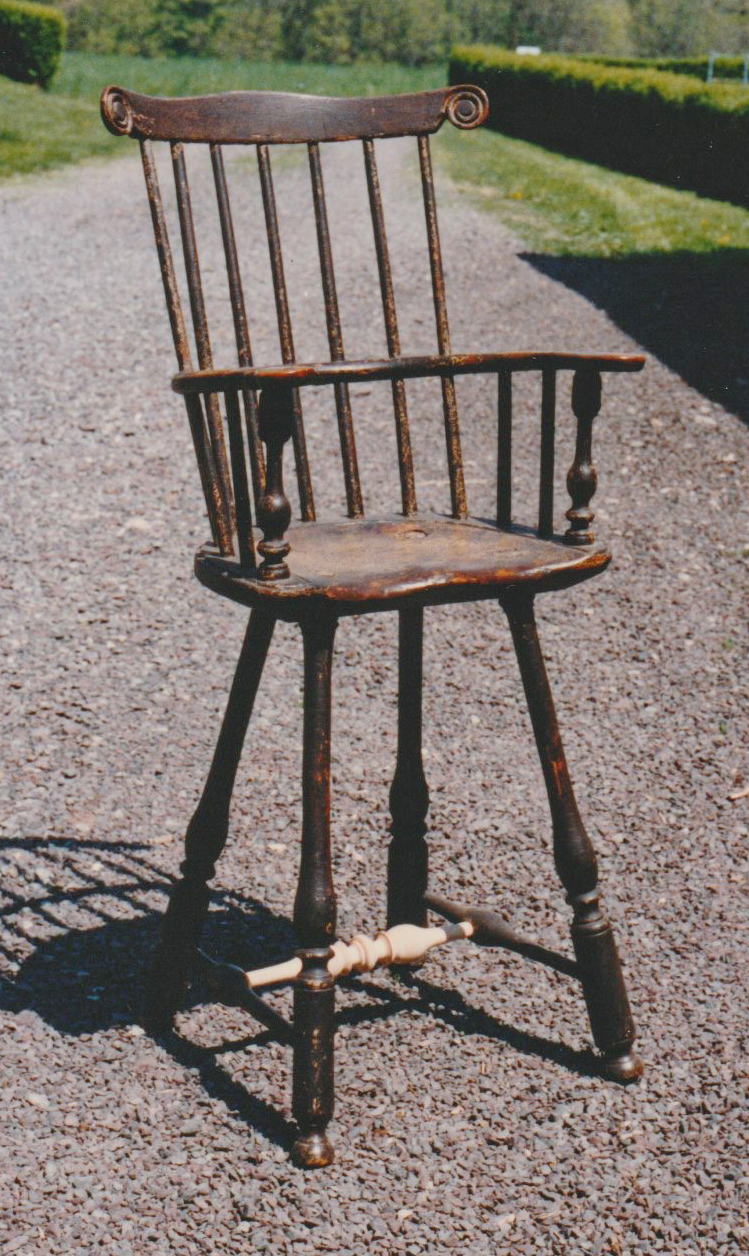
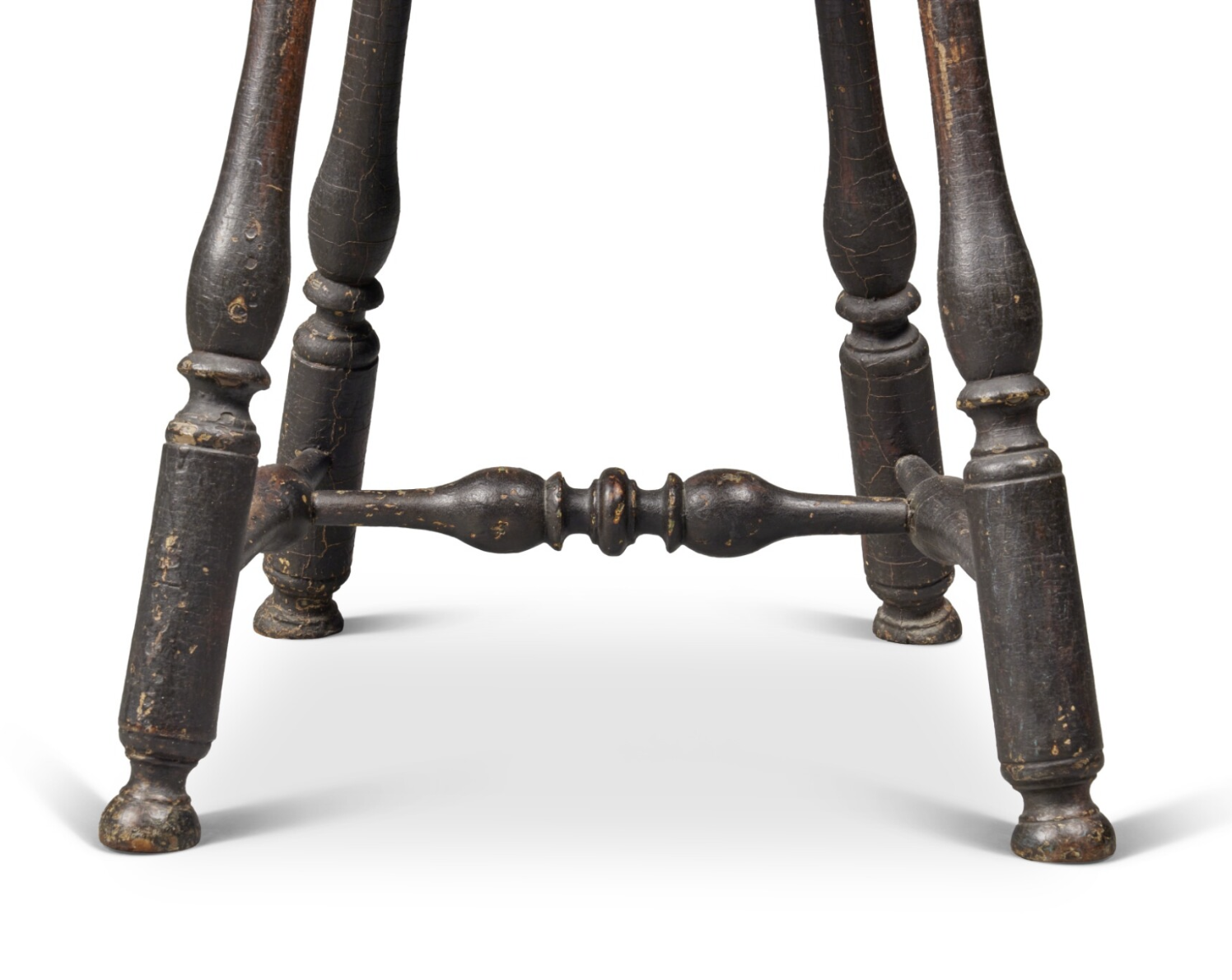
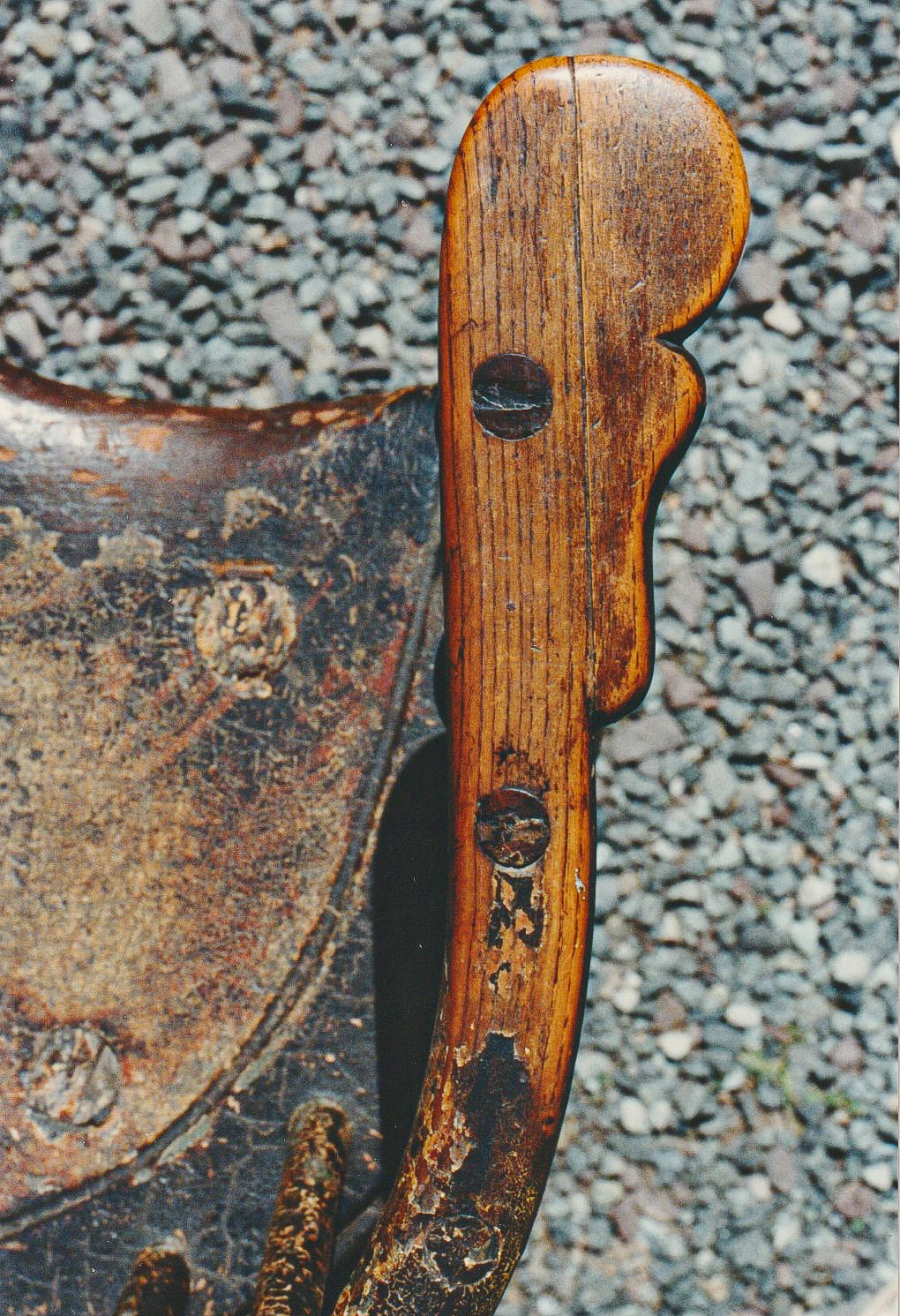
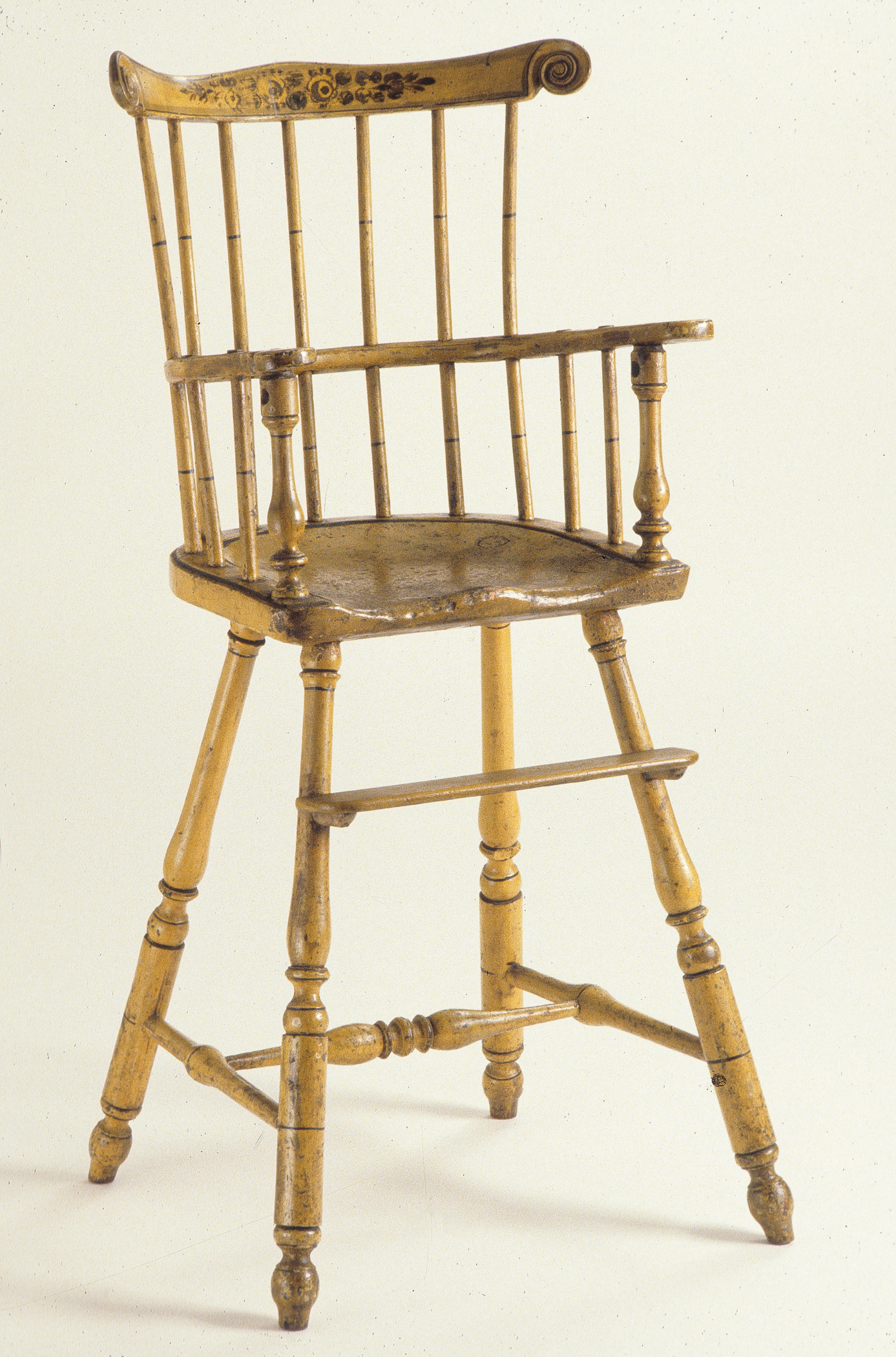
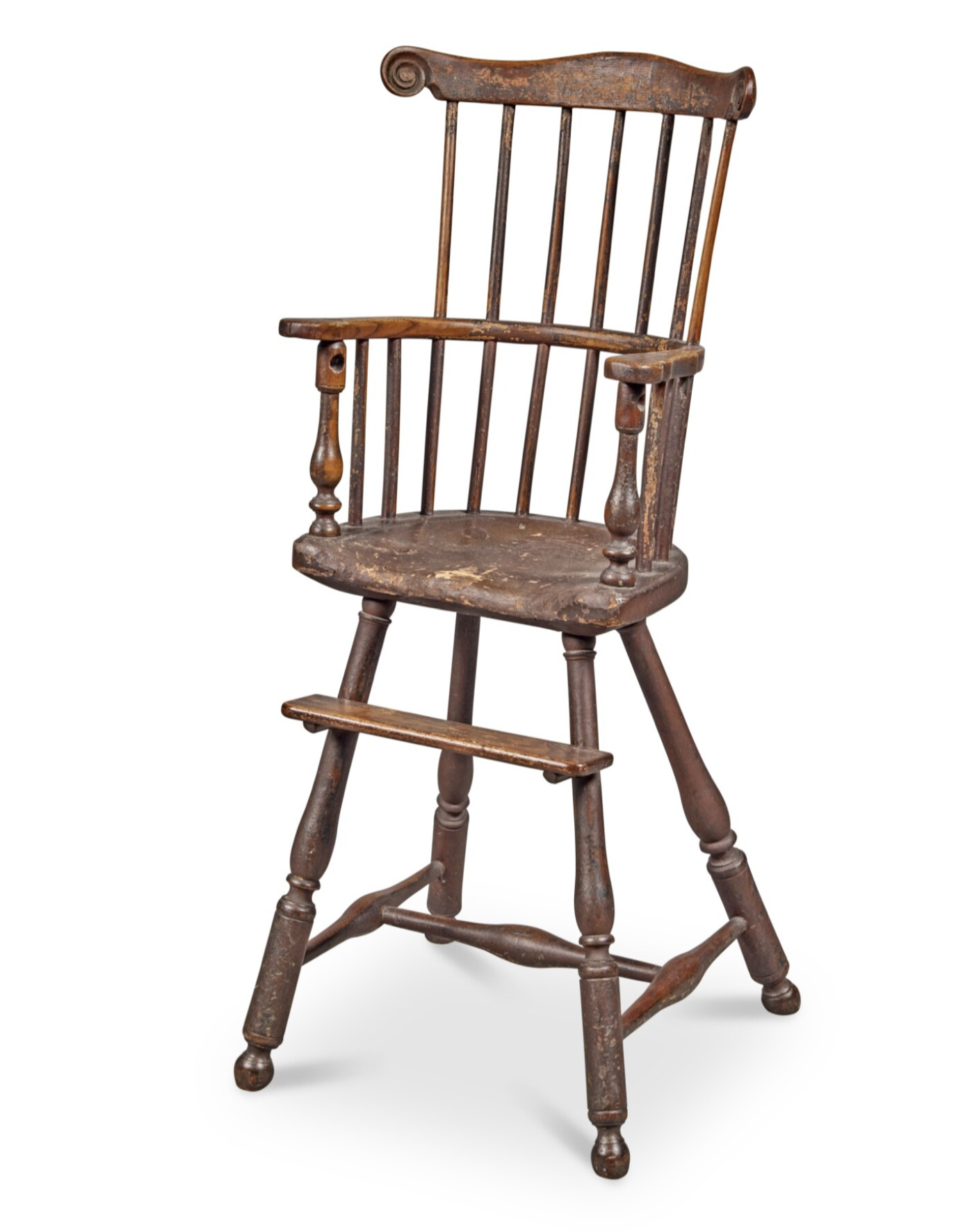
The turning profiles of the above and following chair are distinctly different enough from the former three chairs that they may have originated in a different shop. We don’t know enough about how chair shops operated at this time to be definitive about this. We can safely say a different turner made the legs and arm supports and that the two or three makers of bespoke Windsor highchairs working at this time within blocks of each other would have known one another and compared notes on their practices.
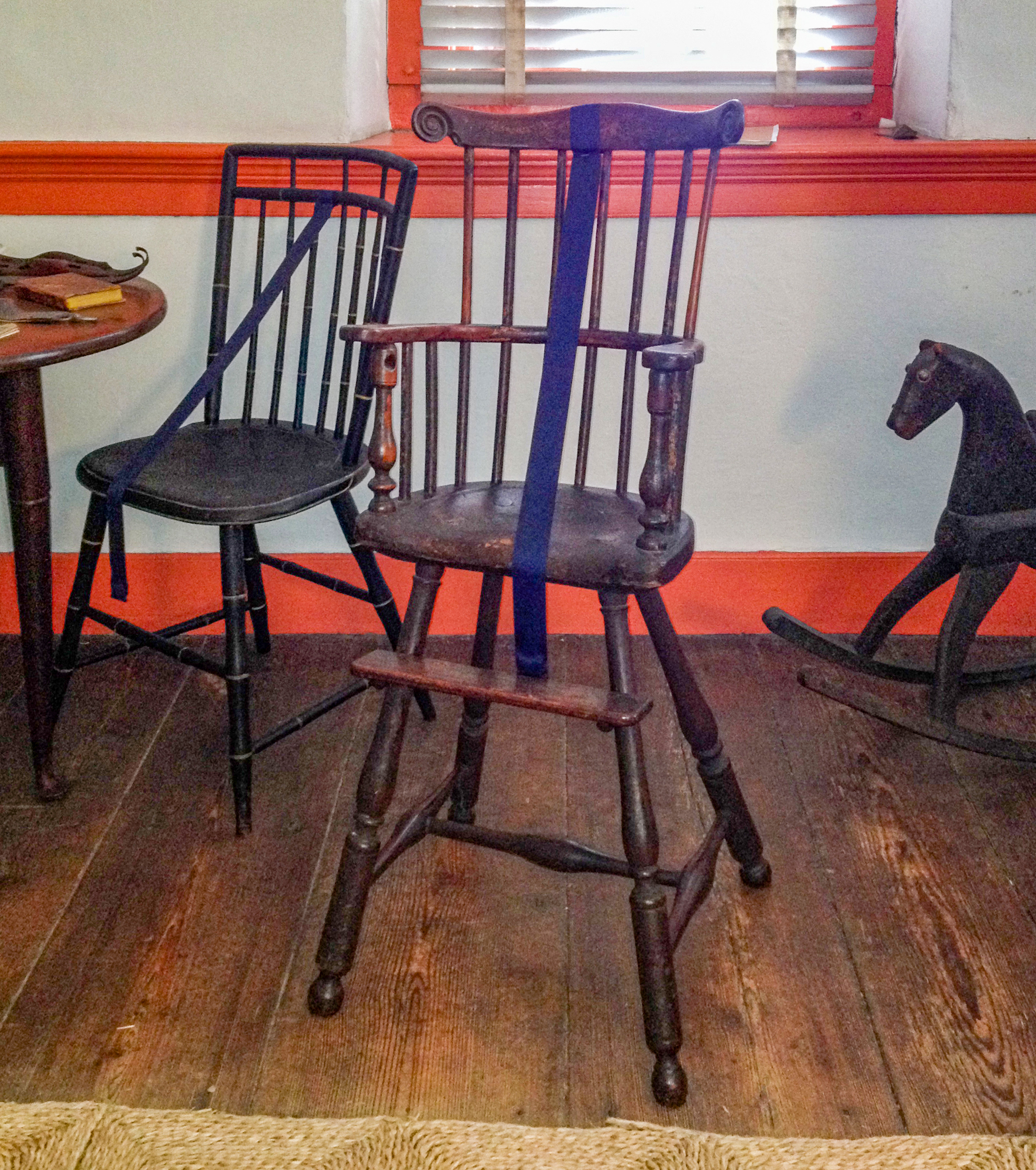
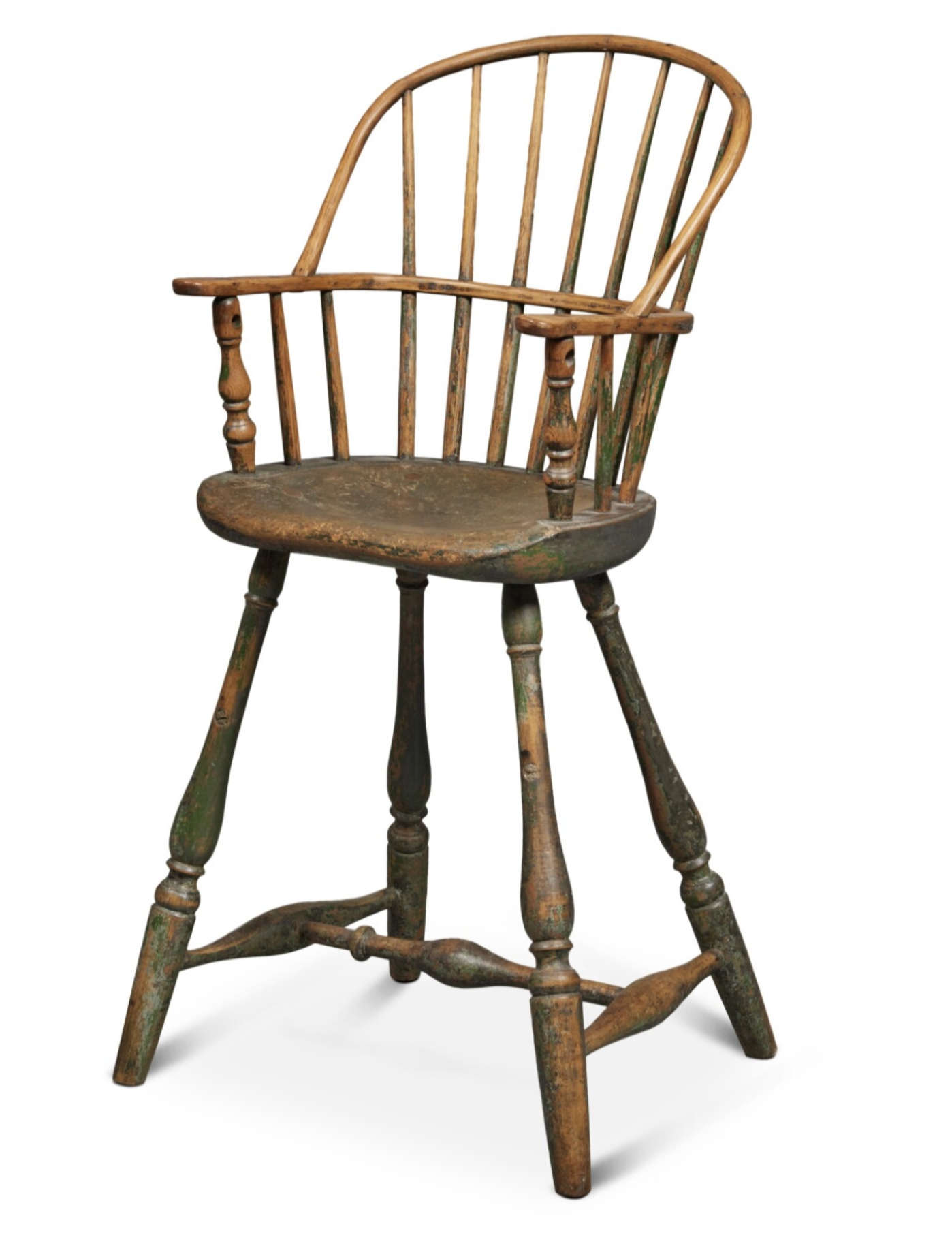
After several further developments in full-size Philadelphia high-back Windsor armchairs, a new model Windsor armchair, called sack-back in America and and round-top in England, was introduced. Seats were now oval with soft chamfers and the cylinder and ball feet of the high-back chair was replaced by tapering termination. (As usual with Windsor chairs, the story is a bit more complicated as there are some early sack-back chairs which retain some of the features of high-back chairs.) Also gone were carved volutes, a further simplification to facilitate ramped up production. Highchairs would continue to mirror full-size Windsor chairs as styles developed over the coming decades.
Collecting Windsor highchairs is not everyone’s cup of tea. But understanding their extreme rarity and challenging design decisions, Charles and Olenka ultimately choose to add no less than three early Windsor high chairs to their collection
I’ll finish with an amusing anecdote. A year and a half ago I received images of all the lots in an upcoming single owner sale of American decorative art. Among a number of interesting Windsor chairs, I was surprised to see an image of a high-back highchair that had been illustrated in Santore’s The Windsor Style in America, Running Press, 1981.
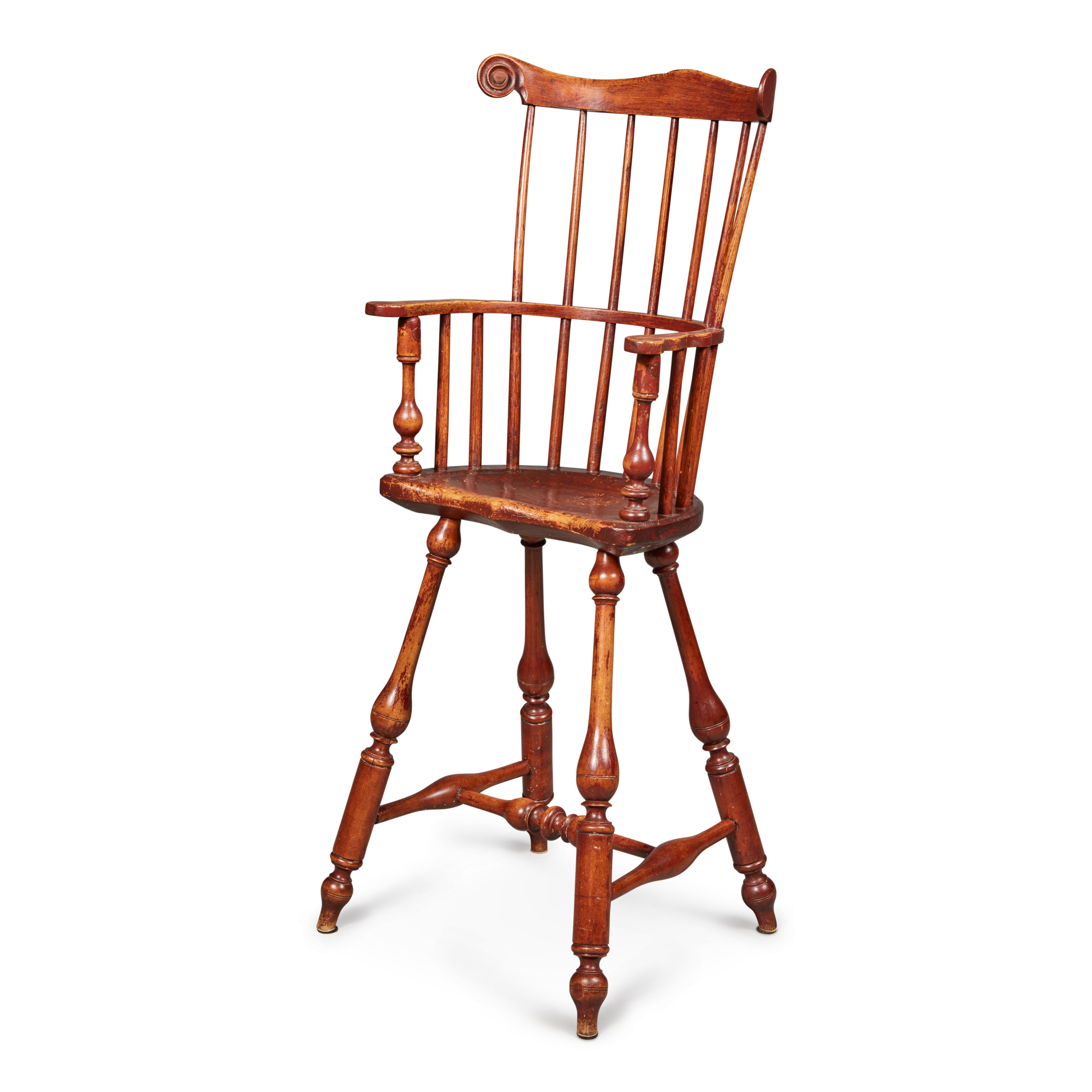
However, the image of the highchair was not in the books section of historic children’s and scaled-down furniture, but rather at the back of the book in a “questions and answers” chapter. The last question was “How can one guard against purchasing a fake or reproduction Windsor chair sold as authentic?” To make his point that reproductions are often stylistically incorrect, Santore illustrated a Wallace Nutting chair that he said had been advertised in 1927.
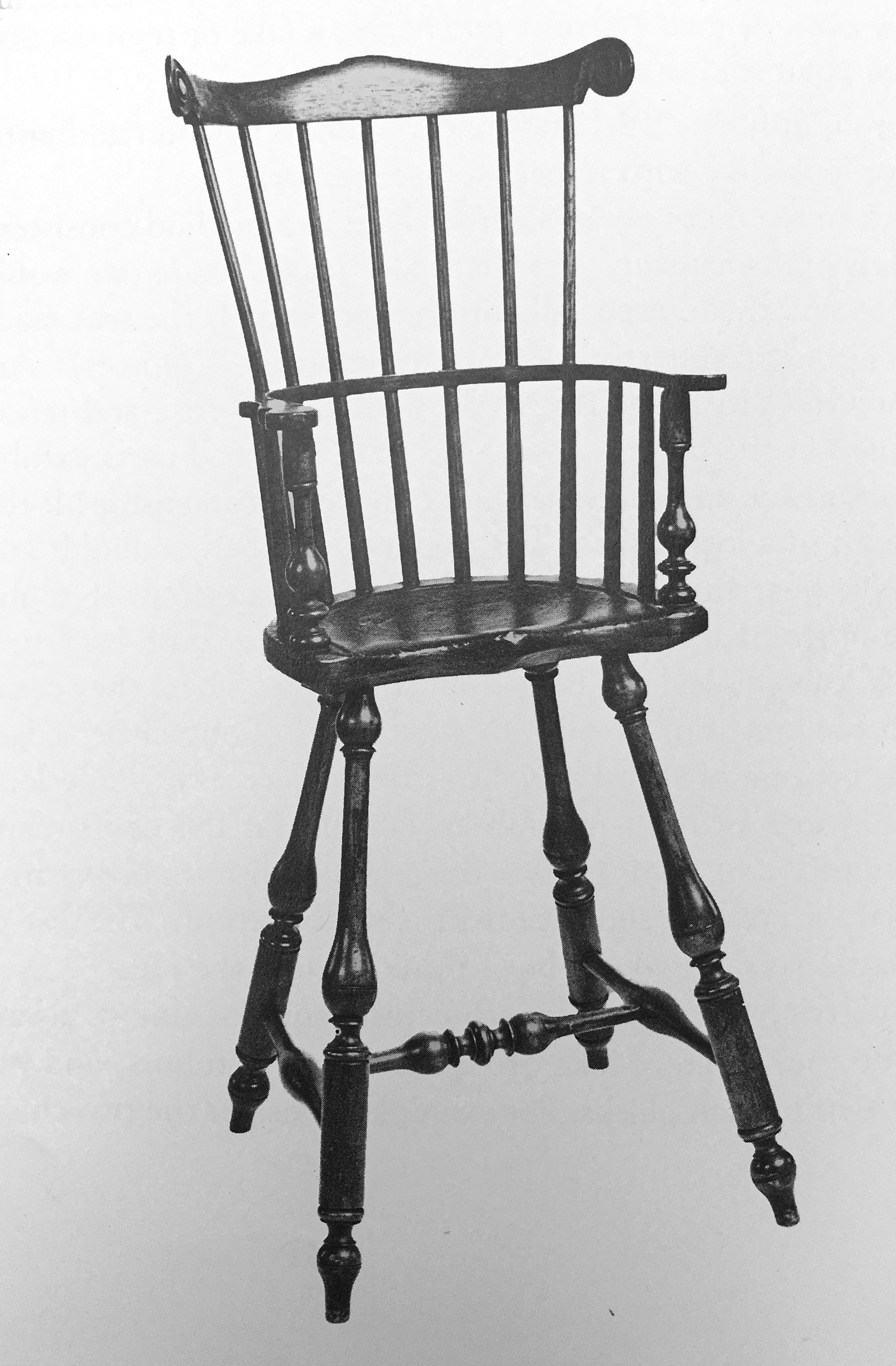
The highchair had been “purchased as an authentic piece of eighteenth-century American furniture.” Charlie and I both knew the owner who had purchased the chair unwittingly, and to their credit the owner kept the chair, using it as a learning tool while keeping it out of the marketplace. In the end, the Wallace Nutting highchair did not make it into the auction catalogue, it is hoped the highchair will continue to be recognized for what it truly is.
 In Proportion to the Trouble
I found this post really interesting. I pulled out my Santore book and found the chair. But I would really like to read a more detailed evaluation of how you can identify these chairs as a fake or reproduction. I can look at pictures but only guess at what “a crest rail rounded along the upper front edge” really means.
Just a suggestion for a future blog topic! Lol
Thanks for sharing all your knowledge.
Thank you.
How to identify non-period reproduction is a good topic and a comprehensive answer would require thousands of words and even a small book. Ultimately, you can really only get good at this through experience. You need to know a lot about how originals were made and why, you need to know what tools were used and marks they left.
There are certain generalities that apply to different forms. In the case of Windsor chairs, one of these is in modern versions of Philadelphia chairs the turnings tend to be exaggerated, the thin ares get too thin. The necks of the long balusters of the legs on the Nutting chair is much too thin. There are double scribe lines on the balusters of the Nutting chair. Thomas Gilpin used single scribe lines on some of the balusters of his Windsor chairs, but no other Philadelphia Windsor chairmakers did this. These are things you can see in a photo an object needs to be examined in person to make an informed decision about authenticity. I would look to see if the correct woods were used, (of course, you need to know what wood species were used in the originals) I would examine the surface of the turned elements for tool marks, and see if there was shrinkage in the tunings that left them out of round and slightly oval shaped. Nutting and most other 20th century Windsor reproduction and made of kiln-dried wood and the turnings are perfectly round.
That’s just the tip of the iceberg though for evaluating Windsor chairs. There is also paint history, surface wear, and more. Maybe it’s time for another book about fakes and frauds.
The rounded crest rail could have benefited from a drawing of the profile of the crest. Original crest rails have thickness at the top with a slight rounding over at the front and rear corners, the Nutting chairs are so rounded over they come to almost a point at the top rear edge.