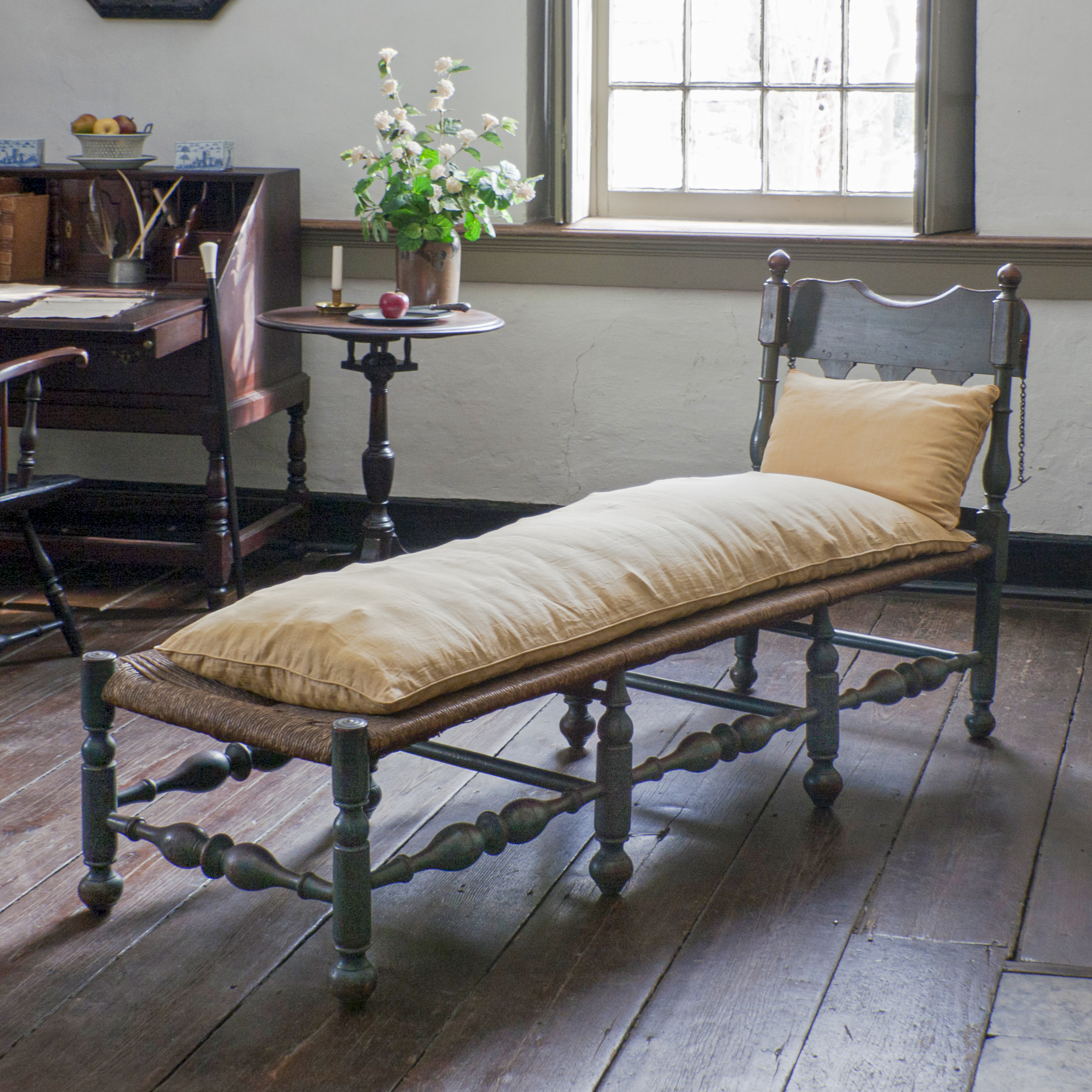
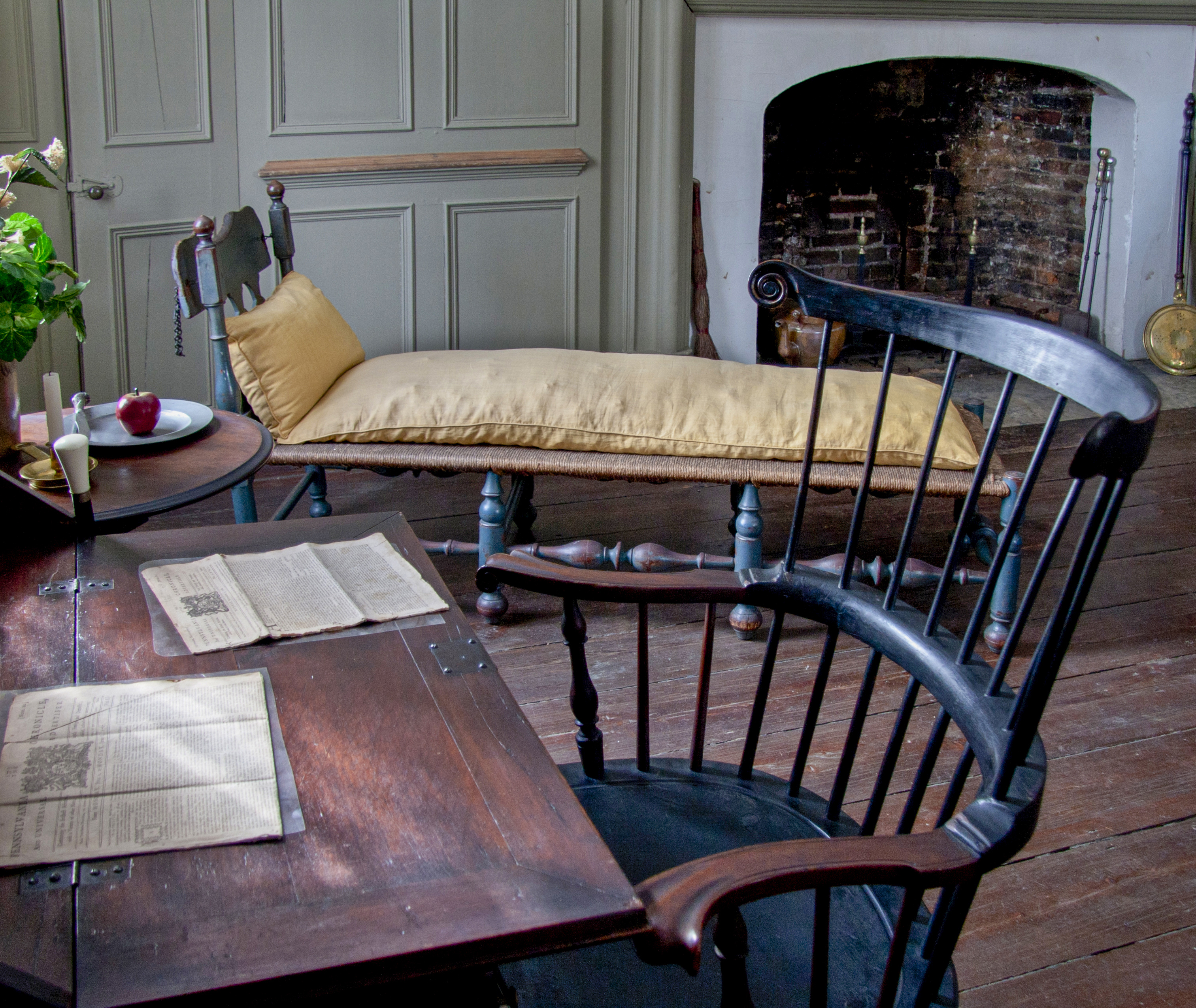
In 1997 the Dietrich American Foundation placed a rush-seat couch on long-term loan to Stenton Museum. It resides in the room on the ground floor called “the Back Dining Room” in the 1752 probate inventory of James Logan’s (1674-1751) possessions.
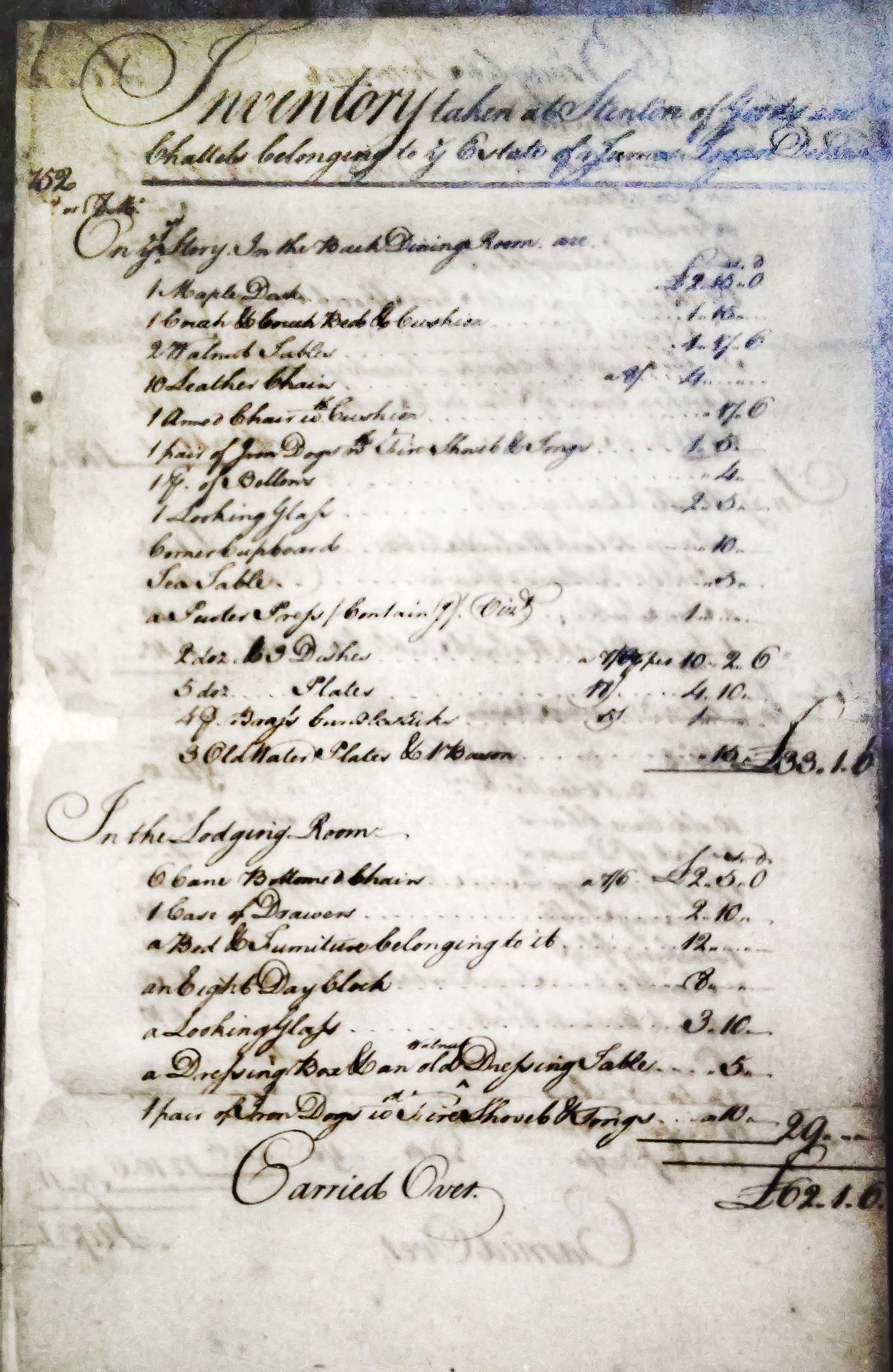
There was a couch, or day-bed, in this room at the time of Logan’s death as the inventory attests. “1 Couch & Couch Bed & cushions … 1..15..”, or one pound and fifteen shillings.
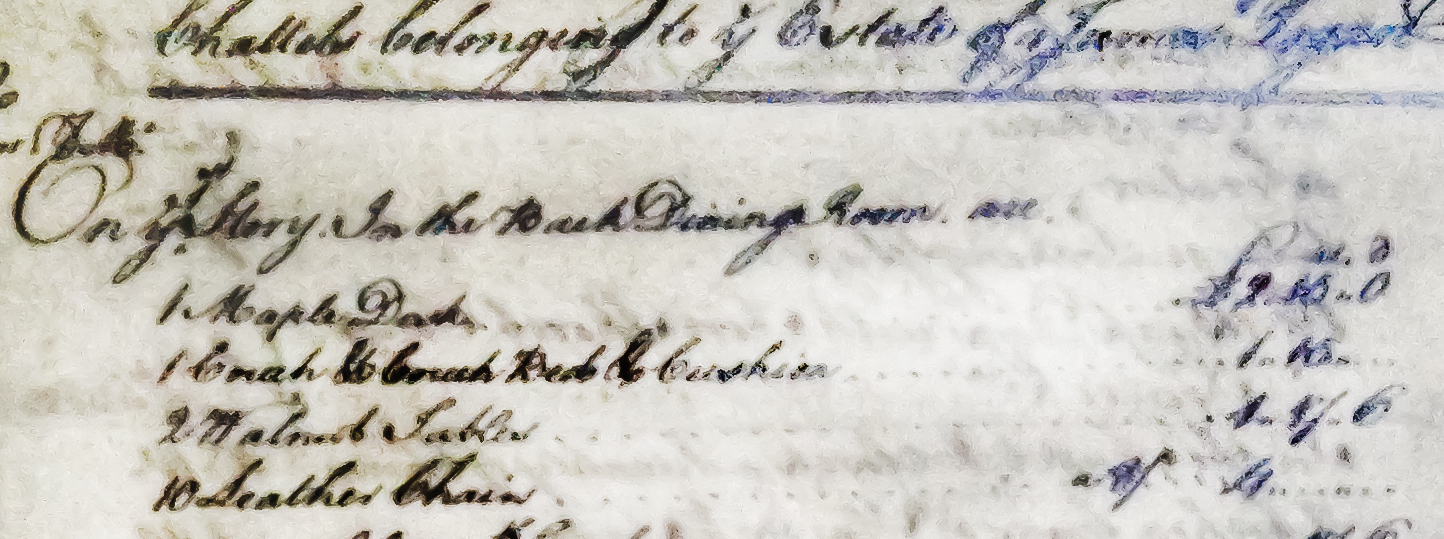
A couch documented as having been at Stenton during the eighteenth century has not been found so the the D.A.F. loan presently serves as a stand-in for Logan’s couch. Logan imported a “Black Couch” from London in 1717, and it may have been that couch recorded on the inventory. Late seventeenth century British couches were made with cane seats and backs. Later, rush and leather was used on the seats. Whether cane, rush, or leather, all couches would have been furnished with a loose cushion, a bolster, and pillows. On the inventory, “Couch Bed” refers to the long cushion on the seat and “Cushions” refers to bolsters or pillows for the back. It is exceedingly rare for an original cushion to survive with a couch but it would have been stuffed with feathers, horsehair, straw, or a combination of materials. The inventory of the back dining room also includes a maple desk, 2 walnut tables, 10 leather chairs, 1 armchair, 1 looking glass, a tea table, a corner cupboard, hearth equipment, and a pewter press filled with dishes and plates. A pewter press, that descended in the Logan family, was returned to Stenton in 2014 and again holds Logan family dishes and plates.
The D.A.F. couch post-dates Logan’s couch, having been made in the mid-eighteenth century, possibly as late as 1770. Logan’s couch would have been made in London or Philadelphia while the D.A.F. couch was likely made in Chester County, Pennsylvania. Horace Gordon, acting as an agent for H. Richard Dietrich, Jr., purchased the couch from Margaret Swartley Rosenberger in 1965. In October of that year she recorded her account of her family’s ownership of the couch. Genealogical research gives Margaret’s history a credence that family lore often lacks.
“Abraham Darlington, born 1757, to his son,
Abraham Darlington, born 1789, to his daughter, Anna Darlington, born 1829. All the above of Thornbury Township, Chester County, Pennsylvania. Agnes Darlington Swartley, born 1877, Margaret Swartley Rosenberger, born Oct. 25, 1903″
Abraham Darlington married Susanna Chandler at Kennett Meeting in 1781. They were likely the second owners of the couch. Abraham was the son of Thomas and Hannah Darlington who were married in 1754 at Concord meeting. (A detailed history of the possible provenance of the couch is available in the D.A.F. object file.)
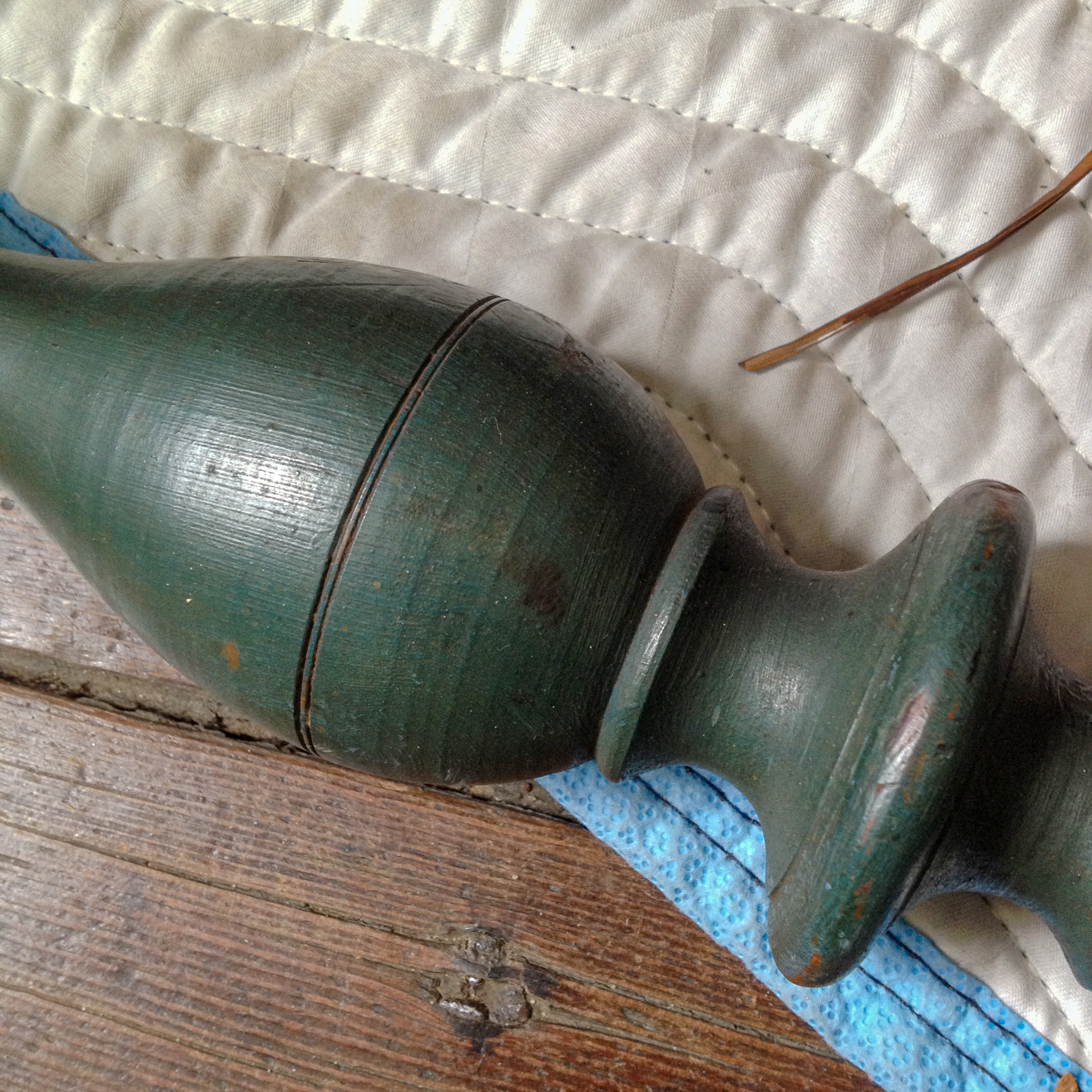
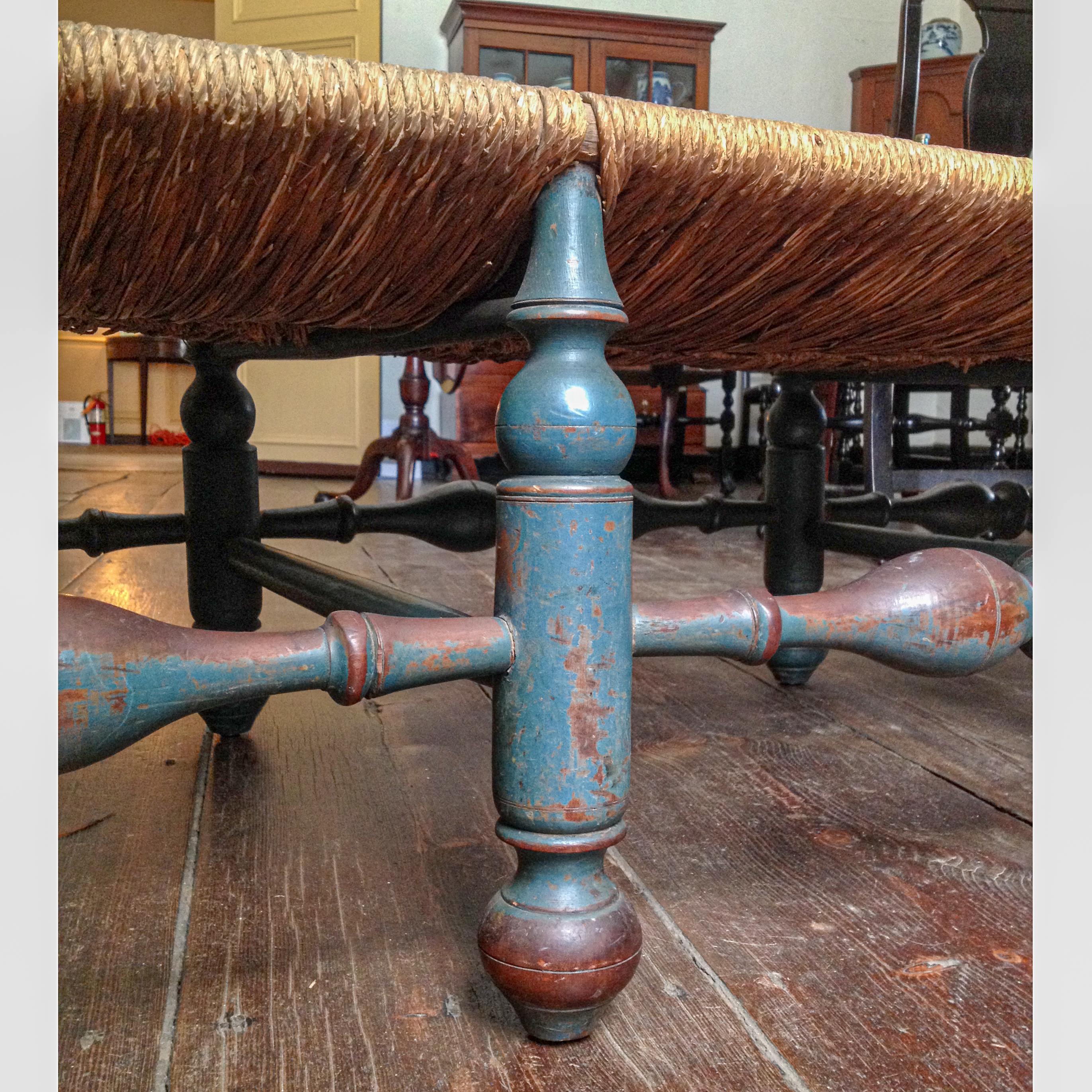
The condition of the couch is remarkable. It has its original coat of blue paint which has not been over-varnished. On areas of the turned elements where there is little or no abrasion from use, the marks left by the lathe tools are clearly visible.
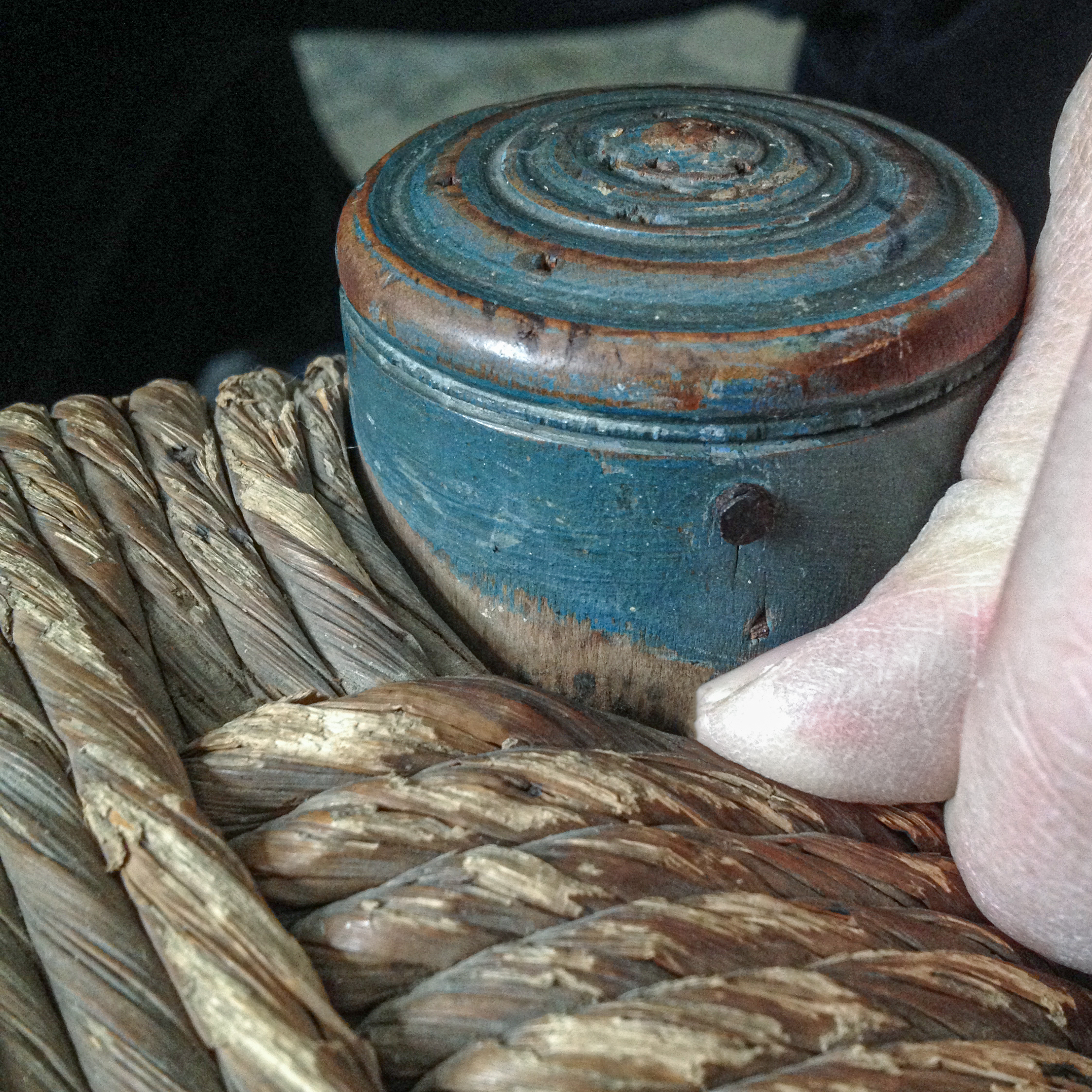
The original rush bottom is intact. The couch was painted after the rush was woven on the seat frame. If you have ever rushed a chair seat with real bullrush you know how harsh the weaving process is on the frame. Weaving rush after the frame was painted would have resulted in considerable damage to the paint surface.
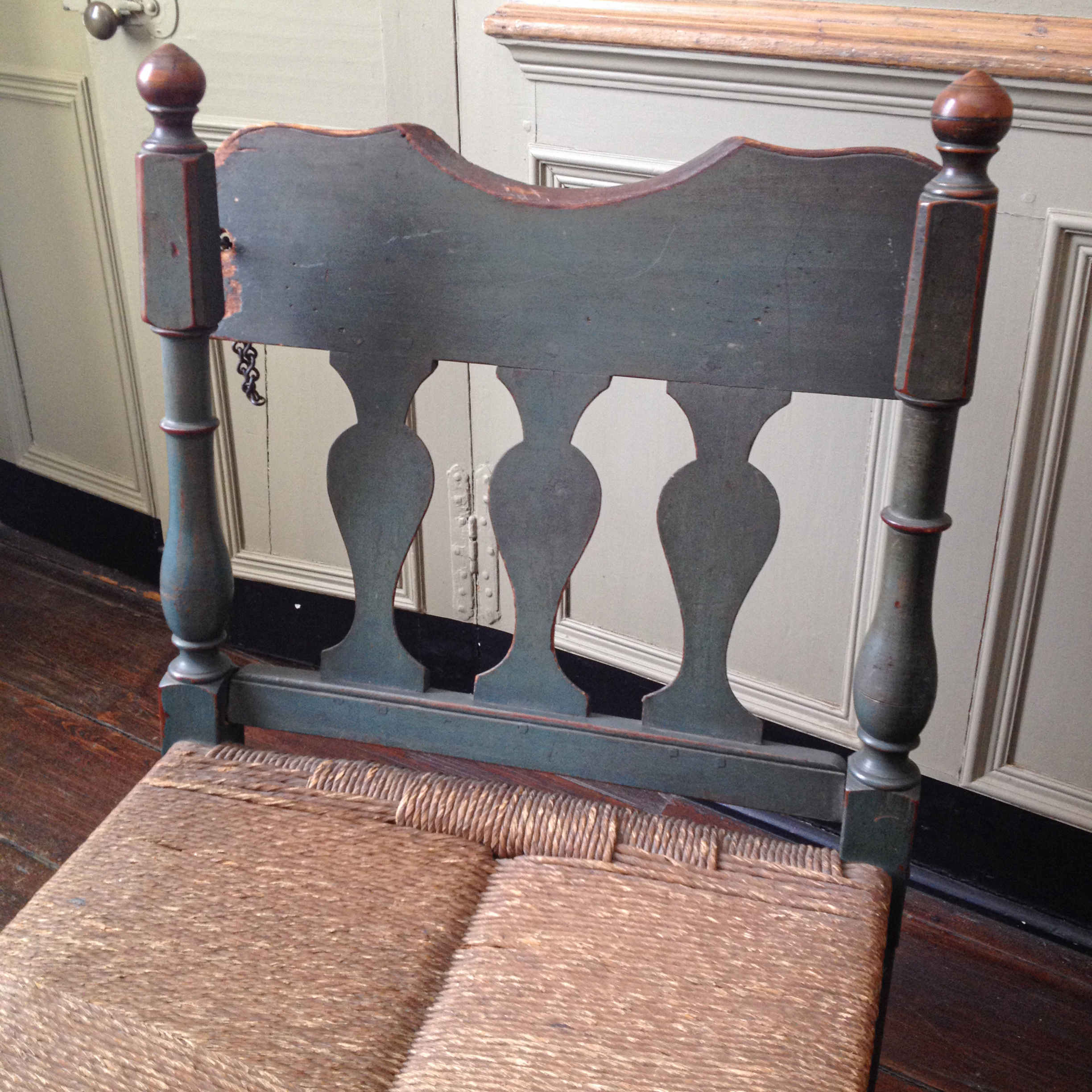
Many late seventeenth and eighteenth century couches have pivoting backs. Round tenons on the lower rail of the back swivel in holes bored in the rear posts. Chains fixed at the top of the rear posts secure the back in any position the user prefers.
 In Proportion to the Trouble
Dear Chris
Thanks for the crisp photos that capture the remarkable condition of the DAF couch.
In furtherance of discussion, I offer the below excerpt from an AF2020 article comparing the “Couch Bead &c” listed in the 1754 household goods inventory of Philadelphia joiner John Head with transactions in his account book related to couches.
With all good wishes,
Jay
The “Couch Bead &c” valued at £3.0.0 may be one of the two “Couch[es]” or daybeds he had bought for £1.4.0 from chair maker Solomon Cresson (1674–1746) on October 7, 1729, only one of which Head had sold. Head made no couches or other seating furniture himself. He did record “mending a Couch” for merchant John McComb Jr. (fl. 1720–1726) on April 25, 1721, at a cost of £0.0.6. One popular covering for seating furniture was leather. Head had provided a “Couch Hide” to cordwainer William Clare (1675–1741) on February 18, 1723, at a price of £0.3.0.
https://chipstone.org/article.php/851/American-Furniture-2020/An-Inventory-of-the-Household-Goods-of-John-Head
Thanks Jay. “Couch Hide” reminds me that Phillip Bradley once had an early 18th century Philadelphia couch with its original leather bottom intact. That was something to see.