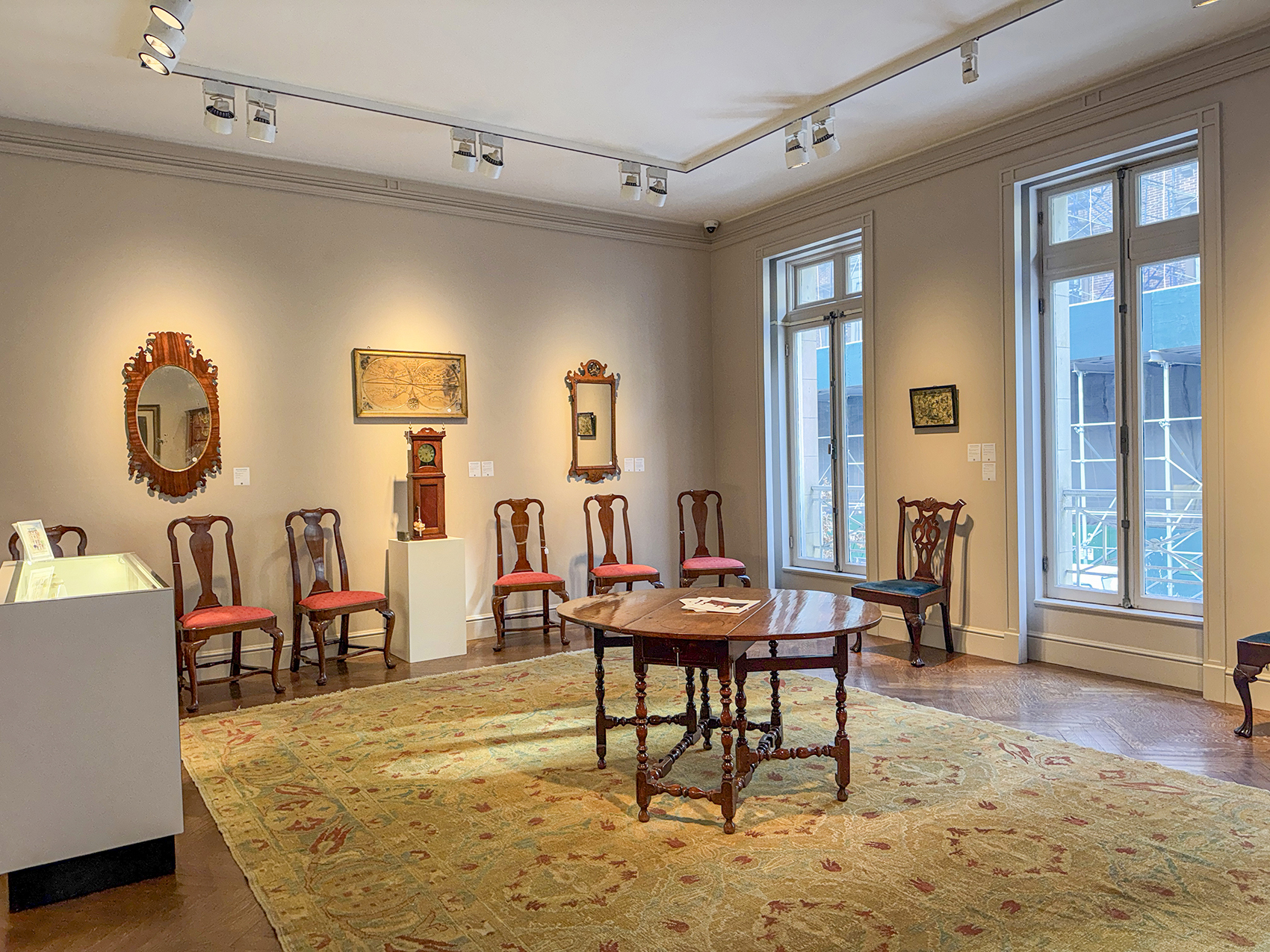
Americana Week in New York has come and gone, and in Sotheby’s case, apparently gone for good. The Americana and Folk Art department was closed during the firms layoffs in December. What the future for Christie’s Americana department will be is not known at this time. On the plus side, Freeman’s | Hindman had an inaugural sale in New York with previews in an Upper East Side townhouse which showed the objects in a much more intimate setting than the cavernous spaces at Sotheby’s and Christie’s.
Freeman’s | Hindman’s second story rooms at 32 East 67th Street.Previews at Freeman’s | Hindman gallery in New York in January.
Sotheby’s
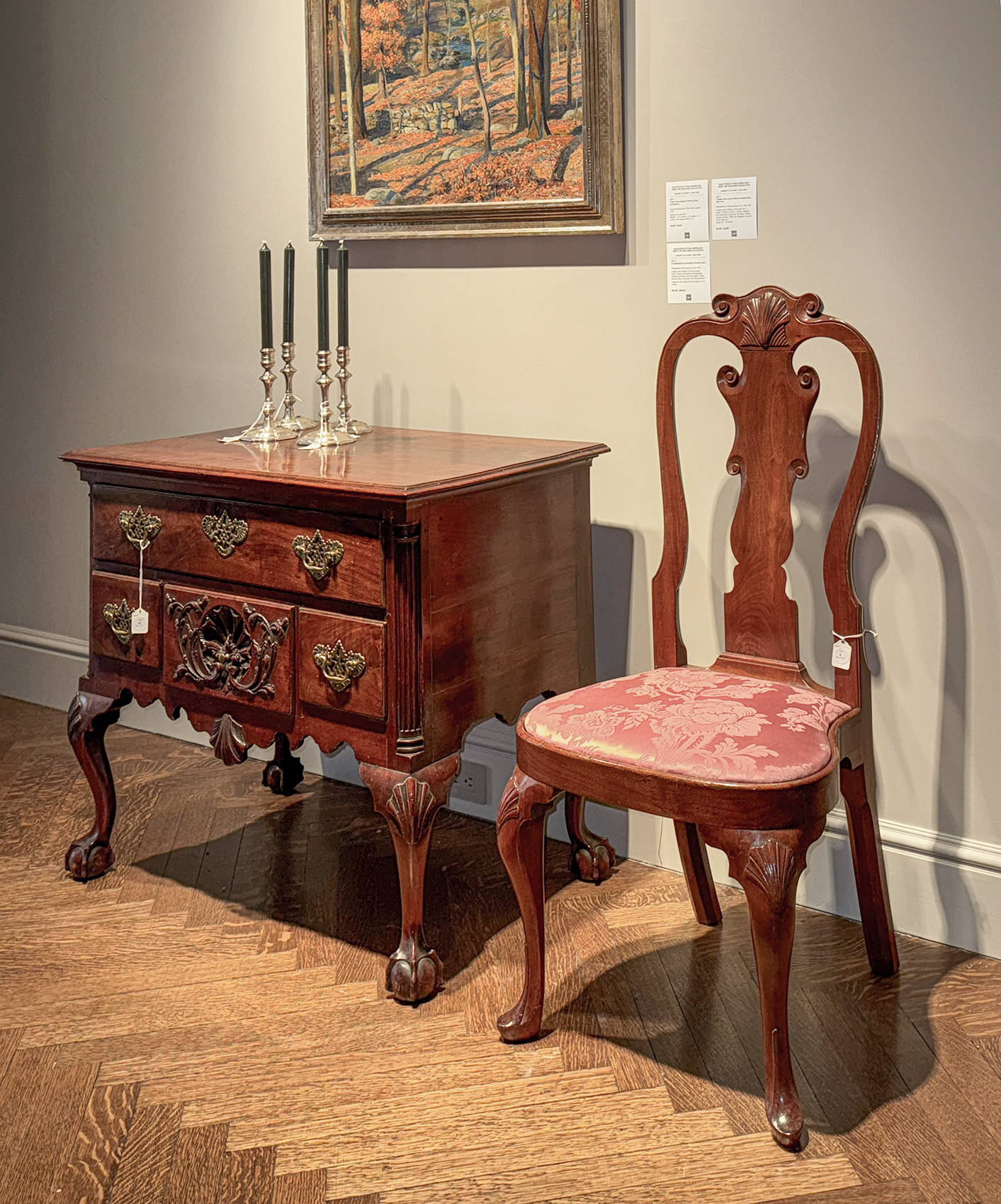
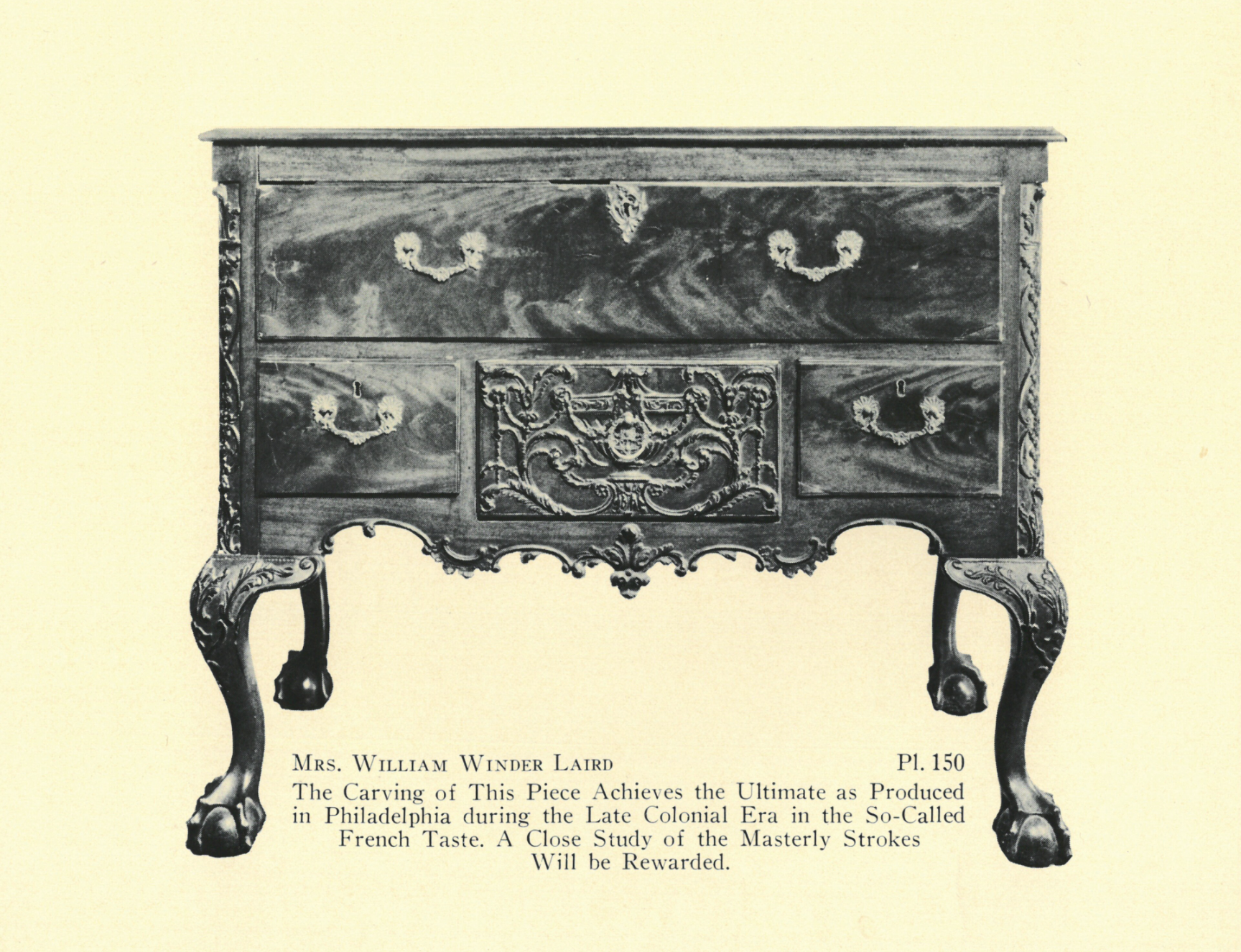
When examined, the “Laird Family high chest base” at Sotheby’s turned out not to be the base to a high chest after all. What it was originally intended to be and how it was used?
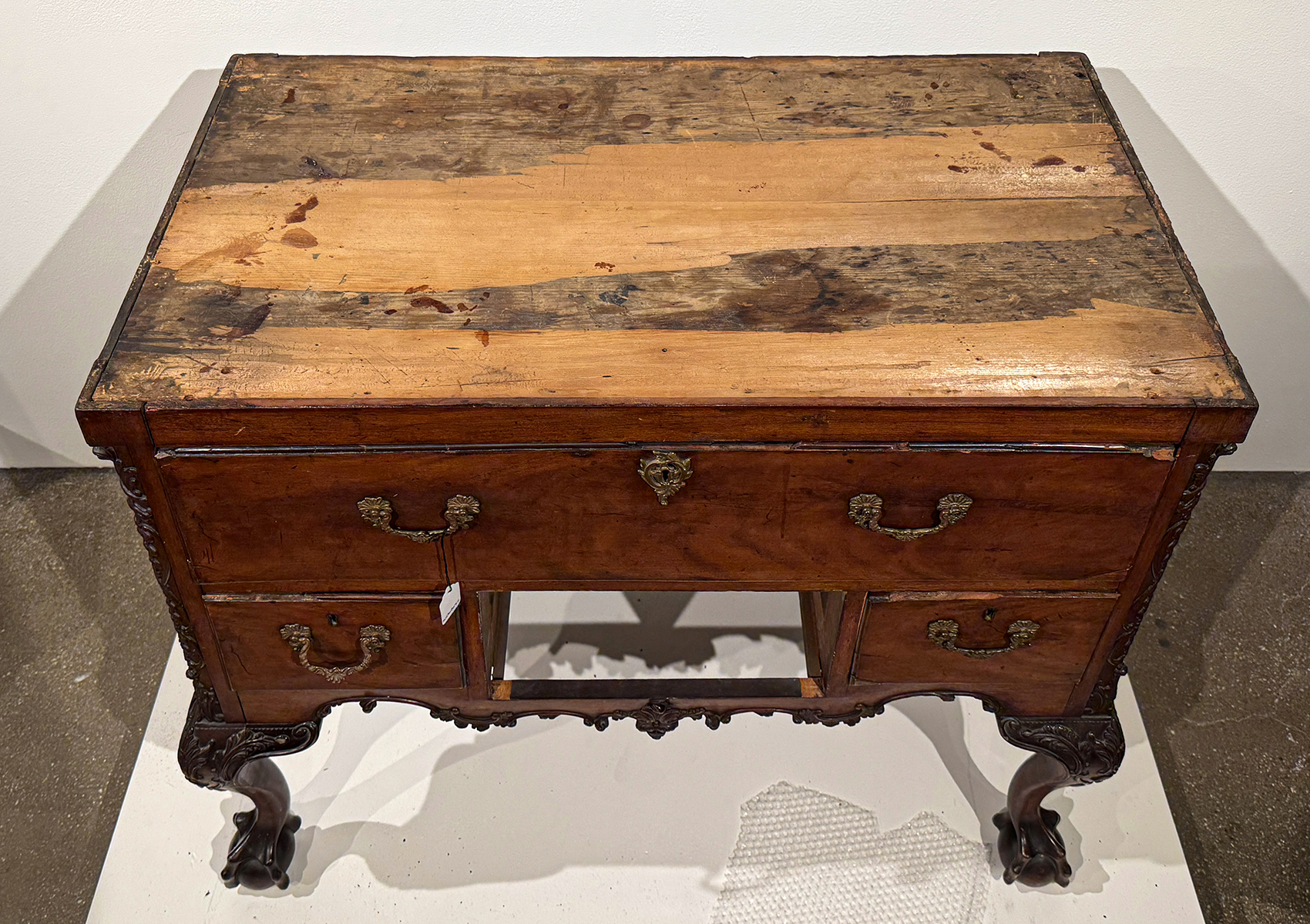
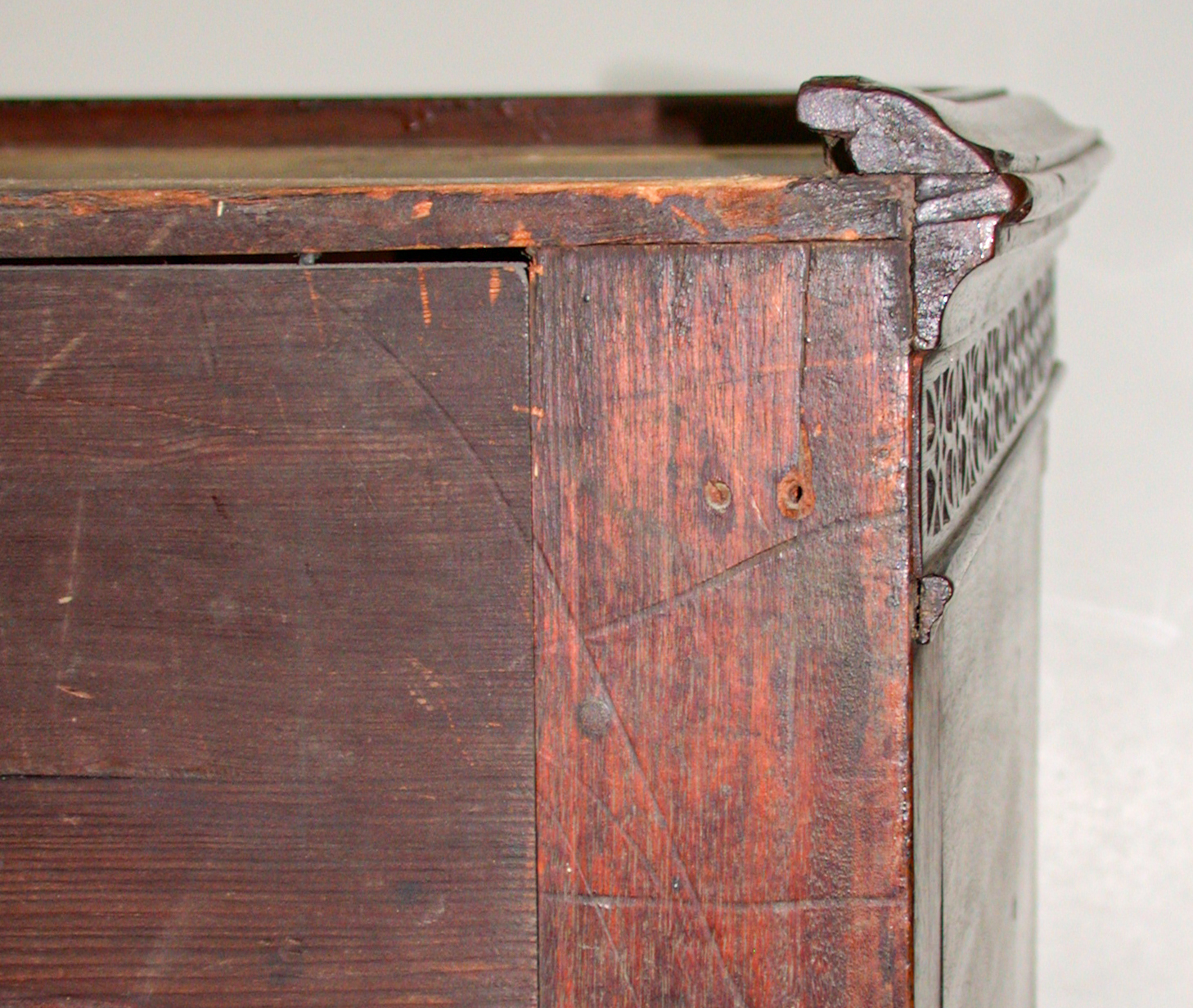
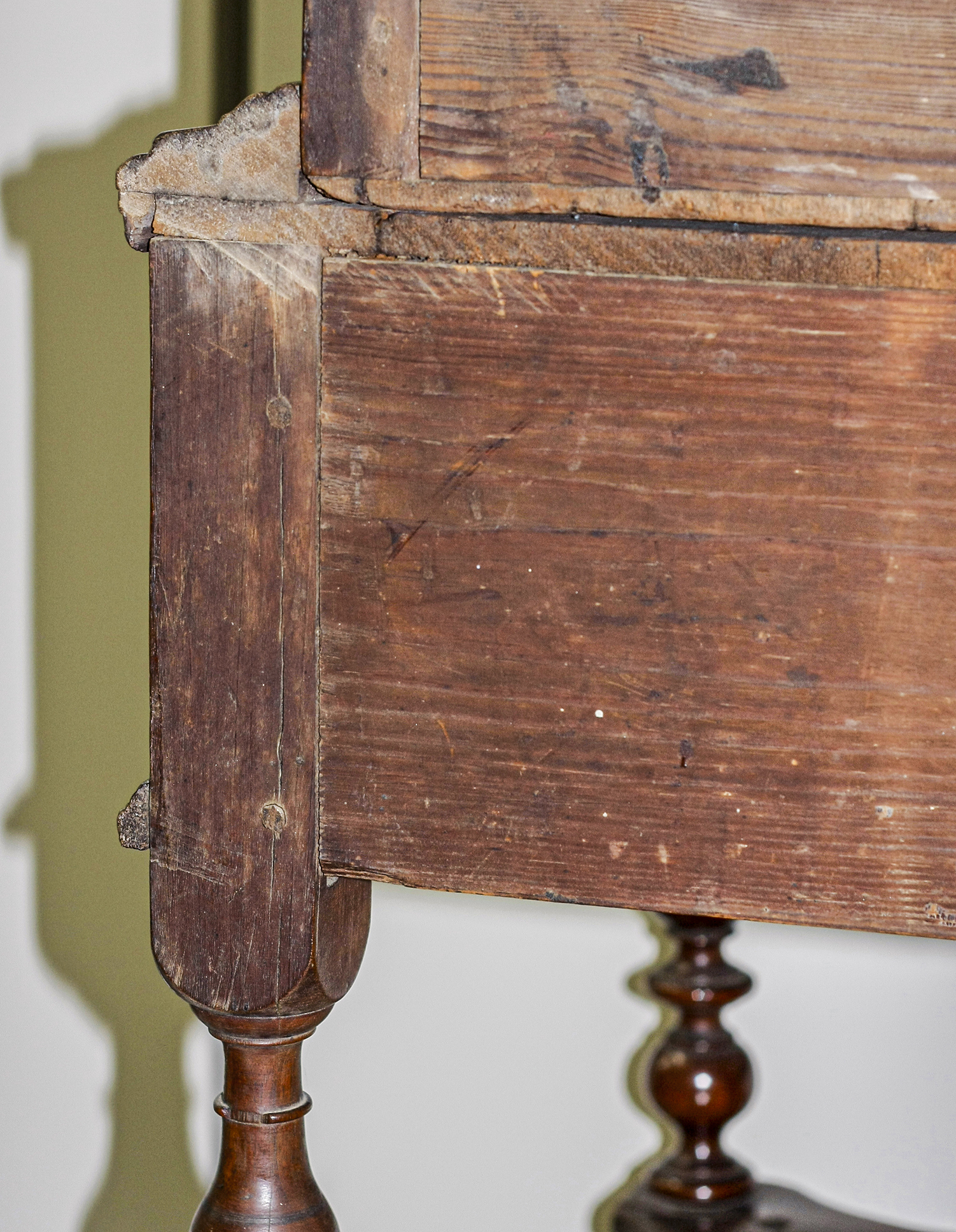
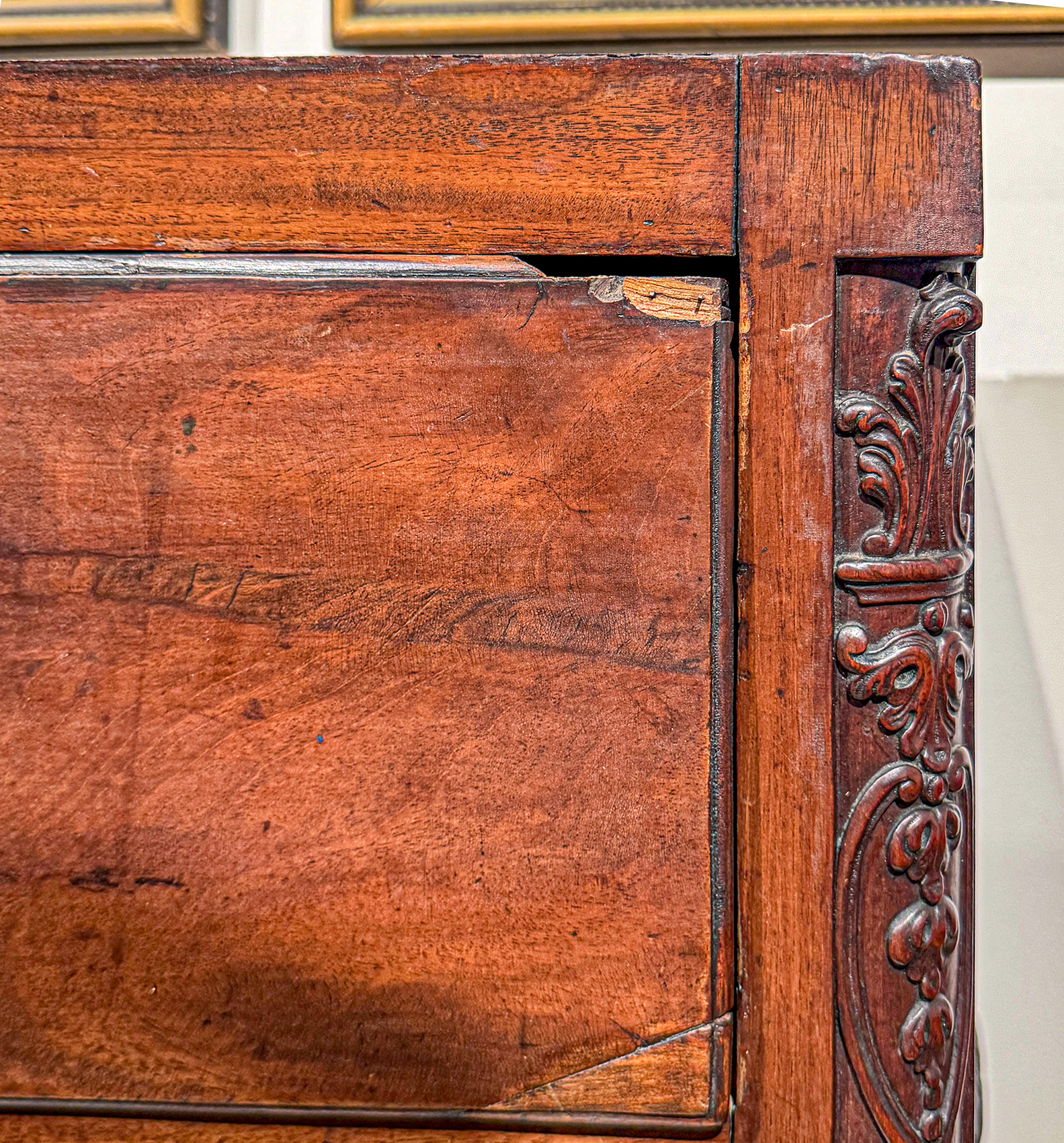
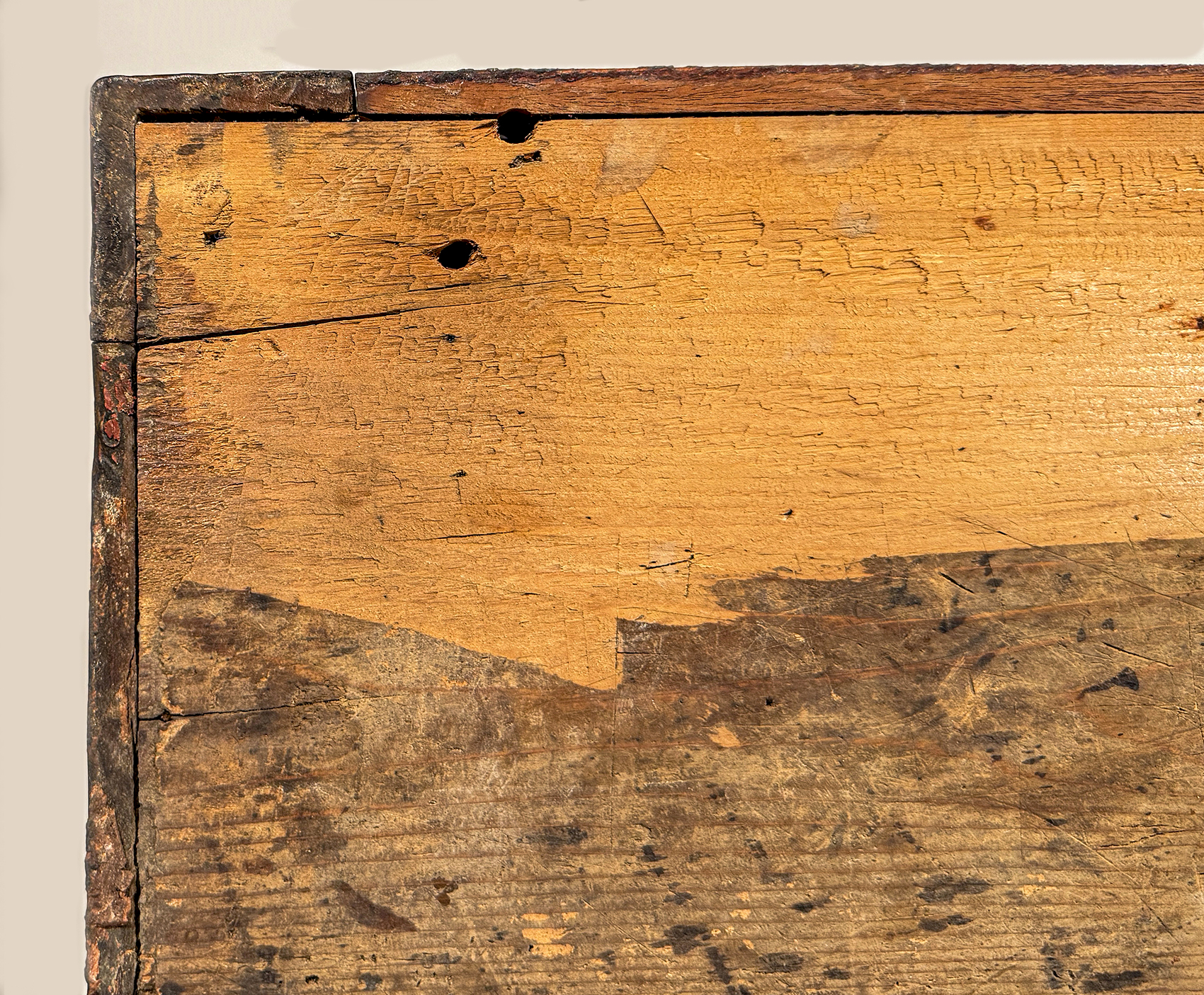
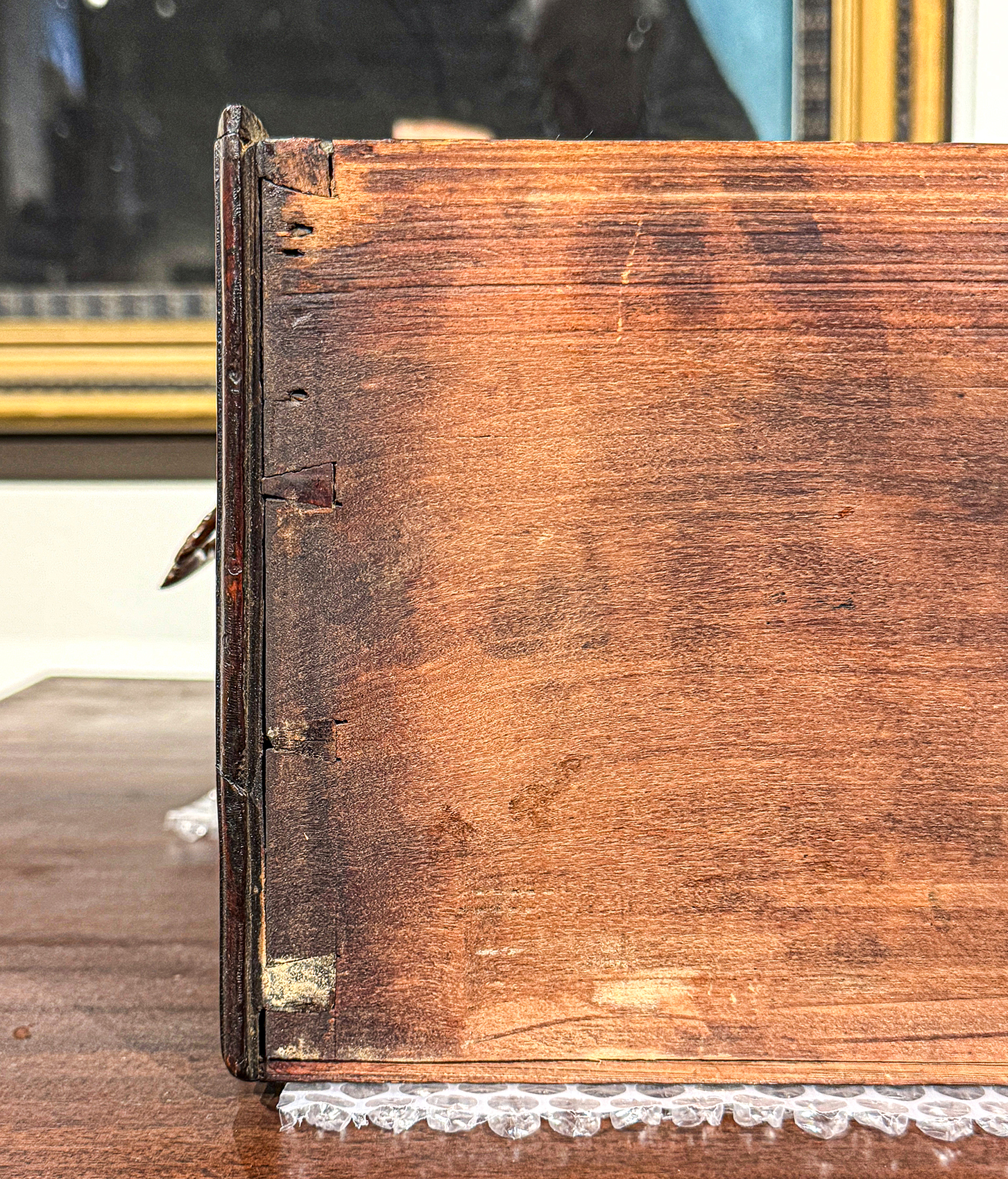
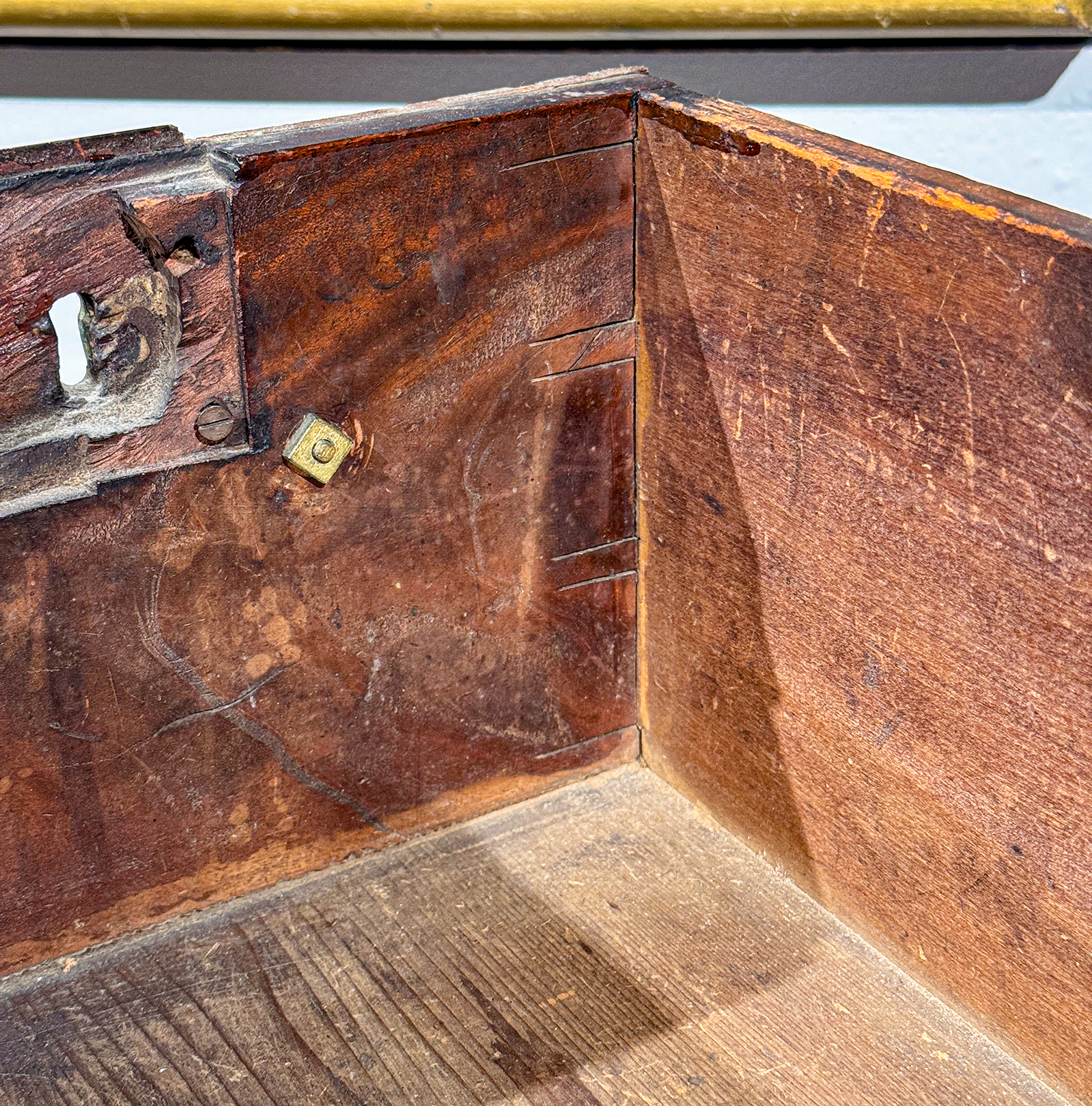
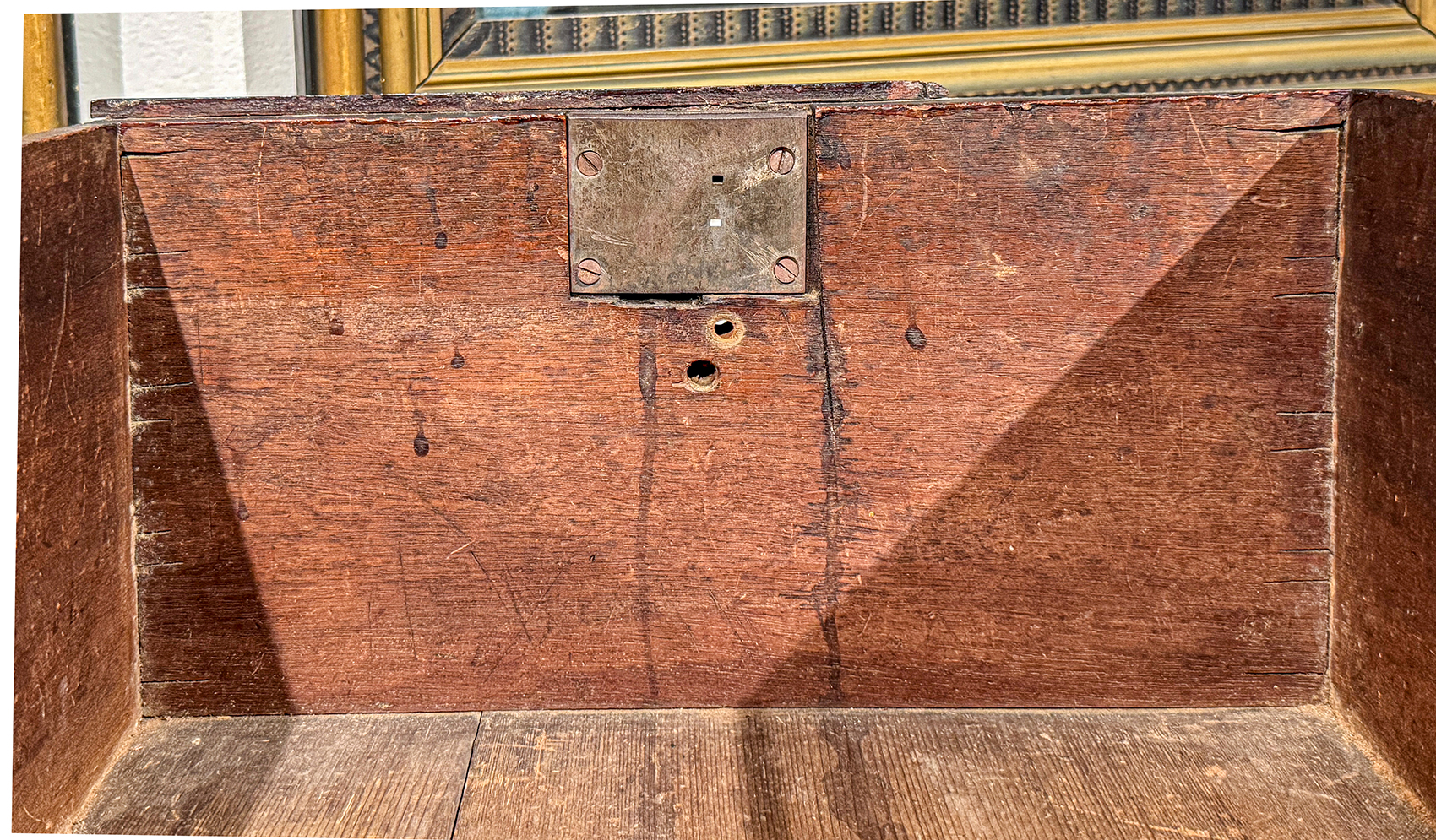
With the modern mahogany top removed we see something unexpected, the front rail, sides, backboard and even the tops of the legs are rebated to receive Atlantic white cedar boards. (At some point, probably to reduce buckling of the boards to allow the new wood top to sit flush, the cedar was leveled with a fore plane, hence the light wood appearance where the plane removed a patinated surface.)
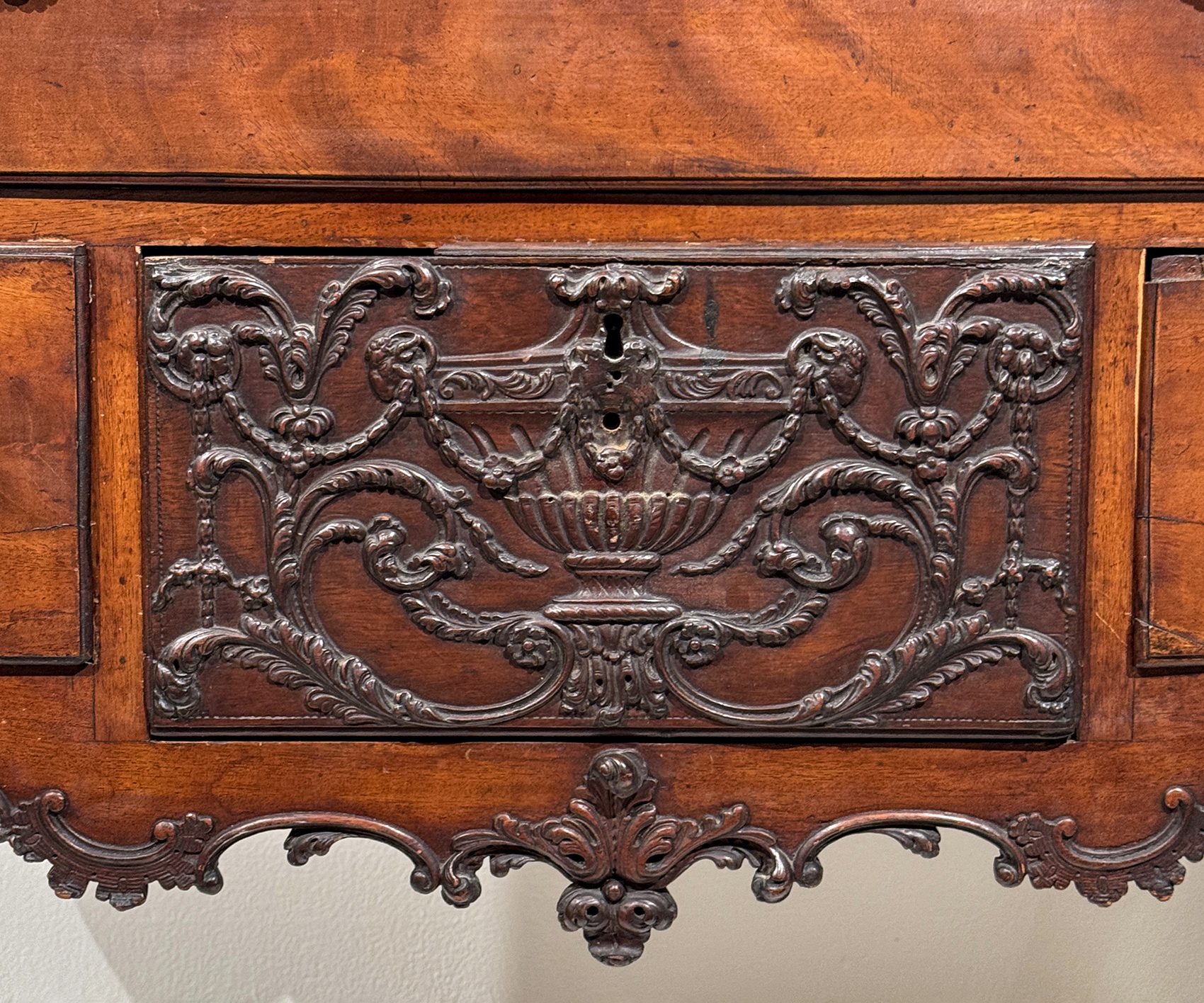
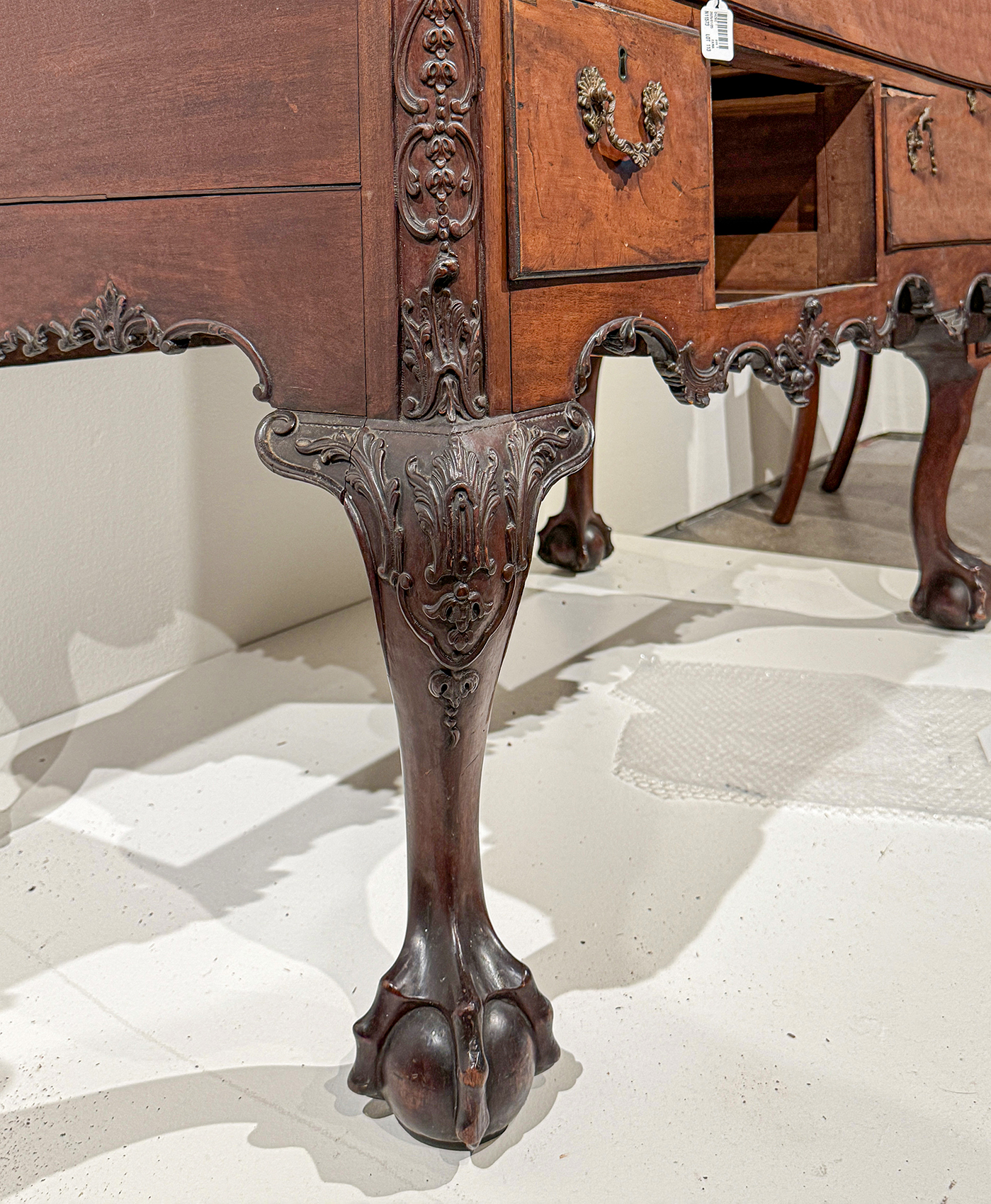
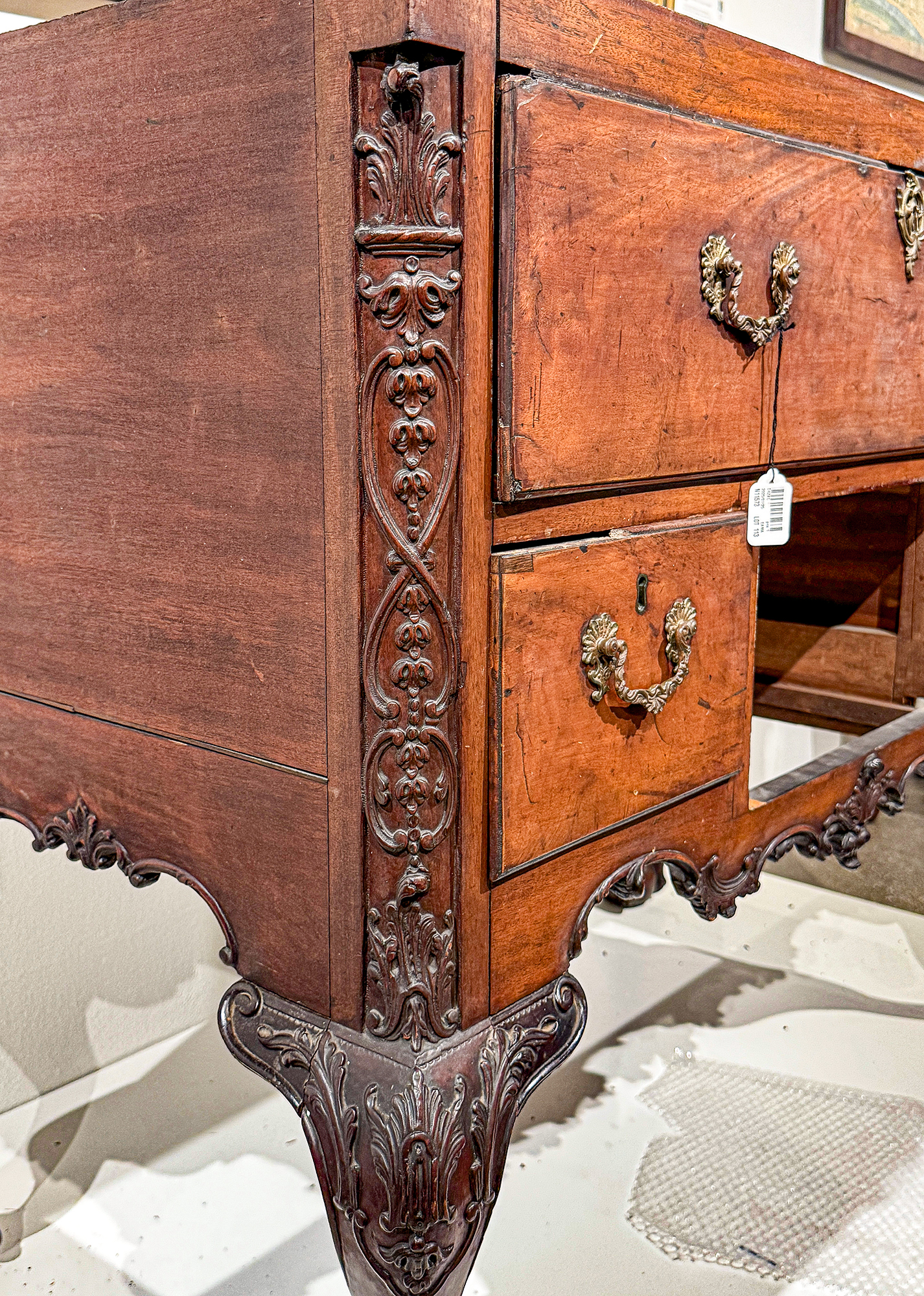
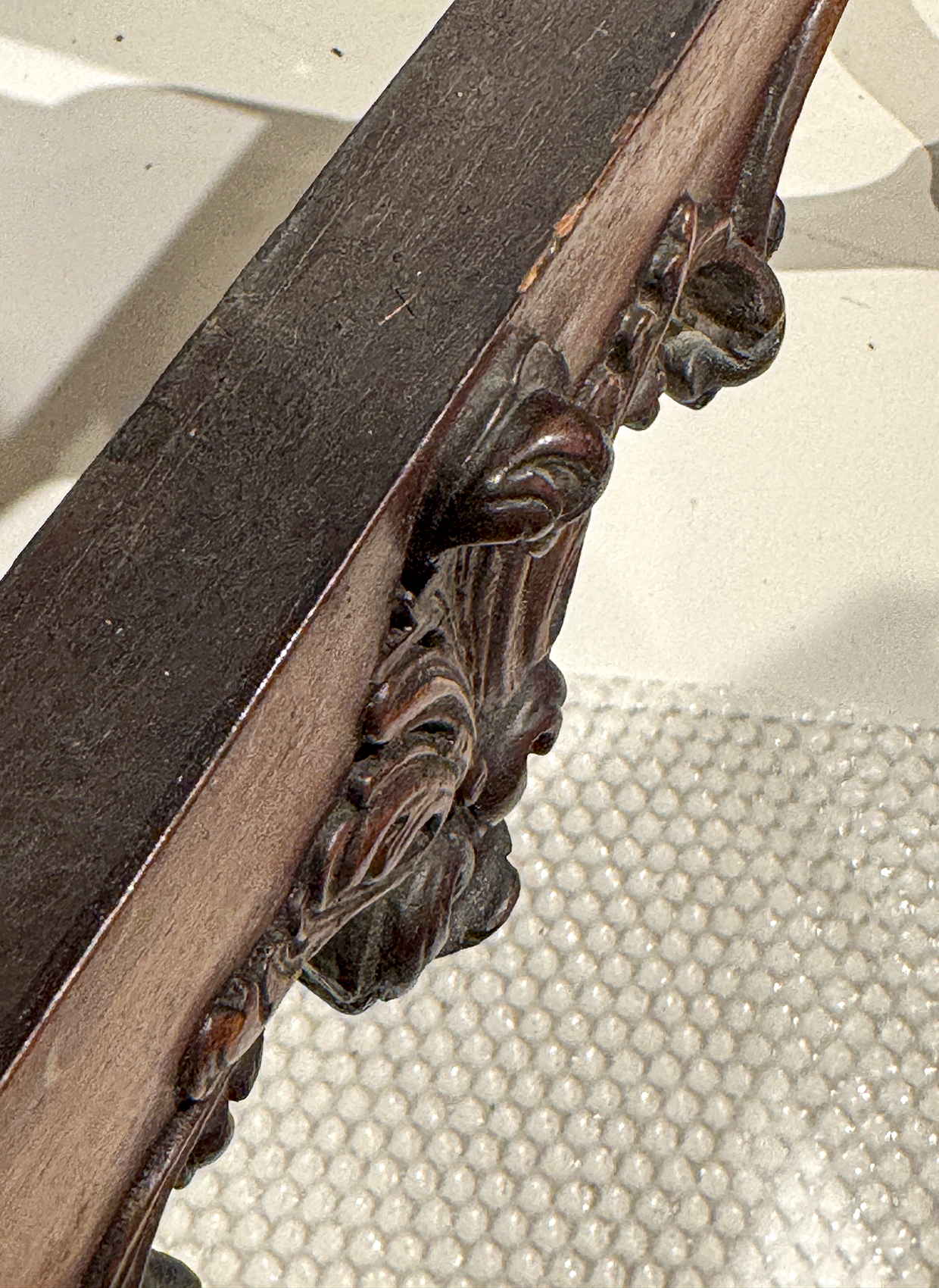
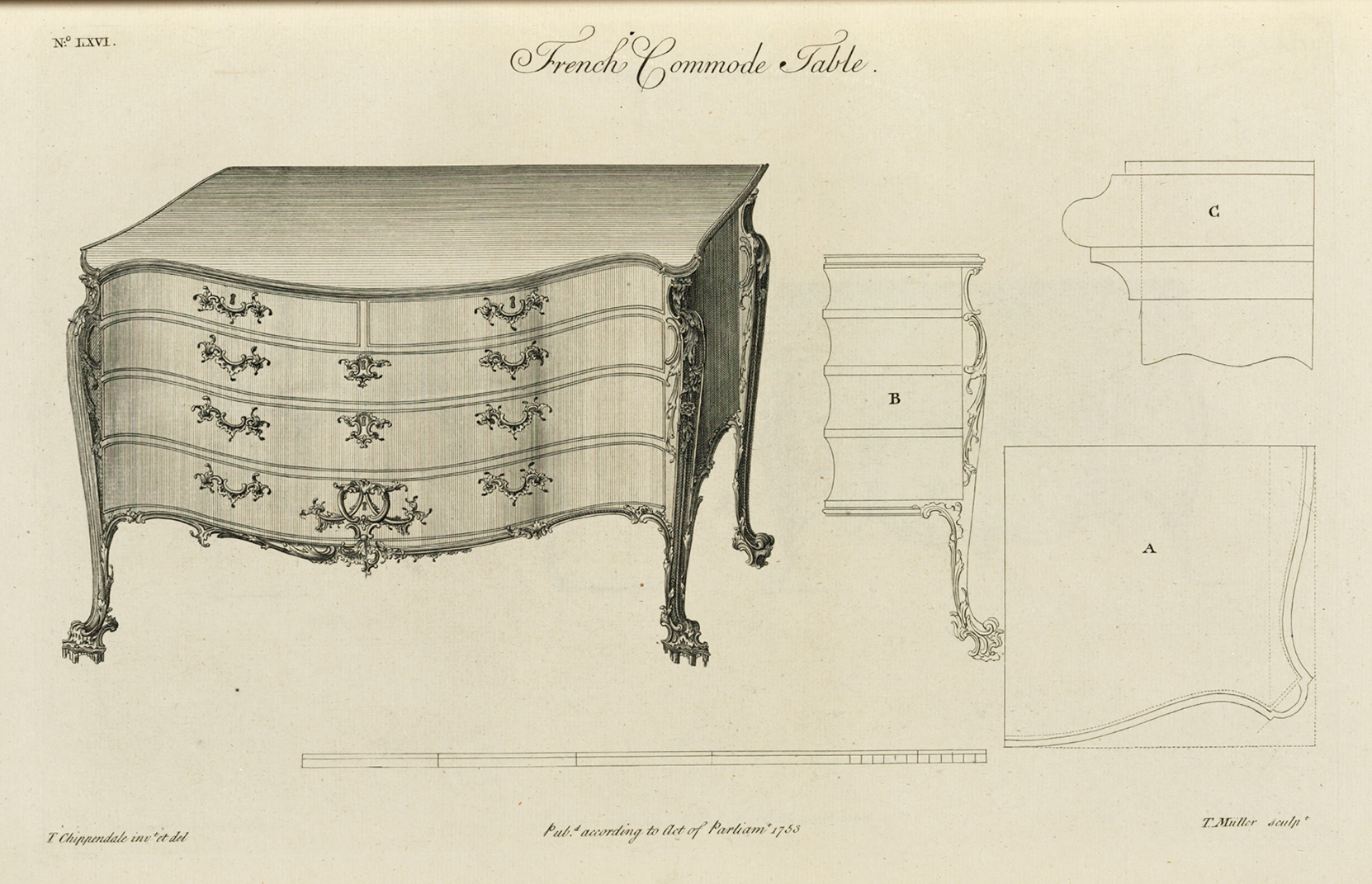
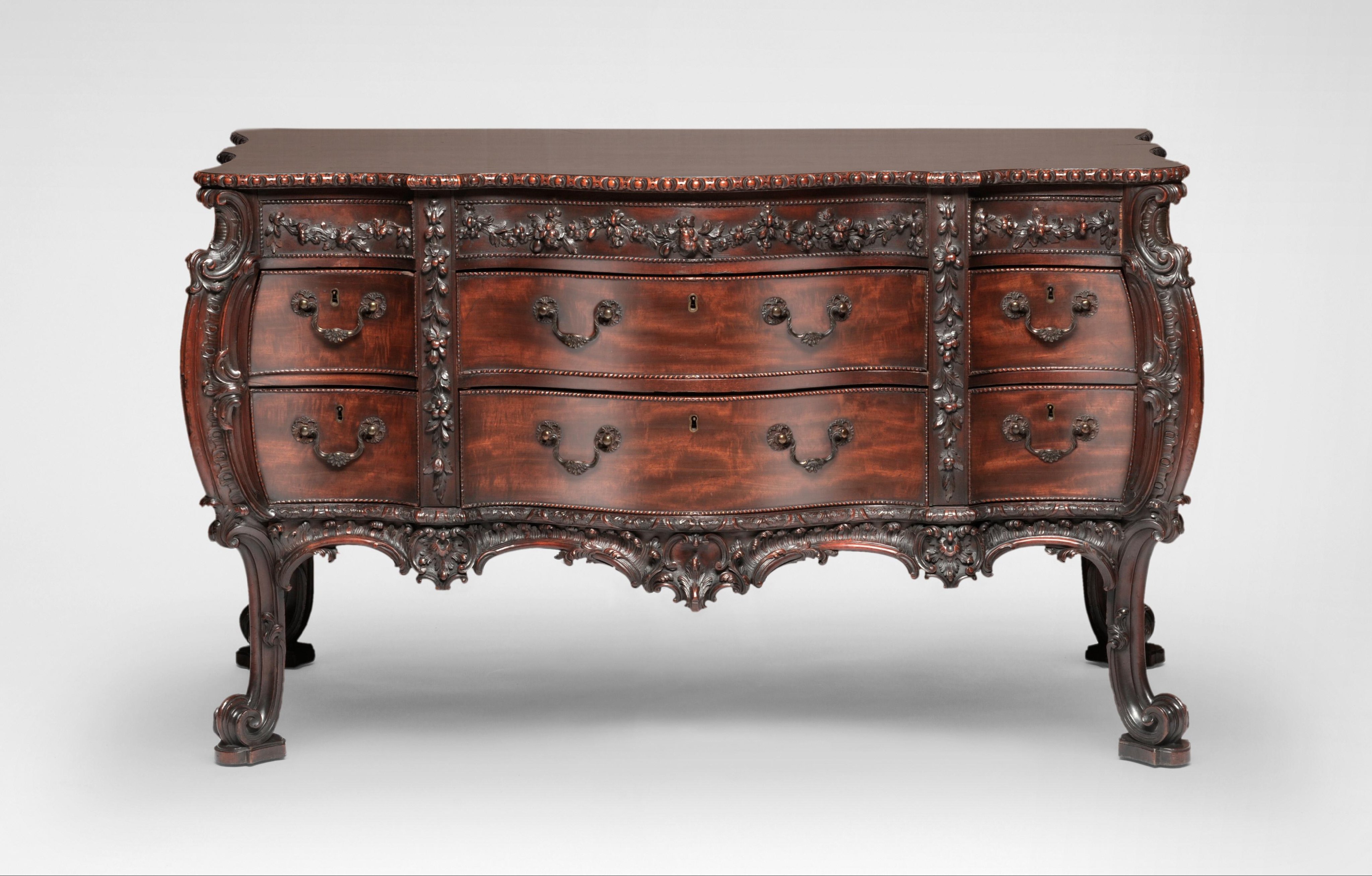
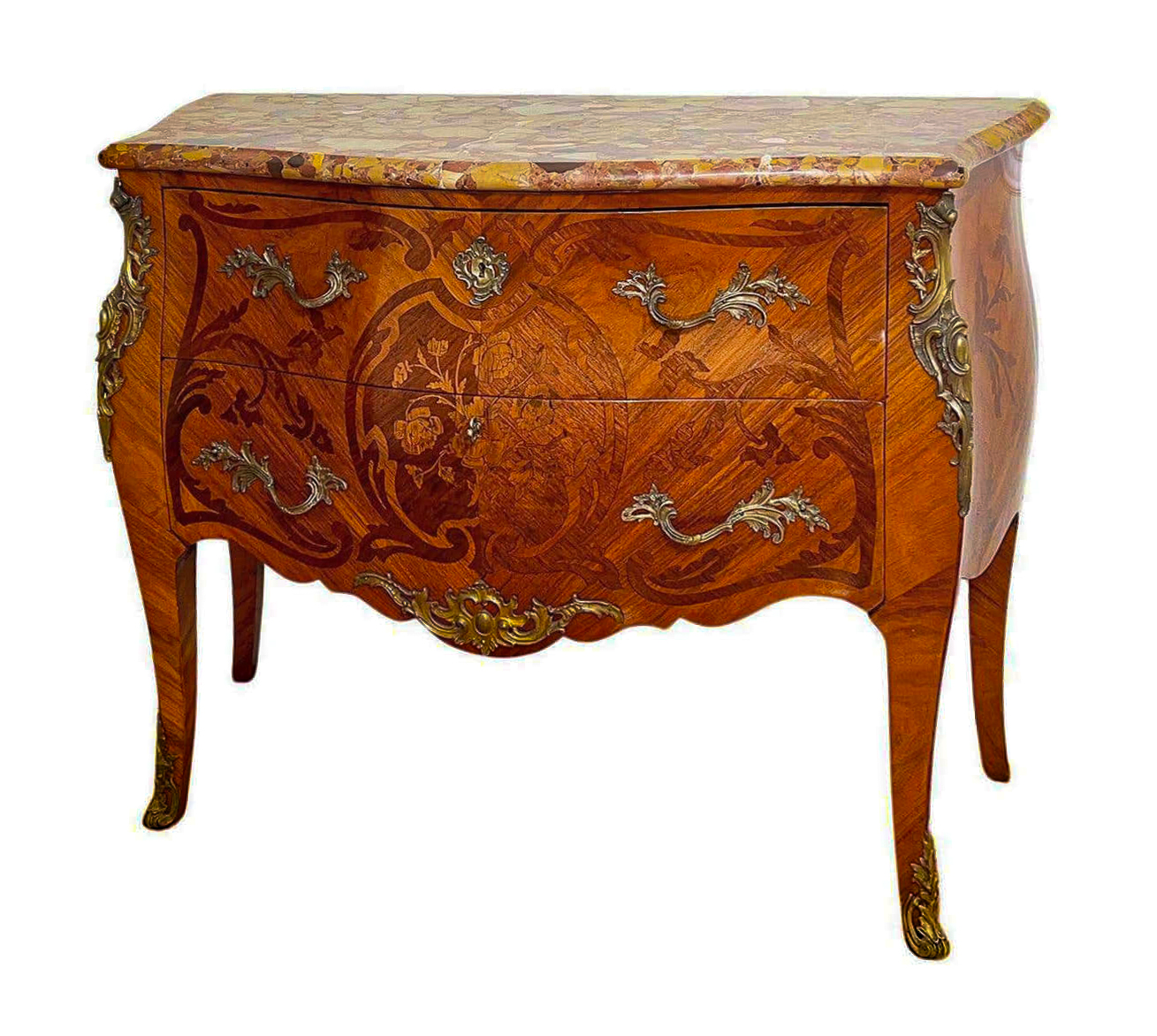
The secondary wood top boards of the bases of high chests are simply nailed to the front, sides, and back the the exposed edges are covered by the waist moulding (usually in two sections) nailed to the top board and the front and sides. This is a view of the back of a mid-18th century high chest base made in Philadelphia. The secondary top board is nailed to the top of the base. The lower section of the waist moulding is nailed to the front and sides, the upper section is nailed to the secondary wood top board, concealing the edges of the secondary wood top.High chest, made in Philadelphia c. 1710. The type of high chest base construction described above was present in the earliest high chests and chest on chests made by British joiners in Philadelphia.Proper left front of the Laird chest. Examination in both visible and UV light of the areas where waist mouldings for a high chest base would have been applied presented no evidence of missing original mouldings or fret. There was no nail evidence on the front rail or sides or on the top of the chest. Notice the lamination for the foliate scroll of the corner column carving.At each corner, in similar locations, a pair of small holes bored with a pod bit are present. The hole in each case closest to the front rail, side or backboard is partially bored in the rail, side, or backboard. The use of a pod bit suggests the borings could have been made at the time the chest was constructed or any time after until the use of pod bits gradually died out towards the end of the nineteenth century. Is the fact that the top of the legs were rebated for the cedar top boards evidence of the original appearance of the chest? Two quick saw cuts could easily have removed the corner of the cedar board so it fit around the leg instead of the longer process of chopping out the end-grain at the top of the legs.The central drawer with applied carving.All of the knee returns are replaced. Surviving carved legs of this design and carving style on related objects would allow for more accurate returns to be reproduced. What value do you give to the current knee returns made in the late 19th century by a competent carver that now have a history of being part of this object for more than a hundred years?A overall view of the carved corner column.The carving on the lower rail is mostly done out of the solid but there are three laminations for thickness to create more three-dimensional foliate scrolls.Certain aspects of the drawer construction was surprising. Three large dovetails rather than the four or five you would typically see on a drawer this height made in Philadelphia c. 1775. And drawer sides with flat tops sitting flush with the drawer front instead of slightly rounded and sitting somewhat below the drawer front.There was about an inch of narrow saw kerf on the interior of the drawer front allowing for more rapid removal wood where the dovetails on the sides would be housed. This was a common construction feature in Philadelphia at this time.An interesting point but one that has no bearing on the mysteries about the chest. The center drawer front with applied carving is thicker than the other drawers and the grain is as plain as can be found on mahogany. This was a blank for a shell carved drawer, which needs extra depth to accommodate a recessed shell and plain grain that carves easily. Some contemporary chests with drawers having carved appliqués used standard thickness drawer fronts with the same figuring as the other drawers producing a shimmering appearance behind the applied carving.There are several illustrations of objects in Chippendale’s “Director” which he calls French Commode Tables. They have wood tops and a carcase with banks of long and short drawers on short legs.English versions of this form were made in the middle of the eighteenth century. This commode table made in London c. 1755 shows Chippendale’s design influence. We don’t know in what space this object was originally used, what was stored in the drawers, or how the large expanse of the top was used. Is the Laird chest the Philadelphia version of Chippendale’s “French Table?” If so, why does it take the form of a high chest base instead of something more like Chippendale’s designs?High style commode tables made in France were veneered and most often had marble tops. Might the Laird chest have had a marble top? Could the holes bored in the top of the chest held registration pegs for a marble top? Numerous marble, or clouded limestone, top serving tables made in Philadelphia in the second half of the eighteenth century survive, but none of them have drawers. We’re familiar with the English and French commode tables being used in public rooms, but why utilize a bed chamber form – high chests and dressing tables – for a public space serving table?
Many questions remain and there may be no evidence surviving with the chest that might provide answers. Why is the top drawer so tall? It seems out of proportion. If the chest was designed as a server, why is the height of the chest taller than all contemporary marble slab tables even without the added height of a wood top (7/8″) or a marble top (1 1/4″) that would bring the overall hight to between 37 1/2″ to 40″? How would a wood top have been attached? Would it be easier for a marble top to become disassociated from the chest? Is there evidence under the cedar top boards that can’t be seen? Many opinions have been given, but I’d be happy to stop seeking an answer.
Thanks for your follow-up post on the Americana sales and, particularly, for your analysis of what was described, in the Blue Book and at Sotheby’s, as the Laird family’s high chest base. “Many questions remain” about it for me, as well.
Even taking into consideration all of your excellent comments, I am disinclined to dismiss the possibility that the piece was originally intended as the base of a high chest. My reasons are, as follows:
Its height, as you point out, seems too tall for something that was supposed to serve as a table. But, it is not too high for the base of a high chest.
If not for a high chest base, then the form would be unique in Philadelphia. Moreover, it looks ill-proportioned compared to the foreign examples you illustrate.
The height of the top drawer is indeed substantially higher than those seen on the top drawers of most Philadelphia high chests. However, I can cite you at least one other example, that owned by Francis P. Garvan and displayed at the Girl Scouts Loan Exhibition, in 1929. It was sold at Sotheby’s, January 24, 2009. Its en suite dressing table had sold in October 2006 from the collection of Mr. and Mrs. Walter Buhl. I also know of at least four other dressing tables with top drawers substantially higher than those beneath. The most recent, which descended in the Scott family, was sold at Sotheby’s, on January 20, 2019. (I will email you images should you wish to post them.) At least to my eyes, the heightened top drawer of the base of the Garvan high chest helps to visually counterbalance the height of both the tympanum and the carved-shell drawer at its center. The tympanum drawer is also higher than the drawers beneath it in the upper section, just as the top drawer in the base is higher than those beneath it. So, just because the Laird piece has a heightened top drawer cannot eliminate the possibility that it, too, was originally conceived of as a high chest base.
Neither of us is familiar with other Philadelphia high chest bases whose tops were constructed in the manner of the Laird piece. But, that does not mean that others do not exist or once existed. Perhaps, this particular cabinetmaker was idiosyncratic in his construction of the top, just as you observe he was in the construction of the drawer.
Could it be that the piece was originally conceived of us a high chest base but that, before it could be completed, the order was cancelled for reasons unknown? Seeking to salvage the time and material invested, did the cabinetmaker then convert it to serve another purpose, explaining the registration holes for the slab and the absence of any witness marks for a mid-molding? If this was a conversion, that would explain why the piece looks ungainly as a table.
2. If not for a high chest base, then the form would be unique in Philadelphia. Moreover, it looks ill-proportioned compared to the foreign examples you illustrate.
Correct, it exists and is unique. Why it is unique cannot be known. Beauty is in the eye of the beholder, but I agree it is ill-proportioned. All the high chest bases with tall top drawers are ill-proportioned to my eye. Anything else said about that is speculation.
4. Neither of us is familiar with other Philadelphia high chest bases whose tops were constructed in the manner of the Laird piece. But, that does not mean that others do not exist or once existed. Perhaps, this particular cabinetmaker was idiosyncratic in his construction of the top, just as you observe he was in the construction of the drawer.
I think we can say no high chest bases that were made in the manner of the Laird chest exist if the facts tell us this not a high chest base which I believe they do due to the lack of any evidence that there was ever a mid-moulding applied and the much greater amount of labor that went into how the Laird chest top was constructed for no reason if it were starting out as a high chest base. It is not speculation that it never had a high chest top, evidence found on the chest shows it to be so. See my note about the rebates below.
5. Could it be that the piece was originally conceived of us a high chest base but that, before it could be completed, the order was cancelled for reasons unknown? Seeking to salvage the time and material invested, did the cabinetmaker then convert it to serve another purpose, explaining the registration holes for the slab and the absence of any witness marks for a mid-molding? If this was a conversion, that would explain why the piece looks ungainly as a table.
While I mentioned the top fitting into rebates in the front rail, sides, back, and the top of the legs, I did not discuss the design and construction ramifications of this. The rebates were part of the design and had to be cut before any assembly of the joinery took place. The cedar being fit to rebates was designed, planned, and executed from the beginning, negating the idea that an order for a high chest was cancelled. The only reason to add this much extra time into the construction of the chest is to be able to fit it out with a wood or marble top without exposing the edge of the cedar board.
It is my position that the evidence in the chest says it was not and never was a high chest base. The absence of peg hole borings in the top of the legs is pretty strong evidence the top was not wood. How would it have been attached to the base if it were? But there is likely no way currently to settle this absolutely.
I’m happy to rethink my opinion about this if new evidence turns up or, based on what evidence we have a different theory can be convincing. I will say this, I was surprised that Sotheby’s did not even suggest it was anything but a high chest base and that that was their position to the end. Surely the loss of a marble slab is easier to swallow and more attractive to a potential customer than a the loss of an elaborate carved upper carcase of a high chest?
Thanks for sharing the additional construction details. I now have a greater appreciation of why you feel that the piece was never intended as the base of a high chest.
I am still hung up on the odd proportions. They lead me to expect a taller section above.
Playing devil’s advocate, might this piece have been constructed as it was to serve more than one purpose? Without a mid-molding affixed, it could have served either as the base of slab top or as the base of a top section to which a mid-molding was applied.
I realize that part of the surface has been planed off the top, but are there any witness marks on the undisturbed areas of the surface that suggest what might have been above it?
I do agree that the registration holes suggest that, if there was only a top above, it would have been a slab rather than wood.
Curiouser and curiouser.
Thanks again for devoting your time,
Jay
Construction is often the key, understanding the steps of how an object is made. If I’m ever really stuck figuring something out in my head I go in the shop and make it and it will become clear. In this case the rebated top stood out, no joiner in that pool of Philadelphia joiners was that idiosyncratic to do that, there had to be a reason.
There was no witness per se on the unplanned surface of the top. However, it otherwise had a dark patina, the chest had long gone without anything on the top. There is also a lot of writing and scribbles on the patinated surface including lettering that looks like it was done with an ink feather pen. I wasn’t able to decipher any of the inscriptions but the top should be photographed in infra-red to see if anything be read.
Hi Chris, Here are two photos of period floral back plates from my collection:
The first photo shows a beautiful example with crisp details, burnished areas and traces of the original tinted lacquer finish. The edge of this little brass feels a lot like the edge of a sea shell.
The second photo shows a pretty nice example with its post and bail. This example is slightly different from the brass in the first photo, possibly because the pattern was copied by another brass founder in the 18th century. It was a popular pattern. Although the examples in the second photo are a bit crusty, you can still see the details in the design. The floral back plates are mirror images of each other. There is quite a bit of honest wear on the back of the left rosette. It is reassuring to see this fine smooth wear as there are lots of reproductions out there.
 In Proportion to the Trouble
What a great read on a snowy morning! Thanks for putting this together.
Thanks!
That’s really good to know. Thanks for sharing.
Thanks for following along!
Dear Chris
Thanks for your follow-up post on the Americana sales and, particularly, for your analysis of what was described, in the Blue Book and at Sotheby’s, as the Laird family’s high chest base. “Many questions remain” about it for me, as well.
Even taking into consideration all of your excellent comments, I am disinclined to dismiss the possibility that the piece was originally intended as the base of a high chest. My reasons are, as follows:
Thanks, again
Jay
2. If not for a high chest base, then the form would be unique in Philadelphia. Moreover, it looks ill-proportioned compared to the foreign examples you illustrate.
Correct, it exists and is unique. Why it is unique cannot be known. Beauty is in the eye of the beholder, but I agree it is ill-proportioned. All the high chest bases with tall top drawers are ill-proportioned to my eye. Anything else said about that is speculation.
4. Neither of us is familiar with other Philadelphia high chest bases whose tops were constructed in the manner of the Laird piece. But, that does not mean that others do not exist or once existed. Perhaps, this particular cabinetmaker was idiosyncratic in his construction of the top, just as you observe he was in the construction of the drawer.
I think we can say no high chest bases that were made in the manner of the Laird chest exist if the facts tell us this not a high chest base which I believe they do due to the lack of any evidence that there was ever a mid-moulding applied and the much greater amount of labor that went into how the Laird chest top was constructed for no reason if it were starting out as a high chest base. It is not speculation that it never had a high chest top, evidence found on the chest shows it to be so. See my note about the rebates below.
5. Could it be that the piece was originally conceived of us a high chest base but that, before it could be completed, the order was cancelled for reasons unknown? Seeking to salvage the time and material invested, did the cabinetmaker then convert it to serve another purpose, explaining the registration holes for the slab and the absence of any witness marks for a mid-molding? If this was a conversion, that would explain why the piece looks ungainly as a table.
While I mentioned the top fitting into rebates in the front rail, sides, back, and the top of the legs, I did not discuss the design and construction ramifications of this. The rebates were part of the design and had to be cut before any assembly of the joinery took place. The cedar being fit to rebates was designed, planned, and executed from the beginning, negating the idea that an order for a high chest was cancelled. The only reason to add this much extra time into the construction of the chest is to be able to fit it out with a wood or marble top without exposing the edge of the cedar board.
It is my position that the evidence in the chest says it was not and never was a high chest base. The absence of peg hole borings in the top of the legs is pretty strong evidence the top was not wood. How would it have been attached to the base if it were? But there is likely no way currently to settle this absolutely.
I’m happy to rethink my opinion about this if new evidence turns up or, based on what evidence we have a different theory can be convincing. I will say this, I was surprised that Sotheby’s did not even suggest it was anything but a high chest base and that that was their position to the end. Surely the loss of a marble slab is easier to swallow and more attractive to a potential customer than a the loss of an elaborate carved upper carcase of a high chest?
Dear Chris,
Thanks for sharing the additional construction details. I now have a greater appreciation of why you feel that the piece was never intended as the base of a high chest.
I am still hung up on the odd proportions. They lead me to expect a taller section above.
Playing devil’s advocate, might this piece have been constructed as it was to serve more than one purpose? Without a mid-molding affixed, it could have served either as the base of slab top or as the base of a top section to which a mid-molding was applied.
I realize that part of the surface has been planed off the top, but are there any witness marks on the undisturbed areas of the surface that suggest what might have been above it?
I do agree that the registration holes suggest that, if there was only a top above, it would have been a slab rather than wood.
Curiouser and curiouser.
Thanks again for devoting your time,
Jay
Construction is often the key, understanding the steps of how an object is made. If I’m ever really stuck figuring something out in my head I go in the shop and make it and it will become clear. In this case the rebated top stood out, no joiner in that pool of Philadelphia joiners was that idiosyncratic to do that, there had to be a reason.
There was no witness per se on the unplanned surface of the top. However, it otherwise had a dark patina, the chest had long gone without anything on the top. There is also a lot of writing and scribbles on the patinated surface including lettering that looks like it was done with an ink feather pen. I wasn’t able to decipher any of the inscriptions but the top should be photographed in infra-red to see if anything be read.
Hi Chris, Here are two photos of period floral back plates from my collection:
The first photo shows a beautiful example with crisp details, burnished areas and traces of the original tinted lacquer finish. The edge of this little brass feels a lot like the edge of a sea shell.
The second photo shows a pretty nice example with its post and bail. This example is slightly different from the brass in the first photo, possibly because the pattern was copied by another brass founder in the 18th century. It was a popular pattern. Although the examples in the second photo are a bit crusty, you can still see the details in the design. The floral back plates are mirror images of each other. There is quite a bit of honest wear on the back of the left rosette. It is reassuring to see this fine smooth wear as there are lots of reproductions out there.
Thank you! Joan

>
Hi Joan,
Images don’t show up in the comments. Send them to my email and I’ll put them up in a post about the chest with my details.
Thank you for collaborating!